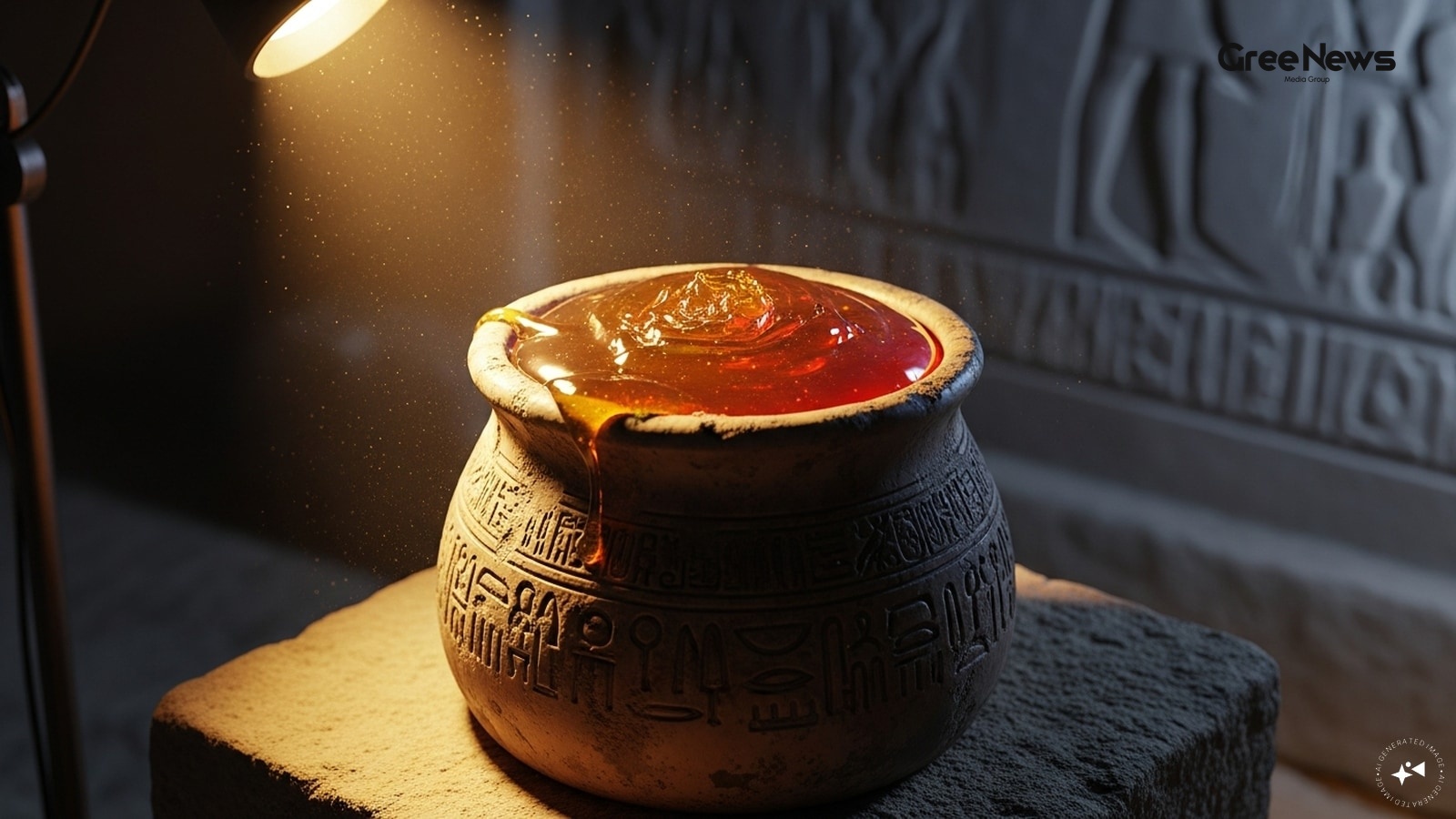
Did you ever think a spoonful of honey could outlive a pyramid?
Honestly, when I first read a piece of breaking news about a 3,000‑year‑old honey still being edible, I laughed a little. I mean, honey is tasty, but lasting that long? Turns out it’s not just a quirky story it’s a solid piece of latest news India that’s sparking a lot of chatter online. The find came from royal tombs in Egypt, and the scientists who examined it say the honey’s chemistry is practically a time capsule. If you’re curious about why this is making rounds on trending news India, keep reading what happens next is actually pretty interesting.
How the ancient jars were found
Back in the late 1800s and early 1900s, a bunch of archaeologists were busy digging around places like Thebes, trying to piece together the lives of pharaohs. While most of us picture glittering gold and elaborate sarcophagi, they also uncovered sealed pottery jars sitting right next to the usual grave goods jewellery, fine linen, even board games. The jars were clearly meant for the afterlife, because the Egyptians believed they would need everyday comforts beyond death.
What really caught people’s attention was that, even after being underground for centuries, the honey inside those jars wasn’t mouldy or sour. It looked just like the honey you’d buy from a local market today, except maybe a little thicker. That discovery quickly turned into a piece of viral news on social platforms, with people sharing pictures of the ancient taste test.
Why honey doesn’t spoil the science explained
Let’s get into the nitty‑gritty. Honey’s staying power largely comes down to three things: its low water content, its high sugar concentration, and its natural acidity. Bacteria need water to grow, and with hardly any in honey, they simply can’t multiply. The sugar creates an osmotic pressure that draws moisture out of any microbial cells that might somehow get in, effectively dehydrating them.
On top of that, honey is naturally acidic its pH usually sits somewhere between 3.2 and 4.5. This creates an unwelcoming environment for most microbes. But the real magic happens during the honey‑making process itself. When bees collect nectar, they fan it with their wings, evaporating most of the water. At the same time, an enzyme called glucose oxidase, which lives in their honey‑storing glands, turns a tiny bit of the sugar into hydrogen peroxide. That tiny amount acts like a natural antiseptic, keeping the honey clean.
Even if some dust or tiny particles sneak into the jar, the antimicrobial action of the hydrogen peroxide means they won’t cause the honey to go bad. That’s why, after thousands of years, the honey may have changed texture perhaps becoming crystalised but it hasn’t turned sour or putrid.
Ancient Egyptian love affair with honey
Honey wasn’t just a sweetener for the ancient Egyptians; it was practically a Swiss‑army‑knife of resources. They used it as food, of course, but also as a medicine, a cosmetic, and a sacred offering. Ancient medical papyri list honey in hundreds of remedies from treating wounds to soothing coughs. Its antibacterial qualities were well‑known even back then.
Religiously, honey was offered to the gods during rituals, symbolising purity and abundance. That’s why you’ll often find jars of honey among the treasure troves buried with kings and queens it was meant to accompany them into the afterlife, both as nourishment and as a divine gift.
What surprised researchers isn’t just that the honey was there, but that it survived the test of time. The jars were sealed, which helped, but the honey’s own chemistry did most of the heavy lifting.
What modern scientists learned
When the jars finally opened, researchers took tiny samples. Under microscopes, they could see that the honey still contained the same sugar composition we see today. Tests for bacterial growth came back negative. Some crystals formed that’s normal for honey left undisturbed for long periods but there was no sign of fermentation or decay.
These findings are now part of a broader conversation about food preservation. In an age where we’re constantly looking for ways to extend shelf life without chemicals, the ancient Egyptians inadvertently gave us a masterclass. It’s no wonder this story keeps popping up in India updates and other news round‑ups it ties together history, science, and even modern culinary curiosity.
Why this matters to us today
Think about it: we spend billions every year on food preservation technologies. Yet a simple natural product, produced by bees thousands of years ago, still beats most of our modern methods. That realization has sparked a wave of interest among Indian entrepreneurs, researchers, and even home‑cooks who are now looking at honey’s natural preservative qualities for everything from pickles to traditional medicines.
Moreover, the story has become a favourite talking point on social media, where many people share their own “did you know?” moments. It’s a perfect blend of viral news and educational content, which is why it’s trending across platforms and being referenced in many latest news India bulletins.
So the next time you drizzle honey over your chai or drizzle it on a warm paratha, you can think of the ancient pharaohs who trusted the same golden liquid to travel with them into the afterlife, and wonder if that same jar could still be sipping sweetness in a museum somewhere today.
Final thoughts: the timeless sweetness
All in all, this discovery reminds us that nature often holds the best solutions. The honey’s ability to stay edible after three millennia isn’t just a cool fact it’s a lesson in how simple chemistry, combined with careful sealing, can create a product that truly stands the test of time. It’s no surprise that this piece of breaking news has turned into a hot topic in India updates, sparking curiosity from schoolchildren to seasoned scientists.
If you ever get a chance to taste a spoonful of that ancient honey (under strict lab conditions, of course), you’ll be part of a living link between the past and the present and you’ll know exactly why that sweet drop lasts forever.









.jpg)