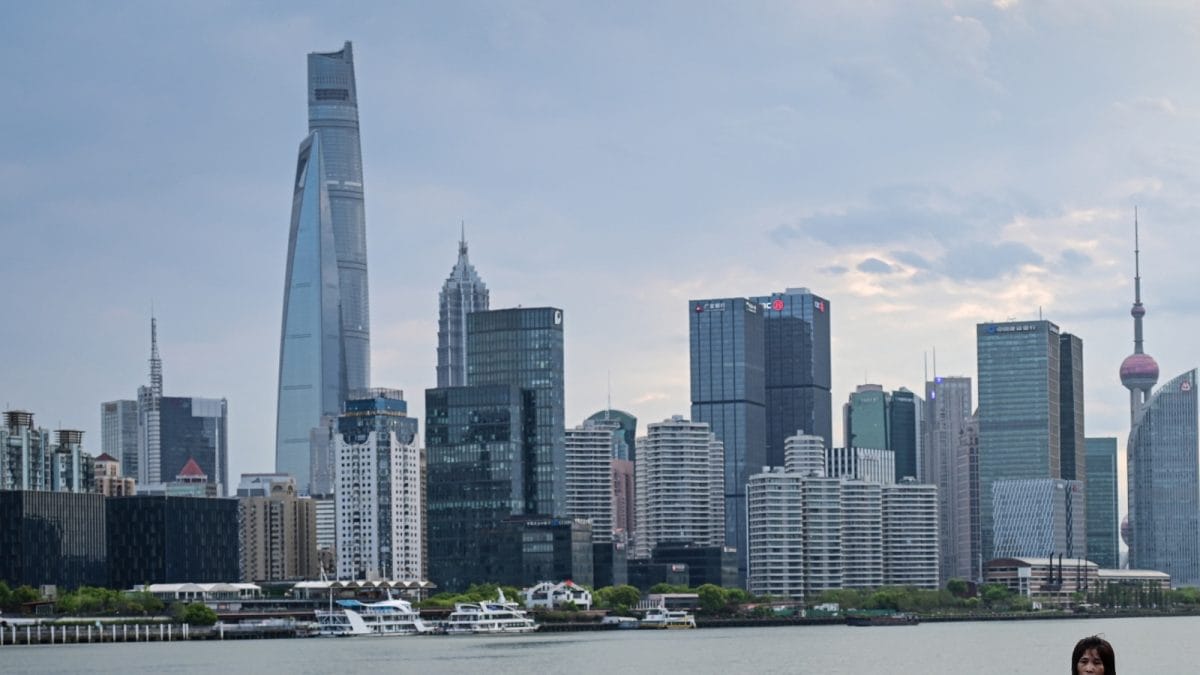
This came after India slammed China for assigning 'fictitious names' to places in Arunachal Pradesh, saying the state remained an integral part of Indian territory.
Honestly, when I first read about the latest news India on my morning chai break, I couldn't help but feel a mix of irritation and amusement. The story was serious – China had published a list of so‑called “standard” names for several spots in Arunachal Pradesh, a region that India has always called its own. The Ministry of External Affairs went on record, saying that any attempt by the Chinese side to give "fictitious" names was a blatant effort to rewrite reality. That part was the breaking news, and it made headlines across every TV channel and WhatsApp group.
But while the diplomatic rows were heating up, my friends on social media started poking fun. Someone suggested, "What if we take those Chinese city names and give them a desi makeover?" It was like a tiny experiment to lighten the mood, especially because the tension over borders has been a constant in the past few years. And that’s where the idea of asking an AI for Indian‑styled names for Chinese megacities was born. What happened next is interesting – the AI churned out a list that was both witty and surprisingly on point.
The background: why naming matters
Before diving into the fun list, let me set the stage. The controversy began when China released a document naming 15 mountains, five residential areas, four passes, two rivers, and a lake in Arunachal Pradesh – which it calls Zangnan. Each place was given a Chinese‑language name, along with exact latitude‑longitude coordinates. From India's perspective, this wasn't just a cartographic exercise; it was a strategic move in a long‑standing border dispute.
India's Ministry of External Affairs responded with a strong statement: "India categorically rejects any mischievous attempts by the Chinese side to assign fictitious names to places which form part of the territory of India. Such attempts by China at introducing false claims and manufacturing baseless narratives cannot alter the undeniable reality that these places and territories, including Arunachal Pradesh, were, are, and will always remain an integral and inalienable part of India." This was shared across all government portals and quickly turned into trending news India, with journalists and analysts dissecting the language line by line.
In most cases, naming is more than symbolism – it’s about asserting sovereignty. When you put a name on a map, you’re saying, "We own this piece of land." That's why the Indian reaction was swift and firm. It also explains why previous attempts by Beijing in 2017, 2021, 2023, and 2024 had similar push‑backs. The pattern shows how deeply intertwined geography and politics can be, especially in a region as contested as the Himalayas.
AI’s Indianised twist on major Chinese cities
Now, coming to the lighter side – the AI-generated list. I asked the model to think like an Indian poet who loves traditional town names, and the results were surprisingly apt. Here’s what we got, and trust me, the names sound like places you could actually find on a road sign in Maharashtra or West Bengal.
- Beijing – Baijnath (evokes Indian temple towns, think of a quiet hill station named after a deity)
- Shanghai – Shankhai (rooted in ‘Shankar’, gives it a spiritual vibe)
- Guangzhou – Ganga‑jyoti (river + light, a nod to the Pearl River heritage of Guangzhou)
- Shenzhen – Shantivan (peaceful forest, keeping the ‘Shen’ sound while sounding very Indian)
- Chengdu – Chandrapur (moon city, a common Indian toponym that feels familiar)
- Xi’an – Shivaan (close phonetics, with a divine Indian twist, like a city of Lord Shiva)
- Nanjing – Nandigram (village of joy, echoing ‘Nan’, reminds you of many Indian villages)
- Hangzhou – Haridham (holy abode, keeping the ‘Ha’ sound, almost like a pilgrimage spot)
- Tianjin – Tejasnagar (city of brilliance, inspired by ‘Tian’, which also means sky in Chinese)
- Wuhan – Vishwanagar (means global city, echoing ‘Wu’ with ‘Vishva’, signifying world)
Many people were surprised by how naturally the names fit into Indian contexts. It was a bit of viral news, shared across meme pages and even discussed in a few TV panel shows. While the jokes were lighthearted, the underlying reality – that naming carries weight – remained clear.
Why the AI exercise matters
Okay, so why did I bother writing this whole article about a list that looks like it belongs on a travel brochure? Because, my friends, sometimes humour can be a powerful way to highlight serious issues. When we see AI turning Beijing and Shanghai into Baijnath and Shankhai, it makes us think about the power of words. It also shows that while governments play chess with maps, ordinary folks can still have a laugh.
Think about it: a few weeks back, I was at a roadside dhaba in Delhi, watching a cricket match on a tiny TV. The commentary suddenly shifted to "breaking news" about the India‑China border naming row. The patrons started debating – some were angry, some were amused. One of them, a school teacher, said, "If they can rename my village, why not rename my favourite biryani shop?" That comment sparked a small ripple of jokes, and soon the whole dhaba was chanting "Ganga‑jyoti!" as if it were a chant.
This little moment from everyday life illustrates how a serious geopolitical issue can spill over into our daily chatter, becoming part of trending news India on social media. The spread of the AI‑generated names turned into a viral news story that kept people engaged for hours, proving that a dash of humour can indeed amplify a message.
Historical context – naming games aren’t new
It’s not the first time China has tried to christen places in a region India claims. Back in 2017, after the Dalai Lama visited Arunachal Pradesh, Beijing released a list of "standard" names for several locations. Again, India slammed the move, calling it a "preposterous" attempt to rewrite history. Similar episodes followed in 2021, 2023, and 2024, each coinciding with heightened border tensions or diplomatic meetings.
These naming exercises test the thaw in India’s ties with China after the 2020 Galwan clash. Even when Prime Minister Narendra Modi travelled to the SCO Summit in China and held a bilateral meeting with President Xi Jinping, the underlying mistrust lingered. The naming saga, therefore, is more than a cartographic footnote; it’s a barometer of bilateral relations, a sort of "India updates" that analysts watch closely.
And what does it mean for the average Indian? It means that every time we see a new name on a map, whether it’s a mountain or a river, there’s a bigger story behind it – about sovereignty, about pride, and about the narratives we choose to accept.
Public reaction and the spread of the Indianised names
When the AI list first went live, it quickly caught people’s attention. Within hours, it was shared on WhatsApp groups, Facebook pages, and even mentioned in a few regional newspapers as a quirky take on a serious diplomatic row. The list became a part of "India updates" that many of us read during our daily commute.
One of my cousins, who works in a Delhi‑based startup, posted the list on his company's internal Slack channel with a caption that read, "If only geopolitics were this fun!" The post garnered a ton of reactions, and soon the whole office was debating which Indianised name sounded the coolest. That was the moment I realised the power of combining humour with facts – it turns a heavy topic into something people actually want to read and talk about.
In most cases, the conversation stayed light, but it also reminded everyone that behind the laughs lies a genuine concern for territorial integrity. A few comment threads even brought in historical references to the 1962 war, showing how deep these sentiments run.
What does the future hold?
Looking ahead, I think we’ll see more of these naming tussles, especially as both nations continue to assert their claims. However, the spread of AI‑generated content – both serious and playful – will likely become a bigger part of how the public consumes "breaking news". The fact that a simple list could become viral demonstrates that the digital age is changing the way we engage with geopolitical narratives.
Will India and China ever find a common ground on the naming issue? Perhaps, but until then, we can enjoy a little dash of creativity. Who knows – maybe one day a city like Baijnath (Beijing) will actually appear on a tourist brochure, and we’ll all smile at the irony.
For now, keep an eye on the latest news India, stay updated with trending news India, and don’t forget to share a laugh when you can. After all, sometimes a smile is the best way to cope with serious headlines.