From Lenskart to Air India the dress‑code saga continues
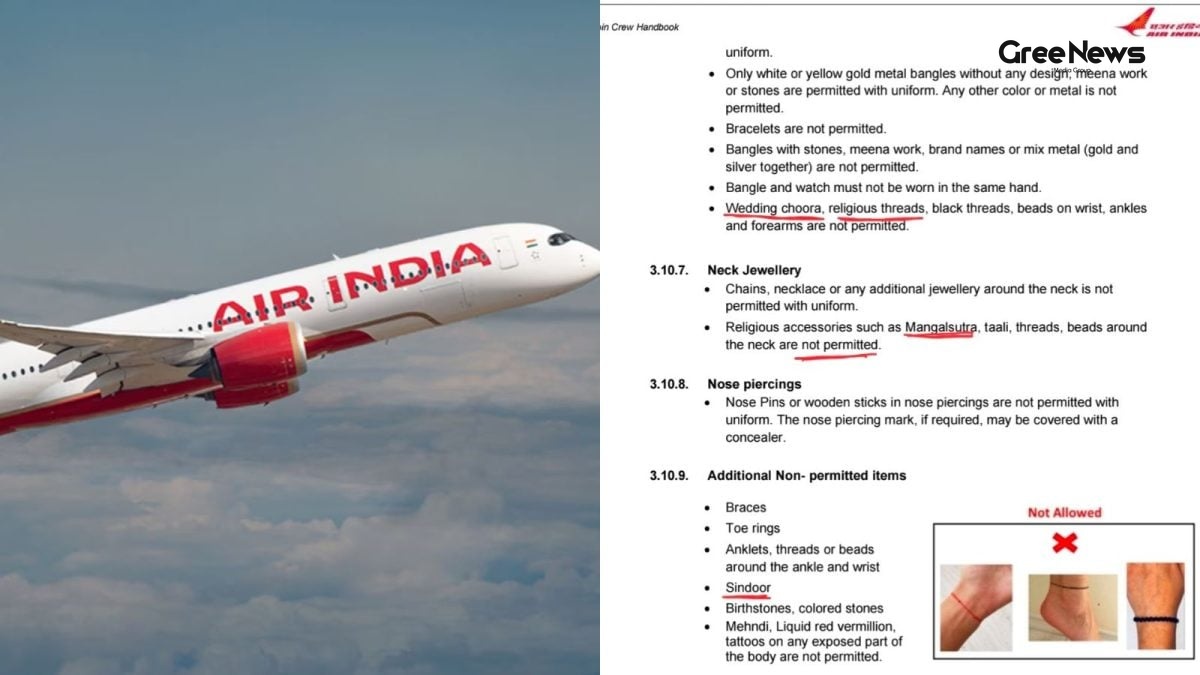
Honestly, I was still reeling from the Lenskart sutta when I saw this new buzz about Air India. You know how fast things go viral in our country one day you’re scrolling through the latest news India, the next you’re seeing every friend sharing the same screenshot. A user named Pranav Mahajan posted a handful of pages from what looks like the official Air India Cabin Crew Handbook. The pages plainly state that traditional items like Bindi, Sindoor, Tilak and even the Kalawa thread are not allowed for staff while they’re on duty. That line alone made the post explode into what’s now trending news India.
What happened next is interesting: almost every comment under the post turned into a debate about cultural identity, Western influence, and the right of a national carrier to set its own grooming standards. In most cases, people were quick to point out that this isn’t just a minor internal memo it feels like a message that says “your culture doesn’t belong in the workplace”. I could see my own aunt, who works in a bank, rolling her eyes and saying, “they’ll do the same with us next year”.
Why the handbook is under fire the core concerns
The core of the controversy stems from the clash between two ideas. On one side, Air India says its grooming guidelines aim to meet “international standards” a phrase they’ve been using since the Tata Group took over the airline. On the other side, many of us feel those standards are heavily Western‑biased and ignore India’s diverse cultural fabric. When the handbook specifically mentions Bindi, Sindoor and Tilak as prohibited, it tells a Hindu employee that symbols of their faith are optional, whereas, say, a Sikh turban or a Muslim hijab is not even mentioned. That discrepancy raised a lot of eyebrows.
People on the internet started comparing Air India’s policy with airlines from neighbouring nations. One comment summed it up well: “Pakistan’s PIA, Qatar’s Qatar Airways and Saudi Arabia’s airline all allow hijab for their crew. Why is it only Hindus who are asked to hide their Hinduness?” The sentiment of many users was that this is a classic case of Hinduphobia, and it’s not just about fashion it feels like an erasure of identity.
Personal reflections “I felt the same way”
Honestly, when I read the line about “no Bindi or Tilak on duty”, it reminded me of a time in college when my friend was asked to remove her bindi for a placement interview. She felt embarrassed and told me it was like they were asking her to drop a part of herself just to look ‘professional’. That memory resurfaced instantly, and I realized why the reaction is so strong. It’s not just about an airline; it’s about many of us who have faced similar silent pressures in corporate environments.
Even my own mother, who works in a government office, told me that in most government offices we’re allowed to wear a bindi, but it isn’t always the case in private firms. The line between ‘professional’ and ‘cultural’ keeps getting blurred, and many of us are left wondering which side we’re supposed to pick.
Social media’s role the voice of the people
The post quickly became a piece of viral news. Within hours, thousands of comments poured in, ranging from angry calls for a boycott to measured suggestions that the airline should simply amend the wording. One user wrote, “Best is to boycott people/ organisations who disrespect Hindu faith even slightly. Let their share prices crash… Tit for tat is the only way.” Another, more calm user, argued that “the government should have a process framework for corporations in India ensuring Hindu religion is protected”. The conversation became a micro‑cosm of the larger debate about religious freedom in India’s corporate world.
What’s more, the conversation spilled over to other platforms too. I saw memes, short videos, and even a few TikTok reels where people humorously tried on a bindi and pretended to be flight attendants. The whole thing turned into a trending news India story, pulling in people who might not usually follow airline policies but felt a cultural chord.
Comparisons with other airlines is India an outlier?
Many commenters pointed out that airlines in Muslim‑majority countries openly allow hijab, and carriers like Qatar Airways have even built entire branding around cultural inclusivity. They argued that this is not about “uniformity” but about respecting the cultural symbols of the crew. A thoughtful post said, “Aviation policies are heavily influenced by Western airline standards, where rings are the default marital symbol but Mangalsutra is an optional Hindu accessory.” The implication is clear the standards being followed are not truly global, but rather a narrow set of Western expectations.
In fact, I recall reading an article a few years back about how Emirates allows its crew to wear modest jewelry and still maintain a ‘professional’ look. So the claim that allowing a bindi would make the airline look unprofessional doesn’t hold much water. It simply shows that many airlines have already found ways to balance uniformity with cultural respect.
Corporate policies & the Tata Group is there a shift?
Since the Tata Group’s takeover, Air India has been undergoing massive changes new livery, revamped routes, and of course, new HR policies. The airline often justifies its grooming guidelines by saying they aim to meet “international standards”. But many of us are skeptical. Are these standards truly “international”, or are they just a veneer for a Western‑led approach that sidesteps India’s pluralism?
One of the users in the thread wrote, “These rules are typical of any corporates. And some make it pronounced, some don’t. That’s why government should intervene.” In my view, this is a call for a deeper conversation about how multinational companies adapt or fail to adapt to local cultural contexts. It’s not just about Air India; it reflects a broader pattern across many Indian corporates that have adopted global best‑practices without localizing them.
Legal angle is there any ground to stand on?
Legally speaking, India’s Constitution guarantees freedom of religion, and the Supreme Court has often ruled that religious symbols are protected unless they cause a clear nuisance. However, when it comes to private employment, the courts have sometimes upheld dress‑code policies if they serve a genuine business need. The key question here is whether banning a bindi is a “genuine business need” or simply a misapplied attempt to appear “global”. That’s why many are urging the Ministry of Labour to look into such policies and perhaps draft clearer guidelines for corporates.
From my perspective, a balanced policy could allow a small, tasteful bindi that does not interfere with safety equipment, similar to how pilots are allowed to wear small religious symbols. This would ensure both safety and cultural respect a win‑win for everyone.
Public reaction boycotts, hashtags, and petitions
Within a day, the hashtag #NoBindiNoAirIndia started trending on X and Instagram. A petition on Change.org gathered thousands of signatures demanding that Air India revamp its handbook. Even a few Bollywood celebrities joined the conversation, sharing their own experiences of being asked to hide cultural symbols at work. The buzz was so intense that mainstream news channels ran special segments, calling it “India updates that you can’t miss”.
In the comments, one user said, “If the airline truly wants to represent India, it should showcase the diversity of its people, not hide it”. Another argued, “The real issue is not about a bindi, it’s about the lack of Indian perspective in corporate policy making”. Both points struck a chord, and the discussion continued to grow, keeping the story alive in the breaking news cycle.
What does this mean for the average Indian employee?
For many of us, this episode is a reminder that corporate policies can affect personal identity in subtle ways. A simple line in a handbook may seem innocuous, but it can ripple out to affect how we present ourselves at work, how we feel about our culture, and even how we view the brand we work for. If a large, state‑owned airline can be questioned on such a small detail, it sends a signal to countless other companies that the public is watching.
Personally, I think the best outcome would be for Air India to engage with cultural experts and maybe even open a dialogue with employees. If they could issue a revised guideline that says something like “a small, safe bindi is permitted”, it would address safety concerns while respecting religious sentiment. It would also set a positive precedent for other corporates in India.
Looking ahead will Air India change its stance?
We’ll have to wait and see how Air India’s management responds. So far, they’ve been relatively quiet, probably weighing the PR fallout against internal policy enforcement. If the airline wants to maintain its brand as a proud Indian carrier, aligning its grooming standards with the cultural realities of the nation seems like a sensible move. As a frequent flyer, I’d love to see cabin crew proudly wearing a tiny, elegant bindi that reflects our heritage while they serve passengers from all over the world.
What’s clear is that this issue has become part of the larger conversation about how Indian companies navigate global standards without losing their own cultural soul. It’s a story that will likely keep resurfacing in the news, especially as more employees speak up on social platforms. One thing’s for sure the dialogue isn’t going anywhere soon.