Why I’m keeping an eye on Thousand Lights this election season
Honestly, whenever I hear the name Thousand Lights, I instantly picture the old theatre‑like area near Marina, the buzzing markets, and the narrow lanes packed with auto‑rickshaws. Growing up, my father used to take me there on weekends for a quick bite of sundal after the temple. So when the news started buzzing about the 2026 Assembly polls turning this place into a political hotspot, I just had to see it for myself.
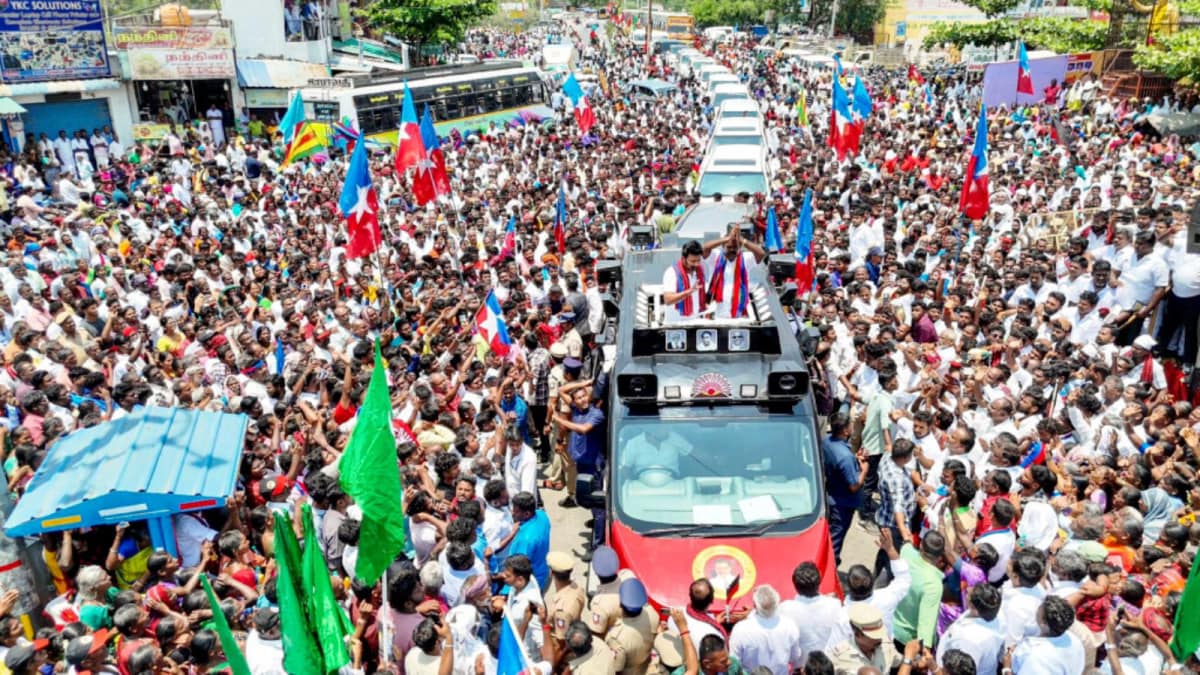
What struck me first was the sheer number of parties that have announced intentions to contest here. It feels like every political group in Tamil Nadu is treating this seat like a mini‑arena, hoping to win a slice of the urban vote‑bank that has historically leaned towards the Dravida Munnetra Kazhagam (DMK). I walked around the area, listened to conversations at tea stalls, and noted how even the shopkeepers were talking about which candidate might bring better street lighting – literally the name of the constituency! The mix of hope, skepticism, and a dash of excitement among the locals made it clear that this isn’t just another routine election; it’s a litmus test for urban politics in the state.
Historical backdrop – a DMK fortress since the ’70s
Looking back, Thousand Lights has been a DMK fortress for most of the past five decades. Since 1971, the constituency has elected a DMK candidate eight times, which is why many senior party leaders still refer to it as a “bastion”. The most iconic figure associated with this seat is, of course, Chief Minister M K Stalin, who represented Thousand Lights repeatedly between 1989 and 2006 before shifting to Kolathur. Whenever I talk to older voters, they reminisce about how M K Stalin used to hold public meetings right outside the famous Thousand Lights temple, making the name synonymous with political gatherings.
Even though the DMK’s grip has been strong, the seat has never been completely immune to surprises. For instance, the 2011 Assembly election saw the All India Anna Dravida Munnetra Kazhagam (AIADMK) break the streak by winning the seat with B. Valarmathi as its candidate. That win was considered a rare shock – a reminder that urban voters can swing if they feel ignored or if a rival campaign promises something fresh.
Who’s in the race? – A line‑up of familiar and new faces
The final list of candidates for the 2026 contest is still being confirmed, but party insiders have already hinted at who might step forward. The Dravida Munnetra Kazhagam (DMK) is expected to stick with the incumbent MLA Ezhilan Naganathan, giving him another chance to defend the seat. I’ve seen Ezhilan Naganathan’s campaign volunteers knocking on doors, handing out flyers that showcase his work on local schools and water supply schemes. Their enthusiasm makes it clear that the party believes his name still carries weight among the electorate.
On the Bharatiya Janata Party (BJP) side, the name most people in Chennai recognise is actress‑turned‑politician Khushbu Sundar. She contested the 2021 Assembly election from here and managed to finish as the runner‑up, pulling in over thirty‑nine thousand votes. Even though she didn’t win, her fan following and charismatic street‑talk sessions have kept her in the spotlight. I spotted a few youngsters near a coffee shop quoting her speeches, which shows she still resonates with a section of the urban youth.
The All India Anna Dravida Munnetra Kazhagam (AIADMK) is said to be fielding a strong organisational candidate – a name that hasn’t been revealed yet, but party sources say the person has deep roots in Chennai’s municipal administration. It feels like AIADMK is aiming to recapture the urban ground it lost a while back, and they are probably counting on local networks to mobilise voters in high‑rise apartments.
Besides the three major parties, smaller outfits are also gearing up. Naam Tamilar Katchi (NTK) announced director Kalanjiyam as its candidate, a move that surprised many because Kalanjiyam is better known for his films than for politics. Yet the NTK camp believes his popularity could translate into votes, especially among the Tamil cinema‑loving crowd. Meanwhile, Makkal Needhi Maiam (MNM) may bring back its Chennai‑focused urban agenda, hoping to attract voters who want a fresh, non‑traditional voice.
All these pieces together make the competition in Thousand Lights quite multi‑cornered, and that usually means vote‑splitting becomes a decisive factor. I’ve often heard local pundits say that even a small swing of a few thousand votes can tip the balance, which is why each party is working overtime to reach out to the diverse communities that live here.
Election numbers from recent years – what the data tells us
Let’s take a quick look at the numbers from the last three elections, because numbers can sometimes say more than slogans.
In the 2021 Assembly election, the winner was Ezhilan Naganathan (DMK) who secured 71,867 votes. The runner‑up, Khushbu Sundar (BJP), managed 39,405 votes, leaving a margin of 32,462 votes – a comfortable lead for the DMK. That result suggested that the DMK still enjoys a solid base, especially when the opposition vote is split between BJP and AIADMK.
The 2016 Assembly election was tighter. Ku. Ka. Selvam (DMK) won with 61,726 votes, while the runner‑up B. Valarmathi (AIADMK) got 52,897 votes. The margin narrowed to 8,829 votes, indicating that AIADMK was able to pull a significant chunk of the urban vote back.
Going further back to 2011, AIADMK actually managed to break the DMK’s stronghold. The winner that year was B. Valarmathi (AIADMK) with 67,522 votes, defeating Hasan Mohamed Jinnah (DMK) who earned 59,930 votes. The margin was 7,592 votes – a relatively small gap but enough to flip the seat.
These figures show a pattern: while the DMK generally leads, the AIADMK and BJP can chip away at that lead, especially when local issues like traffic, water supply, and civic amenities dominate the conversation. I’ve seen my neighbours talk about how the 2011 win gave them hope that change was possible, whereas the 2016 and 2021 results reinforced the belief that the DMK could still bounce back if it addressed the everyday problems.
Core issues shaping voter sentiment in Thousand Lights
Urban life in Chennai comes with its own set of challenges, and the people of Thousand Lights are no different. Here are the main topics that keep popping up whenever I sit down for a chat at a local tea stall.
1. Urban infrastructure and traffic
Everyone complains about the traffic jam that seems to stretch from Marina to Elliot’s Beach during peak hours. The narrow roads, the lack of proper signal synchronisation, and the ever‑growing number of two‑wheelers make commuting a nightmare. Residents say they want better urban planning, widening of key arteries, and perhaps a more efficient bus rapid transit system. I’ve even seen a few residents holding up posters demanding a dedicated lane for public transport.
2. Civic amenities – water, waste, and drainage
Water supply irregularities are a big headache. Some blocks get water for only a couple of hours a day, while others face shortages during the summer. Waste management, especially in high‑rise apartments, is another sore point – many complain about delayed garbage collection and overflowing bins. Drainage problems become glaring during the monsoon, with pockets of water turning streets into temporary ponds. Candidates are promising quick fixes, but voters remain skeptical until they see actual improvement.
3. Housing and high‑rise voter turnout
The constituency has seen a boom in high‑rise apartments over the last decade. However, voter turnout in these complexes tends to be lower than in traditional neighborhoods. Parties are now targeting residents of towers with door‑to‑door campaigns and digital outreach. I personally observed a DMK volunteer using a tablet to register voters in a 20‑storey building, hoping to push the numbers up.
4. Minority welfare and social justice
Minority communities have a strong presence in Thousand Lights. Welfare schemes, scholarships, and minority‑focused development projects are high on their agenda. The DMK often highlights its social justice narrative, while the BJP stresses its national welfare programs, and the AIADMK promises region‑specific benefits. The conversation I overheard at a local mosque emphasized the need for consistent implementation rather than just promises.
5. Anti‑incumbency versus structural advantage
Even though the DMK has a structural advantage, there’s a growing sense of anti‑incumbency, especially among younger voters who feel that promises of better roads and water have been unfulfilled. The opposition parties are banking on that sentiment, hoping that the urban dissatisfaction can outweigh the DMK’s historical strength.
The bigger picture – what Thousand Lights could mean for Chennai and Tamil Nadu
When you stitch together the candidate line‑up, the past election data, and the pressing local issues, the Thousand Lights constituency looks like a micro‑cosm of the larger urban political landscape in Tamil Nadu. If the DMK manages to hold onto the seat, it will reinforce the idea that even in highly competitive urban zones, party loyalty and a strong grassroots network can trump temporary anti‑incumbency feelings.
On the other hand, if either the Bharatiya Janata Party (BJP) with Khushbu Sundar or the All India Anna Dravida Munnetra Kazhagam (AIADMK) pulls off a surprise win, it could signal that urban voters are ready for a shift – perhaps towards candidates who promise quicker, more visible improvements in traffic management, water supply, and civic services.
Personally, walking through the bustling streets of Thousand Lights during the campaign season makes me feel that the upcoming election will be less about ideology and more about who can deliver tangible change on the ground. The conversation among residents is pragmatic – “Will the road in front of my house get repaired?” or “Will we finally get a reliable water schedule?” – rather than lofty slogans.
In most cases, the outcome here will likely influence how parties strategise in other Chennai constituencies, especially those with a mix of old market areas and modern high‑rise apartments. The ways parties engage with voters here – be it through social media, door‑to‑door canvassing, or community meetings – could become a template for the rest of the city.
All in all, Thousand Lights isn’t just a seat; it’s a barometer for urban sentiment in Tamil Nadu. The next few months will be interesting to watch, as the campaigns pick up pace and the electorate decides whether they want continuity or a fresh direction.