Baisakhi: The Harvest New Year of Punjab
Honestly, the first thing that hits you when you step into a Punjabi village during Baisakhi is the sheer amount of colour everywhere – bright turbans, fresh flowers, and the smell of ghee‑laden dishes wafting through the air. Baisakhi usually falls around mid‑April, and though it is officially a harvest festival, for Sikhs it also marks the founding of the Khalsa, so the celebrations are double‑fold. You’ll hear the dhols thumping loud enough to vibrate the walls of your house, and people dance the bhangra with such gusto that you can’t help but join in, even if you’ve never tried before.
Food is the real hero of Baisakhi. Imagine a spread of steaming hot sarson da saag, the bright Green mustard leaves cooked with butter, paired with makki di roti – corn flatbread that’s soft yet sturdy enough to scoop up the saag. There’s also chole, fried pakoras, and a mountain of fresh lassi that cools you down after all that dancing. My aunt used to tell me that the secret to a perfect Baisakhi feast is to add a pinch of garam masala at the very end; she swore it was the reason the whole neighbourhood would gather at her house just to have a bite.
Besides food and music, the religious aspect is very visible. Gurdwaras get decked out with quilts of saffron and white, and the Guru Granth Sahib is placed on a beautifully embroidered throne. Devotees line up for the ‘Akhand Path’, a continuous reading of the holy scripture that can last for days. I remember sitting on the floor, listening to the gentle recitation while the sun shone through the open doors – it felt like the whole world outside had paused for a moment.
To many, Baisakhi is also a day to wear new clothes – bright kurtas, new shoes, and the famous Punjabi jutti. You’ll see families posing for photos with their kids, the little ones wearing tiny turbans that look almost comical. There’s a certain pride in the air, a feeling that the new year is a fresh start, and the whole community shares that optimism.
Rongali Bihu: Assam’s Spring Celebration
Now, picture the tea‑grown hills of Assam waking up with a burst of music and dance – that’s Rongali Bihu for you. It usually lands in mid‑April as well, but the vibe is quite different from Baisakhi. Rongali Bihu is basically the Assamese New Year, and it’s all about welcoming spring after a long, damp winter. The first thing you notice is the rhythmic beat of the 'dhul' and 'taal' – traditional bamboo drums that sound like the heartbeat of the valley.
When I first visited Guwahati during Rongali Bihu, I was taken aback by the sea of people wearing traditional mekhela chador for women and dhoti‑kurta for men. The women’s attire is a gorgeous hand‑woven drape, often with intricate patterns that tell a story of the handloom heritage of the region. Everyone gathers in open fields or community halls to perform the Bihu dance, which is a fast‑paced, graceful movement of the hips and shoulders, accompanied by the sweet songs that talk about love, nature and the joy of new beginnings.
Food, again, takes centre stage. The dish that steals the show is ‘pitha’, a type of rice cake that can be sweet or savoury. There’s also ‘laru’, a little ball of roasted gram flour mixed with sugar and ghee that just melts in your mouth. And don’t forget the bamboo-cooked fish, which has this smoky flavour that you can’t get elsewhere. My friend handed me a plate of ‘tenga’ fish – a tangy, sour preparation – and I swear the taste reminded me of the monsoon rain that suddenly arrives after a dry spell.
What makes Rongali Bihu unique is also the way people Greet each other. Instead of a simple “Happy New Year”, they say “Xubho Bihu”, and often exchange gifts of betel leaves, small bags of rice or hand‑crafted items. There’s an unspoken sense that you’re sharing a piece of your household with your neighbour, which builds a strong community feeling.
Honestly, the best part for me was watching the sunrise on Bihu morning from a hilltop in Jorhat. The sky turned a soft orange, and the whole valley seemed to exhale a collective sigh of relief. Families would set up small altars with banana leaves and fruits, offering prayers for a good harvest. It felt like the whole state was collectively hitting the refresh button, all while the scent of fresh jasmine floated around.
Vishu: Kerala’s New Year with Kolams and Mangoes
Switching gears to the south, Vishu is the way Kerala welcomes the New Year. It’s celebrated in mid‑April as well, but the whole atmosphere is peppered with a different kind of elegance. The day starts early – you’re supposed to see the first ray of the sun, which people call ‘Ushashtakam’, and that’s considered a good omen for the year ahead. I still remember waking up at the crack of dawn in Kochi, stepping onto the balcony with a cup of hot chai, just to watch the sunrise paint the Arabian Sea gold.
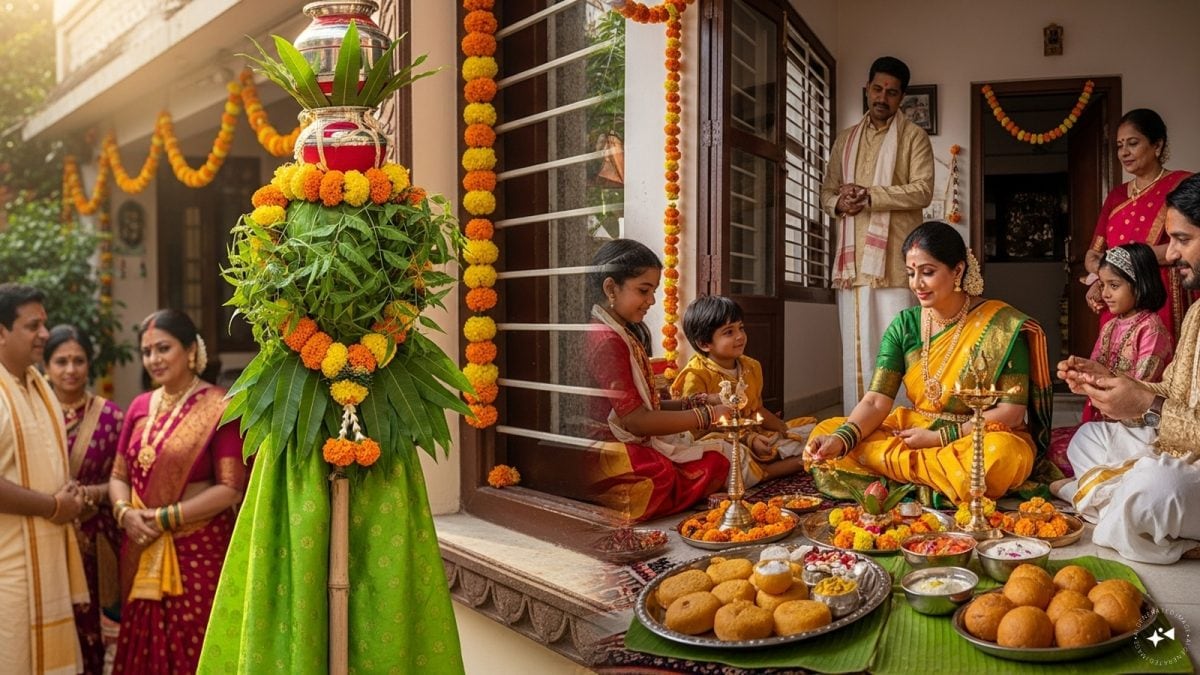
The most eye‑catching part of Vishu is the ‘Kani’, an arrangement of auspicious items placed on a banana leaf. You’ll see a colourful mix of items like a golden mango, a mirror, rice, betel leaves, a small gold or silver coin, and sometimes a lump of camphor. The idea is that when the first thing you see in the morning is this Kani, it brings prosperity and good luck. My cousin’s family would spend the night before meticulously arranging each piece, making sure the mangoes were perfectly ripe – you could taste the sweetness just by looking at them.
After the sunrise, the whole family gathers for a big Vishu feast, called ‘Sadhya’. It’s served on a banana leaf and includes an endless variety of dishes – from the tangy ‘sambar’ to the coconut‑laden ‘avial’, the crisp ‘thoran’, and the ever‑present ‘payasam’, a sweet rice pudding meant to symbolise abundance. I can still hear the clatter of banana leaves as people scoop up curries with their hands, laughing and sharing stories of the past year.
Vishu also has a playful side. People exchange gifts – often new clothes, jewellery, or even simple sweets wrapped in bright coloured paper. Kids love the ritual of “Vishu Kaasu”, where they receive money from elders as a token of good luck. It reminds me of the school days when our teachers would hand out tiny envelopes of rupees – a small gesture that made us feel valued.
Another interesting thing is the practice of playing ‘Thiruvathira’ songs and dancing the ‘Thiruvathirakali’ – a graceful group dance performed by women in circles, symbolising togetherness. Seeing the women in their traditional Kerala sari, moving synchronously, made me think of how traditions can bind an entire community, even in a time when everything else seems to change quickly.
In most cases, after the feast people take a short walk through the house, checking that each corner is clean, almost as if they are sweeping away any negativity before the new year truly begins. It’s a simple act, but it resonates deeply – it’s like a fresh start for the whole household.