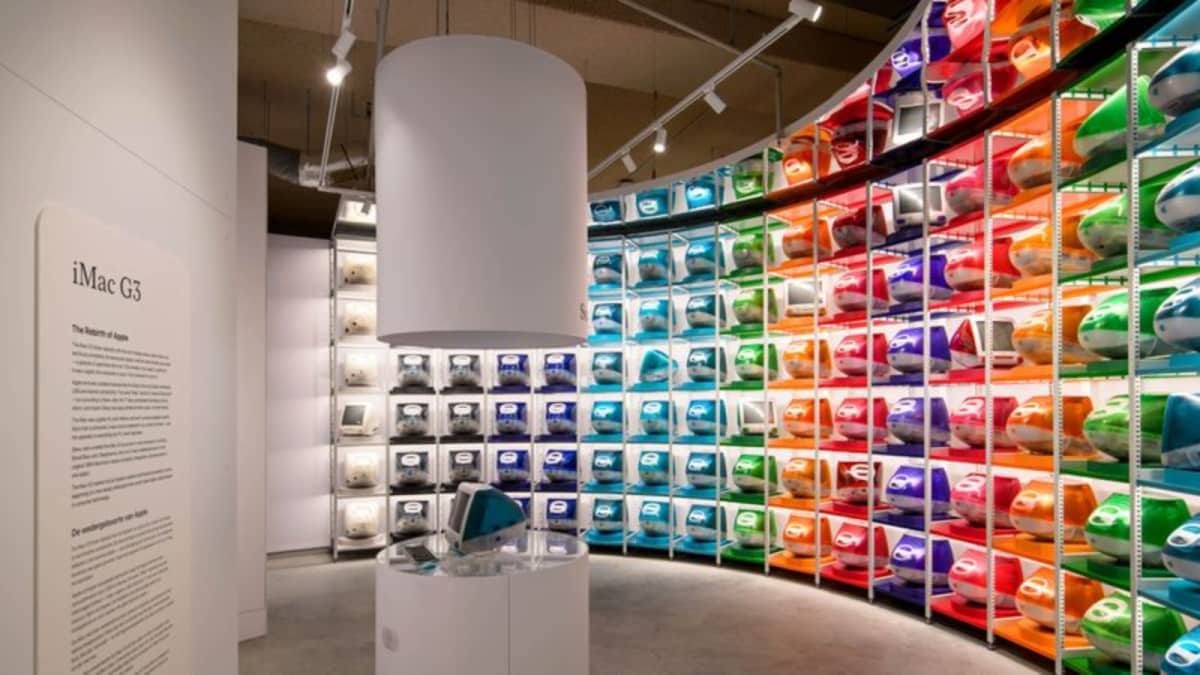
A 2000 square metre space in Utrecht brings together thousands of Apple devices, including a replica of Steve Jobs’ garage and rare early machines
Israel Iran War News Iran US Ceasefiretop videos
Swipe Left For Next Video
Why I Decided to Visit the Museum
Honestly, when I first heard that Europe’s biggest Apple museum had finally opened its doors in Utrecht, I was a mix of excited and a little bit sceptical. I mean, I’m a huge fan of Apple – I have an iPhone, I use a MacBook for work, and I still keep my old iPod hanging around for nostalgic reasons – but how much can a museum actually add to my everyday tech experience?
Well, the idea of walking into a space that actually houses machines I’ve only ever seen on YouTube made me think of those childhood trips to the science museum in Delhi, where you could touch a real satellite model and feel the weight of a roped‑up rocket. That thrill, that sense of being close to something once far away, is exactly why I booked my train ticket to the Netherlands. I wanted to see, feel and maybe even hear the faint click‑clack of an old Apple II keyboard in person.
First Impressions – The Building and the Vibe
Arriving at the museum, the first thing that struck me was the modern glass facade. It’s sleek, reflective, and at the same time, it feels welcoming – kind of like the front of a new Apple Store you see on a busy road in Mumbai, but on a much larger scale. The glass lets in a lot of natural light, and the whole place feels airy, which is a pleasant change from the cramped, air‑conditioned malls I usually explore.
Inside, the reception area had a subtle, almost theatrical lighting that made the polished wooden counters look like they belonged in a high‑end boutique rather than a museum. There were a few staff members in neat, blue‑tinged shirts, ready to guide visitors, and I could already sense that the experience here would be more than just looking at gadgets behind glass.
Stepping Into Steve Jobs’ Garage – A Replica That Feels Real
One of the highlights, as advertised, is a life‑size replica of Steve Jobs’ garage – the very place where Apple started as a modest hobby project. Walking into that recreated space felt like I was being transported to the early 1970s, except it had a very Dutch twist. The garage was furnished with a wooden workbench, old‑fashioned tools, and, of course, a vintage LISA computer perched on the table.
What made it even more interesting was the ambient sound design – faint background chatter, the hum of a refrigerator, and the occasional clink of a screwdriver. It reminded me of the small tinkering rooms we have back home in Bangalore, where engineers stay up late, soldering circuits and dreaming big. The replica didn’t just show the look of the garage; it gave you a feeling of the early hustle and grind that eventually turned into a global phenomenon.
Exploring the Timeline – From Early Machines to Modern Marvels
The museum is organized as a chronological journey, and you can literally walk through 50 years of Apple history. The first section displays early machines, like the original Apple I and Apple II, each placed on a simple pedestal with a brief description. Some of these machines are so rare that I’d only ever seen them in old magazines or on collector blogs.
A particular early Macintosh caught my eye because of its iconic “1984” ad vibe. The screen was still black, but you could see the white case and the iconic rainbow logo. I remembered my uncle in Chennai talking about how he used to borrow a friend’s Macintosh to learn basic programming back in the day. Seeing it up close made those stories feel tangible.
Mid‑Century Innovations – The iPod, iPhone and iPad Era
Moving forward, the displays shift to the iPod era, then the iPhone, and finally the iPad. What’s cool is that each device is displayed alongside a small interactive panel where you can swipe through a timeline of key features. For example, the first iPhone sits next to a screen that lets you compare its camera specs with the latest iPhone model – a visual reminder of how far technology has come.
There was also a side‑by‑side display of various iPod generations. Seeing the chunky first‑generation iPod with its iconic click wheel next to the sleek, ultra‑thin iPod Touch made me reminisce about the days when I used to save up my pocket money to buy a pair of headphones just to listen to songs on my own iPod. Those small personal moments suddenly felt like a part of a larger story that the museum is telling.
Rare and Unusual Finds – What You Don’t See on the Internet
Besides the well‑known products, the museum boasts a few truly rare pieces that most fans have never seen. One such item is a prototype of the Apple Newton – a device that pre‑dated the modern tablet but never made it big in the market. The Newton was displayed with a working demonstration that showed its handwriting recognition feature, which I found surprisingly accurate for something designed in the early ’90s.
Another unusual piece is a limited‑edition gold iMac from the early 2000s. It’s a flashy, almost flamboyant machine that looks more like a piece of art than a computer. A small plaque mentioned that it was made for a special corporate client and only a handful were ever produced. From an Indian perspective, it reminded me of the opulent, gold‑plated phones that some Bollywood stars once flaunted – a quirky blend of technology and showmanship.
Interactive Zones – Hands‑On Experience
One of the best parts of the museum is the interactive zones where you can actually use some of the older devices. There are stations with refurbished MacBooks, iMacs, and even an original Power Mac G4, all set up with vintage operating systems. I spent a good half‑hour just playing around with a classic Mac OS, listening to the startup chime – that “ding” sound still gives me goosebumps.
These hands‑on sections are not just for fun; they also serve an educational purpose. Young visitors, especially school kids, can see how user interfaces have evolved. I spotted a group of teenagers from a nearby high school, their eyes wide as they tried to navigate a vintage Mac, looking for clues on how far touchscreen technology has come. It felt like a mini‑technology workshop, right inside a museum.
Connecting the Dots – Apple’s Cultural Impact
Beyond the gadgets, the museum also highlights Apple’s cultural narrative. There’s a wall covered with magazine covers, advertisements, and even movie posters that featured Apple products. One can see how the brand has been woven into pop culture, from iconic TV shows in the 80s to modern music videos that showcase the latest iPhone.
Reading these stories, I couldn’t help but think about how Apple’s reach has been global – even here in India, many of us grew up tracking iPhone launch events live, borrowing our neighbours’ iPads for school projects, or dreaming of owning that sleek MacBook. The museum, in its subtle way, reinforces that Apple isn’t just a tech company; it’s part of a larger lifestyle that transcends borders.
Reflections – What It Means to Me
Leaving the museum, I felt a mix of nostalgia, admiration, and a pinch of inspiration. Seeing those early machines reminded me that every big idea starts small – a garage, a few friends, a lot of passion. As an Indian tech enthusiast, the story resonates deeply because many of our own startups began in makeshift labs or cramped rooms, much like Jobs’ garage.
And the sheer scale of the collection – thousands of devices spread over 2,000 square metres – made me appreciate how much history can be packed into a single space. It’s not just about the shiny new iPhones; it’s about the evolution, the missed opportunities, the bold leaps, and the continuous drive to innovate.
If you ever get the chance to visit Utrecht, consider stepping into this museum. Bring along a friend, maybe a family member, and let the journey through Apple’s past spark conversations about your own tech dreams. After all, the story of a brand is, at its core, a story of the people who believed in it.