Crew Proposes Moon Crater “Carroll” in Tribute to Artemis II Commander Reid Wiseman’s Late Wife
NASA Headquarters, Washington, D.C.During the ongoing Artemis II mission, astronaut Jeremy Hansen approached NASA representative Kelsey Young with a heartfelt request that extended far beyond the technical objectives of the flight. The request centered on a symbolic gesture that would anchor the personal lives of the crew members to the celestial body they are traveling toward.
Jeremy Hansen explained to Kelsey Young that the Artemis II crew members had observed several distinct formations on the Moon’s near side. Those formations, visible both with the naked eye and through the magnified view of a long lens, had become focal points for the crew’s contemplation of lunar geography. The crew expressed a collective desire to assign names to those visible features, thereby creating a bridge between human experience and the stark, silent landscape of the Moon.
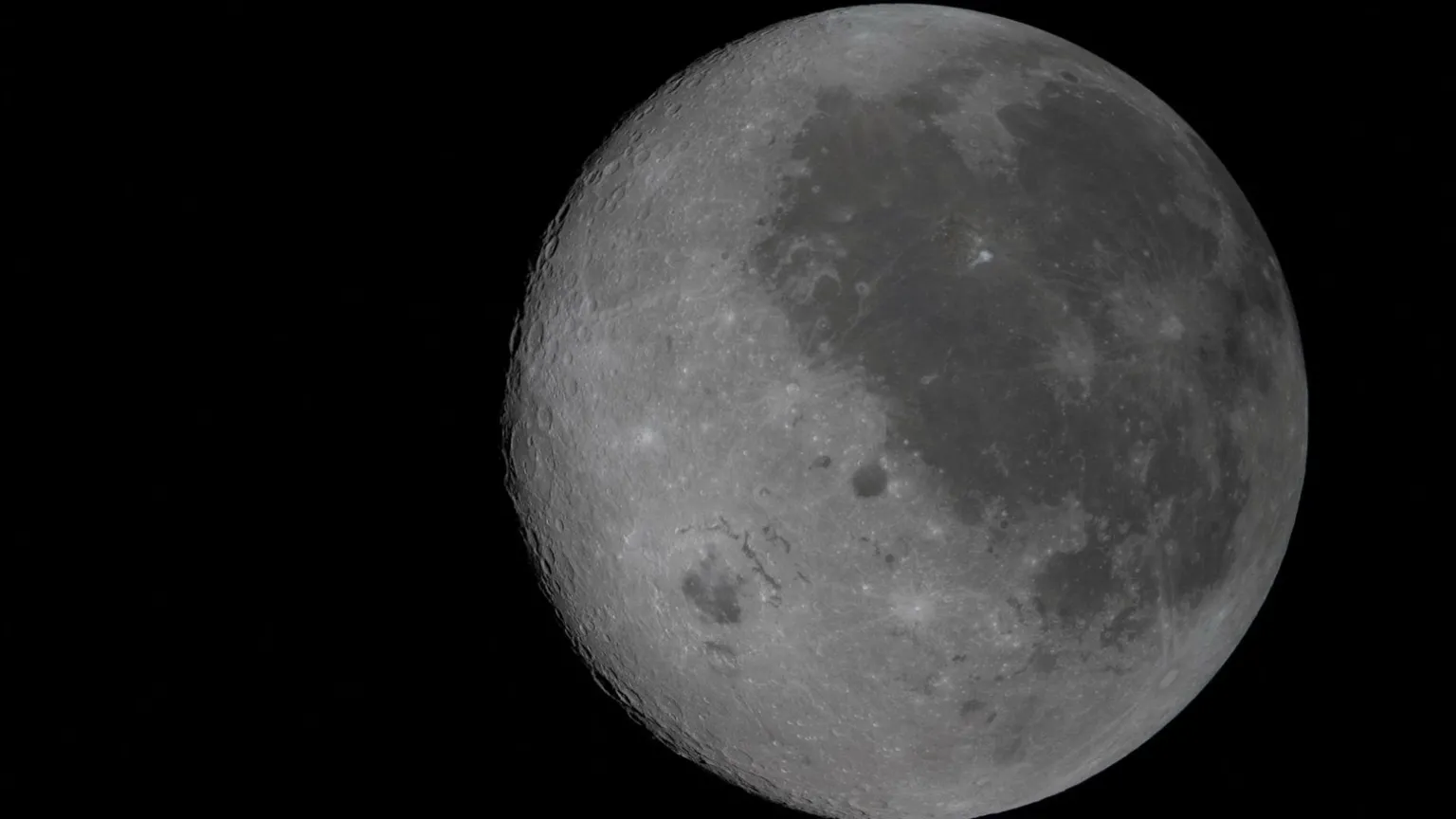
One particular bright spot near the Moon’s surface captured the attention of the entire crew. The illumination of that spot, accentuated by the angle of sunlight, gave it a striking appearance against the surrounding mare. Recognizing both its visual prominence and its symbolic potential, the crew convened to consider a name that would carry lasting emotional weight.
After deliberation, the crew arrived at the name “Carroll.” The name was chosen deliberately to honor Artemis II Commander Reid Wiseman’s late wife, Carroll Taylor Wiseman. Carroll Taylor Wiseman had passed away in 2020 after a battle with cancer, succumbing at the age of forty‑six. By proposing the name “Carroll,” the crew intended to create a permanent, celestial memorial that would endure long after the mission’s completion.
Context of the Proposal
The Artemis II mission represents the first crewed flight of NASA’s Orion spacecraft on a trajectory that will take astronauts around the Moon and back to Earth. While the primary objectives of Artemis II revolve around testing spacecraft systems, validating life‑support capabilities, and gathering critical data for future lunar landings, the mission also offers a unique platform for humanism on a planetary scale.
Astronaut Jeremy Hansen, a seasoned flight participant, noted that the visual experience of seeing familiar lunar landmarks from orbit often prompts reflective thoughts among crew members. In the microgravity environment of space, the crew’s perspective on Earth and the Moon blends scientific rigor with personal introspection.
Within this framework, Kelsey Young, serving as NASA’s point of contact for crew‑related cultural initiatives, received the proposal from the Artemis II crew. The request aligned with NASA’s broader tradition of recognizing human stories through the naming of extraterrestrial features, a practice that has historically linked exploration with remembrance.
Significance of the Name “Carroll”
Carroll Taylor Wiseman’s life, though tragically cut short by illness, left an indelible impact on those close to her, including Reid Wiseman. The proposed lunar crater name “Carroll” serves as a conduit for celebrating her memory within the context of humanity’s next great leap beyond Earth. By inscribing her name onto the Moon’s surface, the crew seeks to transform a personal loss into a universal symbol of love, resilience, and the enduring connection between people and the cosmos.
The decision to honor Carroll Taylor Wiseman in this manner reflects a deep respect for the individual behind the name. It acknowledges not only her role as a spouse of a commanding astronaut but also as a person whose life story resonates with the themes of perseverance and hope that underpin the Artemis program.
Moreover, the act of naming a lunar feature after a private individual underscores NASA’s willingness to embrace narratives that extend beyond pure scientific achievement. It reaffirms the agency’s recognition that space exploration is fundamentally a human enterprise, shaped by the aspirations, relationships, and memories of the individuals who undertake it.
Procedural Aspects of Lunar Naming
Although the Artemis II crew has voiced the desire to name the bright lunar spot “Carroll,” official lunar nomenclature is governed by the International Astronomical Union (IAU). The IAU maintains a rigorous process for approving new names, ensuring that each designation aligns with established guidelines and avoids duplication.
Kelsey Young, as NASA’s liaison, is tasked with forwarding the crew’s proposal through the appropriate channels. The submission will include justification for the name, its connection to the feature’s visibility, and the personal significance attached to Carroll Taylor Wiseman. The IAU’s Committee on Small Body Nomenclature then reviews the proposal, assesses its compliance, and ultimately decides whether to endorse “Carroll” as the formal name of the crater.
Should the IAU approve the designation, “Carroll” will appear in official lunar maps, scientific literature, and future mission planning documents. The name will thereby become an enduring part of humanity’s cartographic record of the Moon, cementing Carroll Taylor Wiseman’s legacy in a literal sense that reaches across the vacuum of space.
Emotional Resonance for the Crew
Beyond the procedural details, the proposal to name a lunar crater “Carroll” carries profound emotional weight for each crew member. For Reid Wiseman, the commander of Artemis II, the possibility of seeing his late wife’s name etched onto the lunar surface provides a tangible connection between personal grief and the larger narrative of exploration. Each time the crew observes the bright spot, they will be reminded of the love that sparked the naming idea and the shared journey of loss, memory, and hope.
Astronaut Jeremy Hansen’s role in conveying the crew’s intention highlights the collaborative spirit within the Orion cabin. Jeremy Hansen’s articulation of the request to Kelsey Young demonstrates a willingness to advocate for the personal narratives that enrich the mission’s cultural dimensions. In a similarly supportive capacity, NASA representative Kelsey Young has shown openness to advancing the crew’s heartfelt wish, reinforcing the agency’s commitment to honoring the human stories intertwined with each flight.
The emotional resonance is further amplified by the visual nature of the feature itself. A bright lunar crater, visible to the naked eye from orbit, becomes a beacon of remembrance. Each glint of sunlight across the crater’s rim can be interpreted as a metaphorical reflection of Carroll Taylor Wiseman’s enduring presence in the lives of those who loved her.
Broader Implications for Astronautic Culture
The Artemis II crew’s naming initiative illustrates a growing trend within astronautic culture: the integration of personal tribute with scientific discovery. While the primary goals of space missions remain grounded in engineering, physics, and exploration, the human element—comprising personal histories, familial bonds, and individual aspirations—continues to shape the narrative surrounding each launch.
By seeking to embed a personal name within lunar cartography, the crew adds a layer of meaning that transcends the usual technical milestones. The act of naming becomes a form of storytelling, connecting future generations of space travelers, scholars, and the public to a deeply personal anecdote that unfolded thousands of miles above Earth’s surface.
In the long view, such gestures may influence how future missions approach the inclusion of cultural and emotional considerations. The precedent set by a request to name a crater “Carroll” could encourage other crews to propose commemorations that honor loved ones, historic events, or social milestones, thereby enriching the tapestry of human presence beyond our planet.
Conclusion
In summary, the Artemis II crew, led by astronaut Jeremy Hansen’s communication with NASA liaison Kelsey Young, has put forward a deeply personal proposal to name a bright lunar crater “Carroll.” The suggested name pays tribute to Artemis II Commander Reid Wiseman’s late wife, Carroll Taylor Wiseman, who died of cancer in 2020 at the age of forty‑six. The request intertwines the technical achievement of orbiting the Moon with a timeless human gesture of remembrance.
Should the International Astronomical Union endorse the name, “Carroll” will join the official roster of lunar features, ensuring that Carroll Taylor Wiseman’s memory endures on the very body that has inspired humanity for millennia. This act of naming not only honors an individual life but also reinforces the broader principle that space exploration, at its core, remains a profoundly human endeavor.