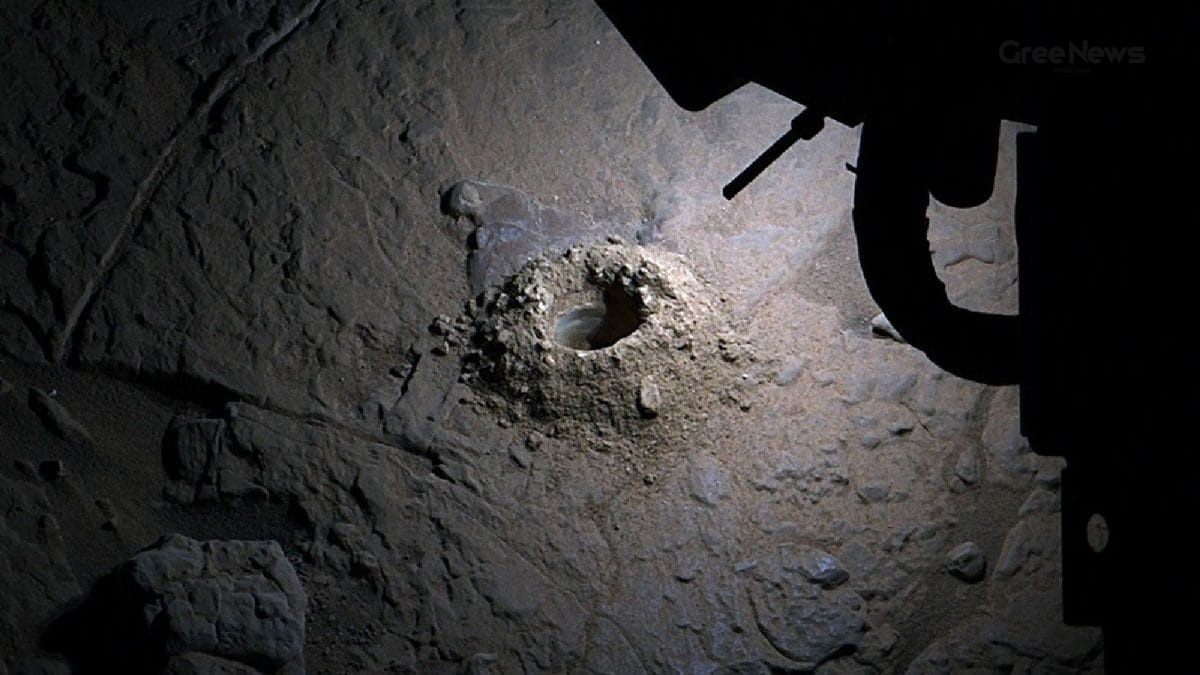
One of the detected compounds was benzothiophene, a sulfur‑bearing organic molecule often associated with meteorites.
Okay, let me tell you how I stumbled upon this fascinating piece of news while scrolling through the latest news India feeds. I was actually watching a short video about the rover’s daily trek when the headline popped up: Curiosity has found ancient organics on Mars. My first reaction? "Is it life? We can’t tell," as the scientists themselves put it. It felt like a scene straight out of a sci‑fi movie, but this is real, breaking news that’s got the whole country talking.
NASA’s Curiosity rover has been roaming the dusty plains of Gale crater ever since it touched down more than a decade ago. Its mission was to sniff out clues about the planet’s habitability, and now it seems to have struck gold or rather, molecules that could be the building blocks of life. The rover detected a suite of organic molecules, including several that we’ve never seen on Mars before. Imagine the excitement in the control rooms when those data packets arrived it was truly a viral news moment for the scientific community and every space‑enthusiast following the updates.
How Curiosity Does Its Detective Work
Before diving into the chemistry, let me give you a quick picture of how Curiosity works. The rover is equipped with a sophisticated set of tools, the star of which is the Sample Analysis at Mars (SAM) instrument. SAM can heat rock samples and analyse the gases released a bit like how we stir a pot to see what aromas rise. In most of the days you see it crawling on rugged terrain, it’s actually busy chewing up rocks, grinding them into powder, and then sending them through its onboard laboratory.
It’s pretty impressive when you think about the conditions out there. Nights on Mars can dip below minus 100 deGrees Celsius, and the thin atmosphere offers barely any protection from intense solar radiation. Yet those very extremes may have helped lock the organic signatures deep underground, preserving them for billions of years. In most cases, that’s exactly the kind of environment that researchers hope will keep any potential biosignatures safe from degradation.
The Discovery: Seven Molecules, Five New to Mars
The team behind the analysis announced that they identified seven distinct organic molecules in a dried lakebed that once existed near the equator of Gale crater. Five of these compounds were completely novel for Mars a fact that sparked a flurry of discussion on social platforms, turning the story into what you could call trending news India style. Among these, benzothiophene stood out. This sulfur‑bearing molecule is usually linked to meteorites, which makes it intriguing because it hints at a possible delivery of organics from space, much like how Earth may have received its first chemical gifts.
Another molecule they found contained nitrogen a key ingredient for DNA and proteins. Although the researchers are quick to point out that this is merely a building block and not a sign of life, it does add a layer of excitement. Prof Amy Williams, one of the voices in the study, compared the findings to “the bricks of a house, not the house itself.” In other words, we have the raw material, but we’re still missing the blueprint.
While the rover continues its journey up the slopes of Mount Sharp, the data keep rolling in, and each new batch seems to raise more questions. You know, it feels a bit like peeling an onion you pull one layer away and discover there’s another layer underneath, sometimes with a stronger smell!
What the Molecules Could Mean Scientists Weigh In
Let’s talk about the experts. Prof Andrew Coates from University College London’s Mullard Space Science Laboratory, who wasn’t directly involved in the study, said something that stuck with me: “It had all the conditions for life to start there when life was starting on Earth.” He’s basically saying that if Earth managed to kick‑start life under its early conditions, there’s no reason Mars shouldn’t have had a chance too.
On the other hand, the cautionary voices remind us not to jump to conclusions. The presence of benzothiophene, for instance, could simply be the result of meteorite impacts delivering these organics, a scenario that mirrors how early Earth may have been seeded. In practical terms, that means the molecules could be “exogenous” they arrived from outside or they could have been synthesized locally by geological processes.
Prof Amy Williams added that while the nitrogen‑containing structure looks like a precursor to DNA chemistry, it’s still a long way from proving any biological activity. The difference between a brick and a house, as she puts it, is massive. Still, the fact that such complex organics survived for eons under Mars’ harsh conditions is a testament to how resilient chemistry can be.
Why This Feels Like a Big Deal for India
Now, you might wonder why a discovery on a distant planet matters to us here in India. First, space news has always captured the imagination of our youth think of the excitement when ISRO’s Chandrayaan and Mangalyaan missions lifted off. This latest breakthrough is part of that broader narrative, feeding the curiosity of millions who follow breaking news about the cosmos.
Moreover, the story underscores the global nature of scientific collaboration. While NASA’s rover did the field work, scientists from around the world including a few Indian researchers who contributed to the data analysis are part of the conversation. It’s part of a larger India updates ecosystem where our own planetary scientists stay tuned to the latest developments and apply the lessons to future Indian missions.
People on the streets of Delhi and Mumbai, students in Bangalore, and even commuters in Chennai are chatting about the findings over chai. It’s turned into a bit of a viral news moment, showing that when we talk about the cosmos, the conversation is truly trending news India style.
Future Missions What’s Next?
The excitement doesn’t stop here. The European Space Agency is gearing up for the Rosalind Franklin rover, set to launch in a few years. Its purpose? To drill even deeper up to two metres and retrieve samples that could hold more definitive clues about past life. The anticipation is palpable. I remember a friend from my university saying, “If Curiosity has nailed down the organics, Franklin might just hit the jackpot.”
Back home, ISRO is also charting its own path, with plans for a Mars Sample Return mission that would bring rocks back to Earth for detailed lab work. Imagine the headlines: “India’s Mars Sample Return confirms life‑building chemistry!” That would be the kind of breaking news that keeps the entire country glued to its screens.
In the meantime, the data from Curiosity keep streaming, and each new analysis adds a piece to the puzzle. What happened next is interesting the rover’s scientists are now focused on mapping where exactly these organics are concentrated, hoping to find patterns that might point to ancient hydrothermal systems, which on Earth are prime habitats for early life.
Personal Reflections Why I’m Hooked
Honestly, reading about the rover’s findings reminded me of the first time I looked through a telescope as a kid. Back then, the night sky seemed endless, and the idea that another world could have once harbored the ingredients for life felt like a fairy‑tale. But here we are, decades later, with a robot sending back real chemical signatures from a planet millions of kilometres away.
It also makes me think about how fragile yet resilient life can be. If a tiny rover can uncover these trace molecules after surviving harsh Martian winters, maybe there’s hope for life in some form on other extreme places on Earth too high‑altitude deserts, deep‐sea vents, or even the frozen tundras of Ladakh.
Many people were surprised by this discovery because it shifts the conversation from “Does Mars have water?” to “Does Mars have the chemistry that could support life?” That’s a subtle but powerful change in perspective, and it’s the kind of discussion that fuels both scientific inquiry and popular imagination.
Wrapping Up The Ongoing Quest
To sum it up, the Curiosity rover’s detection of ancient organic molecules adds a fresh chapter to the story of Mars exploration. While we still can’t declare that life once existed there, the presence of benzothiophene, nitrogen‑rich organics, and several new compounds tells us that the raw ingredients have been hanging around for billions of years, possibly waiting for the right conditions to spark something more.
For all of us following the latest news India feeds, it’s a reminder that the universe still holds many mysteries, and each mission brings us a step closer to answering them. As the rover continues its trek up Mount Sharp, and as new missions prepare for launch, I’ll be right here, scrolling through the updates, sharing what I find, and hoping that one day we’ll get a clearer answer to that age‑old question: “Is it life? We can’t tell… yet.”