The everyday story behind the buzz
Honestly, I never imagined I’d be writing a piece like this when I first started using ChatGPT to draft a quick reply to my aunt’s WhatsApp message. It felt like a tiny miracle I typed a few words, the AI suggested a polite, perfectly‑phrased response, and I hit send. That moment was the beginning of what researchers now call “cognitive offloading”. It’s the same feeling many of us get when we ask Siri to set an alarm or let Google find the nearest chai stall. But what happened next is interesting: I started noticing that I was less inclined to think of the right words myself. The AI was doing the heavy lifting, and my brain was quietly stepping back.
This anecdote may sound like a simple personal habit, but it ties directly into what’s being discussed as breaking news in the tech community across India. The phenomenon of ‘digital amnesia’ forgetting facts because we trust a device to store them has been known for years. Yet AI pushes this a notch higher. Instead of just storing a phone number, it now synthesises entire paragraphs, solves math problems, and even writes poetry. In most cases, we accept it with a nod, not realizing the hidden cost behind the convenience.
What researchers are saying a peek into the labs
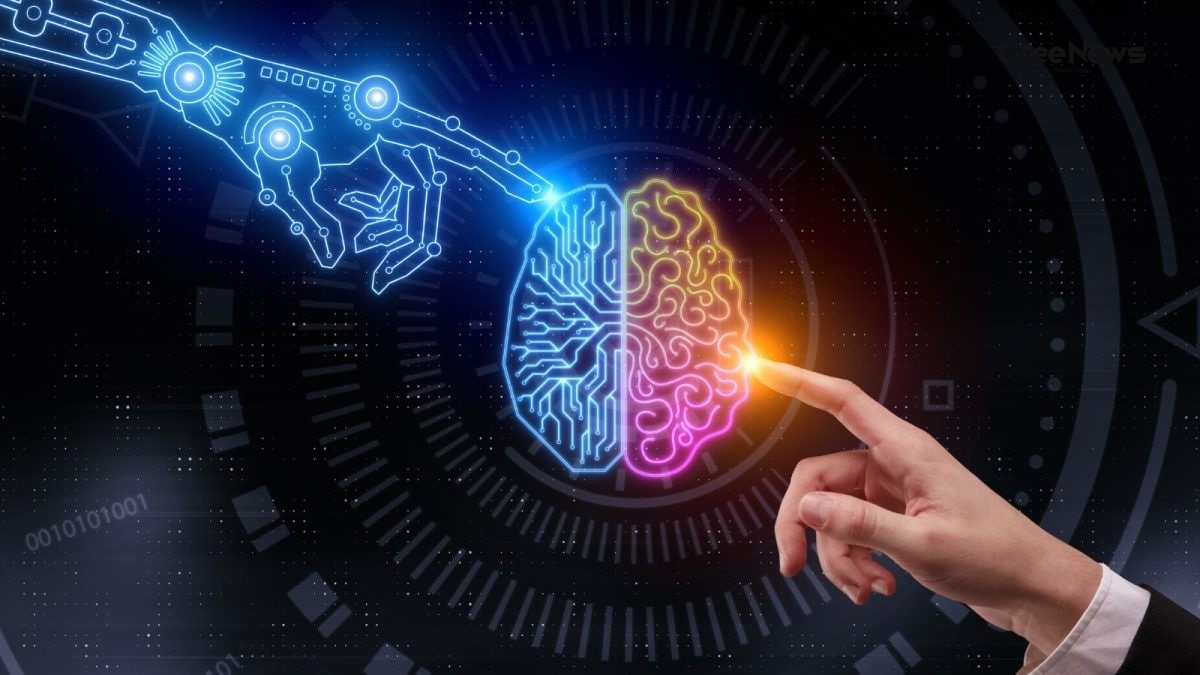
Nataliya Kosmyna of the MIT Media Lab, speaking with the Global Research on Emerging Technologies (Gree), sounded the alarm about this new kind of mental outsourcing. She describes it as “cognitive offloading”, the process where we hand over thinking, memory and problem‑solving to external algorithms. According to her, the brain is a muscle and like any muscle, if you stop using it, it starts to atrophy.
She pointed out that while AI’s convenience is undeniable, neuroscientific evidence is mounting that our reliance on it may be reshaping the brain’s plasticity. In simple words, the more we let machines do the thinking, the less our own neural pathways get a workout. This is not just a futuristic fear; it’s already showing up in everyday habits, especially among the younger crowd scrolling through Instagram and checking AI‑powered news feeds. The trending news India reads today often highlights AI’s role, but rarely does it dive into these subtle psychological shifts.
Now, you might wonder is this just hype? Many people were surprised by the depth of the studies. Kosmyna’s team ran experiments where participants solved puzzles with and without AI assistance. The results were clear: those who relied on the AI performed worse on follow‑up tasks that required the same mental muscles. The brain, it seems, adapts to the convenience and gradually reduces the resources it allocates to those tasks.
Are we losing our unique voice? The linguistic ‘homogenisation’ debate
One of the most visible impacts of this offloading, as the research shows, is a subtle narrowing of our expression. Think about the last time you asked an AI to draft an email. Chances are the tone was polite, the vocabulary quite generic essentially the “average” that the model predicts. This is what Kosmyna and her colleagues call linguistic homogenisation. The AI, trained on massive datasets, tends to favour safe, standardised language because that’s what most people accept.
In India, where English blends with regional idioms, this can be a real loss. Imagine a Mumbai‑born writer who loves sprinkling ‘kya mast’ or a Bengali friend who tosses in ‘bujhte parcho?’ all those colorful bits may fade if AI keeps suggesting the same neutral phrasing. Over time, that feedback loop can discard nuanced metaphors, complex sentence structures and local flavour, replacing them with algorithmic efficiency.
Language isn’t just a communication tool; it shapes how we think. When we simplify our vocabulary, we limit the mental tools available for conceptualising new ideas. The “corrosive effect” is that we lose the cognitive friction that little mental push‑and‑pull we feel when hunting for the perfect word. And that friction, believe it or not, is what fuels deep learning and creativity.
Memory and focus under the AI spell
Remember the old story of people forgetting phone numbers because they could be stored in a contact list? That’s ‘digital amnesia’ and it’s been well‑documented. AI, however, adds a twist. It doesn’t just store data it analyses, connects dots, and spits out a ready‑made answer. When we bypass that mental gymnastics, we stop engaging the hippocampus and prefrontal cortex in the ways needed to build strong, long‑term neural pathways.
Research suggests a “use it or lose it” scenario. If you stop practising mental arithmetic because an AI calculator does it for you, your brain’s number‑crunching circuits receive less blood flow and metabolic support. The same goes for spatial navigation relying on GPS for every short trip can make your internal map‑making skills wobble.
What’s scary is that these changes happen gradually. Many people were surprised when they found themselves struggling to recall a simple fact that used to be on the tip of their tongue. That’s the brain reallocating its resources, focusing more on interacting with the AI and less on the task itself.
Keeping our cognitive agency alive
So, what can we do? The key is to treat AI like a “bicycle for the mind” rather than a replacement for it. That means using the technology to amplify our output, but still doing the core thinking ourselves. In practical terms, I’ve started a habit of writing short notes by hand every evening, just to keep the pen‑in‑hand feeling alive.
Another tip from experts: set “AI‑free” time slots in your day. During those periods, read a physical newspaper (yes, the printed one you can pick up from a local kiosk), solve a crossword puzzle, or simply try to remember a grocery list without looking at your phone. These analogue exercises keep the hippocampus active and maintain the brain’s plasticity.In most cases, it’s not about rejecting AI outright. It’s about being aware of the trade‑offs. If we stay mindful, we can enjoy the speed and convenience of AI while preserving our unique Indian linguistic flair, sharp memory, and creative spark.
One final thought that stuck with me: the real danger isn’t that machines will start thinking like us. It’s that we might start thinking and speaking like machines. By staying alert, we can make sure the AI tools we love don’t end up stealing our mental muscles.
Putting it all together a personal roadmap
Here’s a quick checklist, based on what I’ve learned and the research I mentioned, that you can try today:
- When you need to draft a quick message, let the AI suggest a draft, but then edit it yourself. Add a local phrase or two.
- Reserve at least 30 minutes a day for “offline” brain work reading a book, solving a sudoku, or simply memorising a short poem.
- Check your usage of voice assistants. If you’re asking them to set reminders for everything, try writing down one or two things manually.
- Engage in conversations that require you to think on your feet debates with friends, storytelling sessions with family, or even a friendly argument about cricket scores.
- Remember to pause before hitting “Enter” on AI‑generated content. Ask yourself if you understand the logic behind it.
These small steps can help balance the scales. After all, in a country where we pride ourselves on juggling many languages and diverse cultures, why let a machine flatten that richness?
So, next time you’re tempted to let AI do all the heavy lifting, think of it as a helpful assistant, not a replacement. Let’s keep our brains active, our tongues witty, and our memory sharp because that’s what truly makes us human.