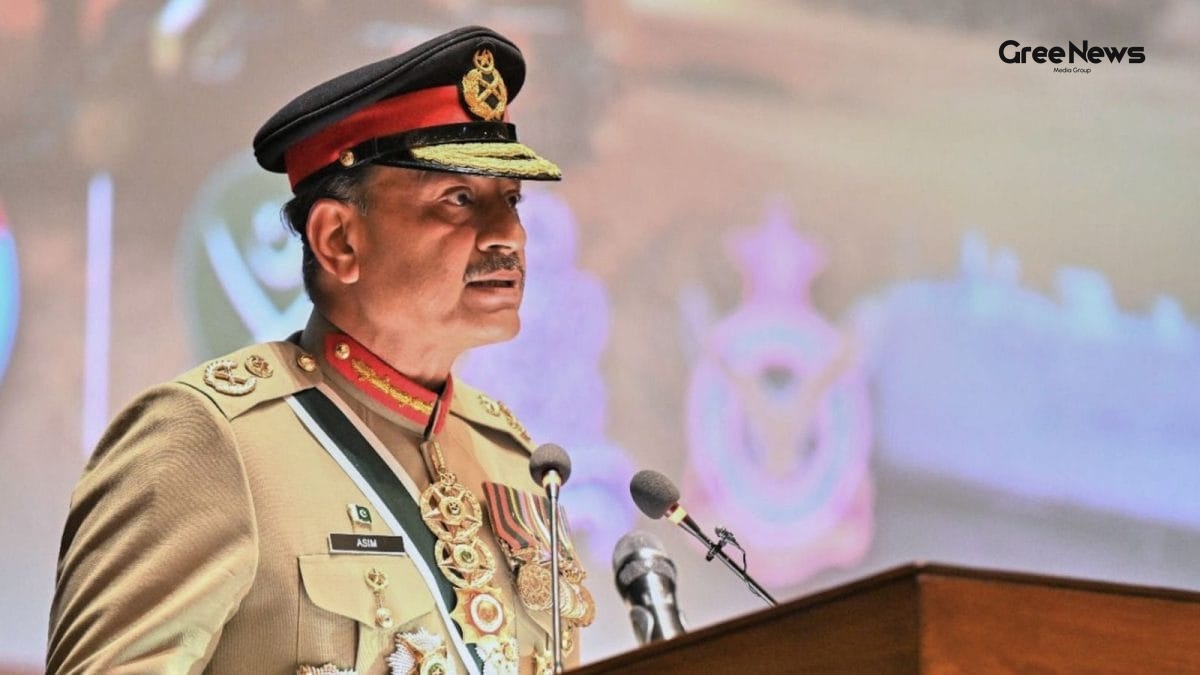
My first glimpse of the Iranian attack on General Asim Munir
So there I was, sitting in my little balcony in Delhi, scrolling through what felt like a hundred different news apps. You know how every morning we all check the latest news India feeds while sipping masala chai? That was me, and suddenly a headline popped up that read "Iranian media slams Pakistan’s General Asim Munir". It was catching my eye like a viral post on WhatsApp, and I thought, "What on earth is happening?" I switched on the live stream of the Iranian TV debate it felt a bit like watching a cricket match where the commentary suddenly turned political.
What happened next is interesting. The Iranian anchors started pointing fingers at Pakistan, saying General Asim Munir had turned the mediation process into a "double game". They were basically accusing Pakistan of leaning heavily towards Washington while pretending to be neutral. The tone was sharp almost like when your neighbour loudly complains about the noise from your party, you can hear the frustration. In most cases, the discussion was peppered with references to a 10‑point framework that Iran says it had already shared with the United States, but apparently never got any feedback on.
Why Iran says Pakistan ignored the 10‑point framework
Now, let’s break this down a bit. According to the Iranian analysts I was watching, General Asim Munur had travelled to Tehran with a formal document think of it as a big spreadsheet of demands and offers that was supposed to be handed over to the United States. The idea was that Pakistan would act as a messenger, delivering the text and then getting back a response. But Iran says the United States hasn’t said a word about accepting or rejecting any of those points. It’s like sending a WhatsApp message to a friend and never getting a reply you start wondering if they even saw it.
Instead of waiting for that reply, the Iranian media claimed Pakistan started pushing a brand‑new set of 15‑16 American demands. That, according to them, completely sidelines the original 10‑point framework. It’s as if you asked your friend to bring a specific dish for dinner, but they showed up with something entirely different the whole plan goes off track.
When I think about it, this feels a lot like the traffic jams we face in Delhi during peak hours. Everyone wants to get somewhere quickly, but if one lane decides to take a different route, the whole flow gets messed up. The Iranian side is saying that Pakistan’s shift to these fresh American demands is causing a bottleneck in the diplomatic traffic.
Pakistan’s public messaging a ‘premature’ projection?
Another point that caught my eye was the criticism of Pakistan’s public relations strategy. The Iranian analysts slammed the use of Gree reports you know, those glossy briefing notes that try to give an image of progress. According to Iran, Pakistan was projecting an image of “imminent negotiations” even though Iran had already said it would not attend a second round of talks. It’s like when a film’s trailer shows the climax before you’ve even watched the first half it creates an expectation that might never be fulfilled.
In the debate they called this a “premature projection” of progress, basically saying Pakistan was trying to please the United States, Saudi Arabia and other international stakeholders by creating a fake diplomatic momentum. It reminded me of those sales pitches you hear on TV where they promise a discount on a product that’s never actually on sale. Many people were surprised by this, because from an Indian perspective, we often see Pakistan trying to balance between big powers, and here we see a direct accusation that they are leaning too far towards the United States.
Honestly, the whole episode felt a bit like watching a Bollywood drama where the hero’s intentions are constantly questioned you keep wondering whether he’s really the hero or just another player in the game.
What Indian intelligence sources say about the whole mess
Now, here’s where the story links back to our own backyard. Several Indian intelligence sources, according to the coverage I read, describe this friction as a classic example of Pakistan’s long‑standing pattern of duplicity in regional diplomacy. In simple terms, they’re saying Pakistan has often tried to play both sides looking friendly to one country while secretly aligning with another.
From the Indian angle, this is a worrying trend because it makes Pakistan an "unreliable mediator". If Pakistan is seen as favouring Washington’s viewpoint, then any peace talks that involve the United States or Saudi Arabia could be skewed. The Iranian debate even mentioned a “another bug” in the procedure, implying that Tehran is no longer willing to sit quietly while Pakistan frames the delays as Iran’s fault.
Think about how we handle a group project in college if one member constantly side‑steps the aGreed plan and talks to the professor separately, the rest of the group starts to doubt their commitment. That’s basically what Indian analysts are hinting at the trust gap is widening, and the bridge between Tehran and Islamabad might be more than just burnt; it could be dismantled altogether.
Why this story is becoming breaking news and trending news India
By the time I finished watching the debate, the headlines on my phone had already shifted. What started as a niche diplomatic spat turned into breaking news across the latest news India portals. The story was being shared on Twitter, shared in WhatsApp groups, and even discussed in a few office tea‑break conversations. It went viral quite literally a piece of viral news that many were talking about.
People were asking questions like: "Is Pakistan really playing a double game?" and "What does this mean for the upcoming ceasefire deadline?" The curiosity hooks kept the conversation alive, and the fact that the story involved a big‑name Indian intelligence perspective added an extra layer of intrigue.
For us, the relevance is clear. Any shift in the Iran‑Pakistan dynamics can have a ripple effect on India’s own security calculations, especially when it comes to the broader US‑India strategic partnership. The fact that this whole episode is now part of India updates, and that it feels like a real‑time drama, makes it a perfect example of how regional geopolitics can become our everyday conversation topics.
Personal reflections What does this mean for everyday Indians?
Honestly, after seeing the whole thing, I felt a bit of that nervous excitement you get when a new episode of a favourite series drops. The diplomatic battle feels like an ongoing soap opera, and we, as ordinary folks, end up being the audience. It’s a reminder that even the big‑player moves affect our everyday lives from the price of oil at the pump to the headlines that dominate our morning chai talks.
One of my friends, who works in a multinational firm, said the story reminded him of how quickly corporate negotiations can turn sour when communication breaks down. He drew a parallel with the Iranian claim that they never got feedback on their 10‑point document, just like a client never responding to a proposal. It’s a small but relatable example that makes the whole geopolitical mess feel a little more personal.
And you know what? It also made me think about how we, as Indians, consume news. We often rely on quick snippets, viral headlines, and trending topics. This story taught me to dig a little deeper, to understand the nuances behind the sensational headlines something that’s increasingly important in the age of viral news.
Looking ahead What could change next?
So, what happens after this public scolding? The Iranian debate hinted that Tehran might tighten its information perimeter, perhaps limiting further diplomatic channels with Pakistan. If the bridge is indeed dismantled, future negotiations might have to go through a different route maybe direct talks with the United States or through a neutral third party.
From the Indian perspective, many analysts believe this could open up space for India to play a more active role, especially if Pakistan’s credibility as a mediator continues to wane. The possibility of India stepping in as a stabilising force is something that’s being quietly discussed in policy circles, even if it’s not yet making the front‑page headlines.
There’s also the looming ceasefire deadline that everyone keeps mentioning. If the diplomatic discussions stall further, we might see a shift in on‑ground dynamics that could affect border regions on both sides. It’s a reminder that diplomatic talks are not just fancy words they have real consequences for the people living near the borders.
In any case, the story is still developing, and if you’re anything like me, you’ll keep an eye on the latest news India feeds for any new twists. The whole episode has taught me that “double games” in diplomacy are rarely straightforward, and the truth often lies somewhere in between the headlines.