Hamilton’s Ferrari Reset: Scuderia To Poach Lewis’ New Race Engineer From McLaren - Report
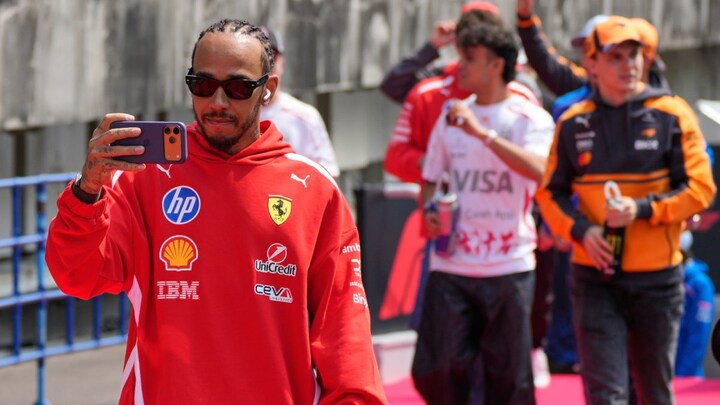
Lewis Hamilton’s Ferrari reset gathers pace Cedric Michel‑Grosjean nears a move to become his race engineer, potentially stepping in from the next race weekend.
After a prolonged period of speculation, the narrative surrounding the race engineer role for Lewis Hamilton at Ferrari is finally solidifying into a recognizable shape. The turmoil that followed the departure of Riccardo Adami at the conclusion of the previous season left a conspicuous void within the driver’s support structure. Ferrari, keen to restore stability for the seven‑time world champion, has been methodically evaluating candidates who can fulfill the demanding responsibilities of the position over the long term.
On the circuit, performance indicators for Lewis Hamilton have shown a decisive upward trajectory this year. Early results feature a podium finish accompanied by a position within the top four of the drivers’ championship – a notable reversal from the previous campaign, during which Lewis Hamilton trailed teammate Charles Leclerc by a substantial margin. This resurgence has lent confidence to the notion that the mechanical and strategic foundations of the car are beginning to align with Lewis Hamilton’s driving style.
Behind the scenes, Ferrari’s internal restructuring has proceeded with measured discretion. The organization has emphasized the importance of securing a race engineer who can synchronize with Lewis Hamilton’s analytical approach, translate data into actionable strategy, and nurture the driver’s feedback loop across practice, qualifying, and race conditions. The selection process has therefore gravitated toward individuals with a proven track record of extracting performance in high‑pressure environments.
In the interim, Carlo Santi has assumed the responsibilities of race engineer for Lewis Hamilton. Carlo Santi’s involvement on the pit wall, most prominently at the opening round in Bahrain, initially suggested a temporary arrangement to bridge the gap left by Riccardo Adami. Nevertheless, Ferrari has communicated that Carlo Santi’s assignment is presently secure, affirming that the Scuderia values continuity while the search for a permanent solution proceeds.
Within the paddock, however, a different name has begun to circulate with increasing frequency: Cedric Michel‑Grosjean. The discourse surrounding Cedric Michel‑Grosjean has evolved from speculative rumour to a more concrete expectation of appointment, as multiple sources have highlighted the timing of a prospective transition to Ferrari.
Who Is Cedric Michel‑Grosjean?
The individual identified as Cedric Michel‑Grosjean is a French engineer whose most recent professional experience involved a senior technical role at McLaren. In that capacity, Cedric Michel‑Grosjean served as Lead Trackside Performance Engineer, a position that entailed direct oversight of car set‑up, telemetry interpretation, and driver development throughout race weekends and test sessions.
After concluding his tenure with McLaren at the end of the previous season, Cedric Michel‑Grosjean publicly announced a career pause through a professional networking platform. The phrasing of this announcement—specifically the reference to a “career break”—prompted journalists and analysts to speculate about a forthcoming alignment with the Scuderia. The speculation intensified when the renowned motorsport publication Motorsport.com reported that the conditions surrounding the break align with a potential recruitment timeline for Ferrari.
According to the same source, a five‑week interval in the racing calendar—created by the removal of two Grand Prix events—offers a suitable window for Cedric Michel‑Grosjean to transition into the race engineer role for Lewis Hamilton. The expectation is that Cedric Michel‑Grosjean will commence official duties at the next race weekend, thereby providing immediate support for the driver and the team as the season progresses.
Contributions at McLaren
During the period of involvement at McLaren, Cedric Michel‑Grosjean played a pivotal role in unlocking the performance envelope of Oscar Piastri. The responsibilities assumed by Cedric Michel‑Grosjean included fine‑tuning aerodynamic configurations, optimizing power‑unit maps, and integrating driver feedback into iterative upgrades. This hands‑on approach contributed directly to the achievement of multiple race victories for Oscar Piastri, as well as the securing of consecutive Constructors’ Championships for McLaren.
The methodology employed by Cedric Michel‑Grosjean combined rigorous data analysis with a collaborative mindset that emphasized rapid response to evolving track conditions. The success narrative that unfolded during the most recent championship season underscored the engineer’s capacity to manage complex performance variables and deliver consistent results under the scrutiny of a global audience.
For Ferrari and Lewis Hamilton, the prospect of replicating such an approach is highly attractive. The strategic objective is to translate the engineering excellence demonstrated at McLaren into a framework that aligns with the distinctive characteristics of the Ferrari chassis, power unit, and the particular driving style of Lewis Hamilton.
Strategic Implications for Ferrari
The integration of Cedric Michel‑Grosjean within the Scuderia’s operational hierarchy could signal a shift toward a more data‑centric philosophy. By leveraging the analytical rigor that defined the recent McLaren campaigns, Ferrari aims to refine race‑day decision‑making processes, enhance pit‑stop strategies, and optimize tyre management across a variety of circuits.
Lewis Hamilton’s proficiency in extracting nuanced information from telemetry feeds is well documented. Pairing that skill set with the systematic performance‑extraction techniques championed by Cedric Michel‑Grosjean may produce a synergistic effect, potentially accelerating the rate at which Ferrari resolves lingering handling issues and improves straight‑line speed.
From an organizational perspective, the appointment of a race engineer with a proven success record also carries motivational benefits for the broader technical staff. The demonstration that Ferrari is committed to recruiting top talent signals a culture of continuous improvement, which can cascade into heightened morale and a shared sense of purpose among engineers, mechanics, and strategists.
Potential Challenges and Adaptation
While the credentials of Cedric Michel‑Grosjean suggest a strong fit, the transition from McLaren’s operational environment to Ferrari’s distinct engineering ecosystem inevitably presents challenges. Differences in chassis design philosophy, power‑unit architecture, and team communication protocols require a period of acclimatization.
Lewis Hamilton’s established rapport with Carlo Santi, who currently occupies the race engineer seat, will need to be renegotiated as the driver‑engineer relationship evolves. Maintaining continuity in strategic planning during the handover phase is essential to avoid disruptions to on‑track performance.
Furthermore, the Scuderia’s internal development pathways must accommodate the infusion of new methodologies without undermining existing processes that have yielded recent progress. Balancing innovation with stability will be a defining factor in the success of the upcoming collaboration.
Looking Ahead
As the season advances, attention will focus on the practical outcomes of the partnership between Lewis Hamilton and Cedric Michel‑Grosjean. Early race weekends will provide a testing ground for the combined efficacy of driver insight and engineering execution. The ability of the duo to translate strategic plans into tangible lap‑time gains will be closely monitored by competitors, analysts, and fans alike.
Should the collaboration deliver the anticipated performance uplift, Ferrari could re‑establish itself as a dominant force capable of contending for both drivers’ and constructors’ championships. Conversely, any setbacks will prompt a reassessment of the engineering hierarchy and may lead to further adjustments within the Scuderia’s technical department.
In sum, the evolution of Lewis Hamilton’s race engineer situation epitomizes the broader narrative of Ferrari’s renaissance. The strategic recruitment of Cedric Michel‑Grosjean, coupled with the driver’s renewed competitiveness, encapsulates a concerted effort to rebuild a winning formula that aligns engineering excellence with driver mastery.