Why I Started Paying Attention to the Wage Issue
Honestly, I was just scrolling through my phone on a lazy morning, catching up on the latest news India, when a headline about a huge wage hike in Haryana jumped out at me. It said the state had raised the minimum wage by 35 per cent. I thought, "Nice for the workers there, but how will that affect us?" Little did I know that a single announcement would spark a chain reaction that would later dominate my news feed, break the usual routine at my office, and even make me cancel a weekend trip.
What started as a welfare‑oriented move in Haryana turned into a series of protests that spread like wildfire across the industrial belt from Noida to Bhiwadi, with ripples felt as far as Surat. The whole saga became the kind of breaking news that kept everyone talking, sharing videos and memes, and wondering what would happen next.
What Haryana Decided
Haryana announced that the minimum wage for unskilled workers would jump from about Rs 11,200 to over Rs 15,200 per month. The same percentage increase was applied to semi‑skilled and skilled categories. On paper it looked like a solid step toward protecting workers against rising living costs. The announcement was in line with recent labour‑code reforms and was meant to be a straightforward, positive step.
But the industrial corridors of northern India are tightly knit. Factories often belong to the same corporate groups, and workers move freely between Haryana, Noida and Gurgaon‑Manesar zones. When the numbers were released, they quickly became a benchmark for anyone watching their paychecks.
Workers Start Comparing Paychecks
In Noida, many of the factories share the same owners as those in Haryana. Workers started chatting during tea breaks, comparing salary slips. It didn’t take long before they realised that two people doing the exact same job for the same employer were earning different amounts simply because they were located in a different state.
That simple observation sparked a question that kept echoing through the canteens: if the work is identical, why does the pay differ? The conversation moved from casual curiosity to a demand for equal pay for equal work.
This was the real turning point what began as a routine grievance about wages had now grown into a battle for pay parity across state lines. The feeling spread fast, fueled by social media chats and a few viral videos that showed workers holding up their pay slips side by side.
The First Signs of Unrest in Noida
Within a couple of weeks after Haryana’s announcement, a small group of workers in Noida decided to stage a peaceful sit‑in outside their factory gate. They carried placards reading “Equal Pay for Equal Work” and shouted slogans that soon caught the attention of nearby colleagues. The momentum built quickly by the next day, more workers from neighbouring units had joined, and the protest grew from a handful to a few hundred.
At this stage, the gathering was still largely calm. I remember seeing a video where workers were chanting, “Hum sab ek hain, ek hi mazdoori!” (We are all the same, same wages!). It felt like the kind of trending news India story that would stay online for a day or two and then fade away.
But the calm didn’t last long.
How the Noida Protest Turned Violent
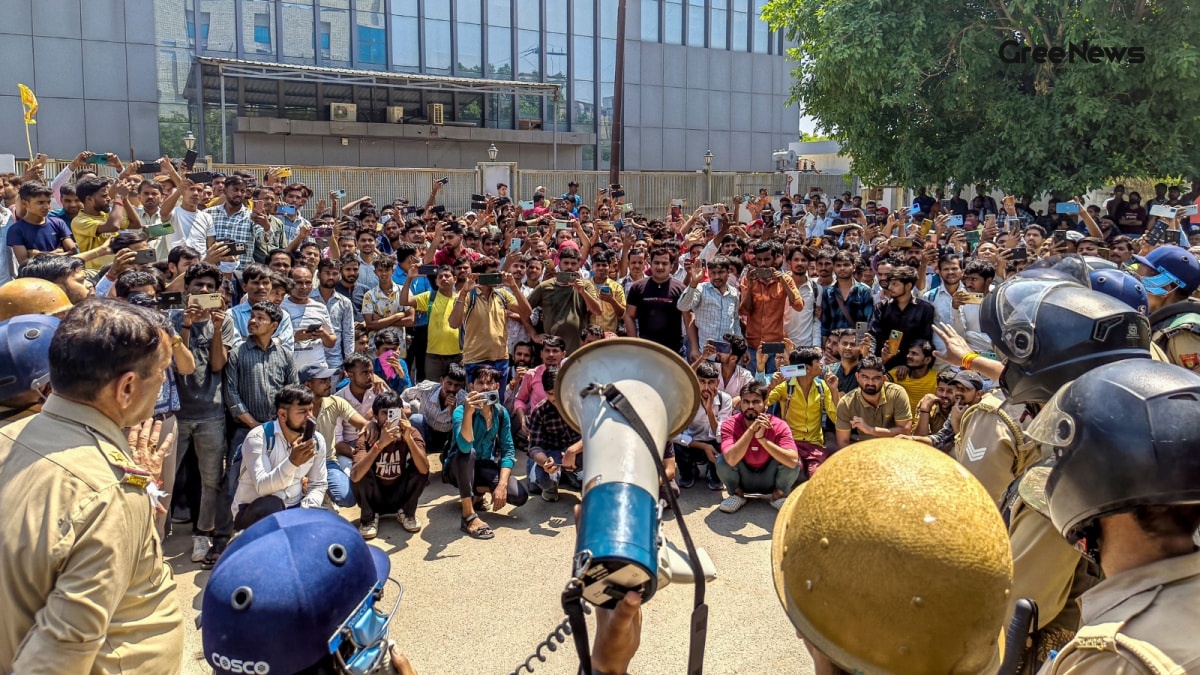
Within a few days, the protest turned chaotic. Some workers started blocking the main roads that connect Noida to Delhi, causing massive traffic snarls. Police arrived to disperse the crowd, and the atmosphere turned tense. Stones were thrown, a few vehicles were set on fire, and tear‑gas canisters filled the air.
The situation escalated to the point where around two hundred people were taken into custody. Reports suggested that “external elements” might have tried to hijack the movement, spreading misinformation through bot‑driven messages. Whether that was true or just a way for authorities to explain the sudden surge in violence, the fact remained the protest had spiralled into a serious law‑and‑order challenge.
What caught people’s attention most was how quickly a wage grievance turned into a full‑blown public disruption, dominating the breaking news cycle for the next few days.
What the Workers Were Actually Demanding
Beyond the glaring pay gap, the workers had a longer list of demands. They wanted fixed working hours, proper overtime compensation, a guaranteed weekly holiday, and stronger job security. The rising cost of fuel, food and other essentials had put a lot of strain on families for years, and the wage hike in Haryana acted like a spark that ignited pent‑up frustration.
These demands resonated with many other labour groups across the country, which is why the story quickly became viral news, with people sharing memes, news clips and even personal anecdotes about their own struggles at work.
The Fire Spreads to Bhiwadi
While Noida was still dealing with the fallout, a similar wave of unrest began in Bhiwadi, Rajasthan. Hundreds of workers gathered outside a factory unit, initially chanting peacefully for the same pay parity. When police attempted to clear the area, tensions rose again and a blockade formed, halting traffic for several hours.
Although the Bhiwadi protest did not reach the same level of violence as Noida, the fact that the same issues were popping up in a different state was alarming. It showed that the wage‑gap problem was not confined to a single region; it was a broader, national concern exactly the kind of trending news India that keeps the readership hooked.
Early Unrest in Surat A Clue in Hindsight
Rewinding a bit, I remembered reading about earlier unrest in Surat’s Hazira industrial belt. Contract workers there had been protesting low wages, long hours, and rising living costs. One of those protests turned violent, with stone‑pelting and clashes with police.
At the time, it seemed like an isolated incident. But looking back, those early signs in Surat were a clear warning that the labour frustration was building across industrial hubs. The events in Surat fed into the larger narrative that later unfolded in Noiva and Bhiwadi, making the whole saga feel like a chain of connected episodes rather than random flashpoints.
Uttar Pradesh’s Quick Reaction
Faced with ongoing violence, Uttar Pradesh moved fast. Within a day of the Noida clashes, the state announced a revision of its minimum wages, making the changes retroactive to the start of the month. The new minimum for unskilled workers rose to roughly Rs 13,690 per month, with similar hikes for semi‑skilled and skilled categories.
The move was clearly aimed at calming the situation and narrowing the wage gap with Haryana. However, even after the announcement, stone‑throwing continued in sectors like 70 and 80 of Noida. Police reported that while the crowd’s intensity had reduced, sporadic incidents of unrest still popped up, especially in residential zones like Cleo County, Sector 121.
What was interesting to me, as an observer, was how quickly the news spread online. Domestic workers, including maids from housing societies, began joining the protests, demanding higher wages and better living conditions. The whole episode became a classic case of how social‑media‑driven information can turn a local labour issue into a nationwide movement.
Why This Whole Episode Matters
For anyone following the latest news India, the Haryana wage hike story is more than just a labour dispute. It highlights how interconnected our industrial regions have become, how a policy decision in one state can ripple across borders, and how quickly ordinary workers can turn into a powerful force when they feel unfairly treated.
The episode also underscores the role of digital platforms in shaping public opinion. Whether it was a viral video of workers comparing pay slips, a meme about “equal pay for equal work”, or a rumor about external elements stirring trouble, each piece contributed to the story’s virality. That’s why this piece continues to dominate breaking news feeds and trending news India sections across websites.
In short, the wage hike in Haryana sparked a cascade of protests that went far beyond the original intent, reminding policymakers that any change in labour policy must consider the broader ecosystem. It’s a lesson that I think many of us especially those of us following India updates daily will keep in mind for a long time.