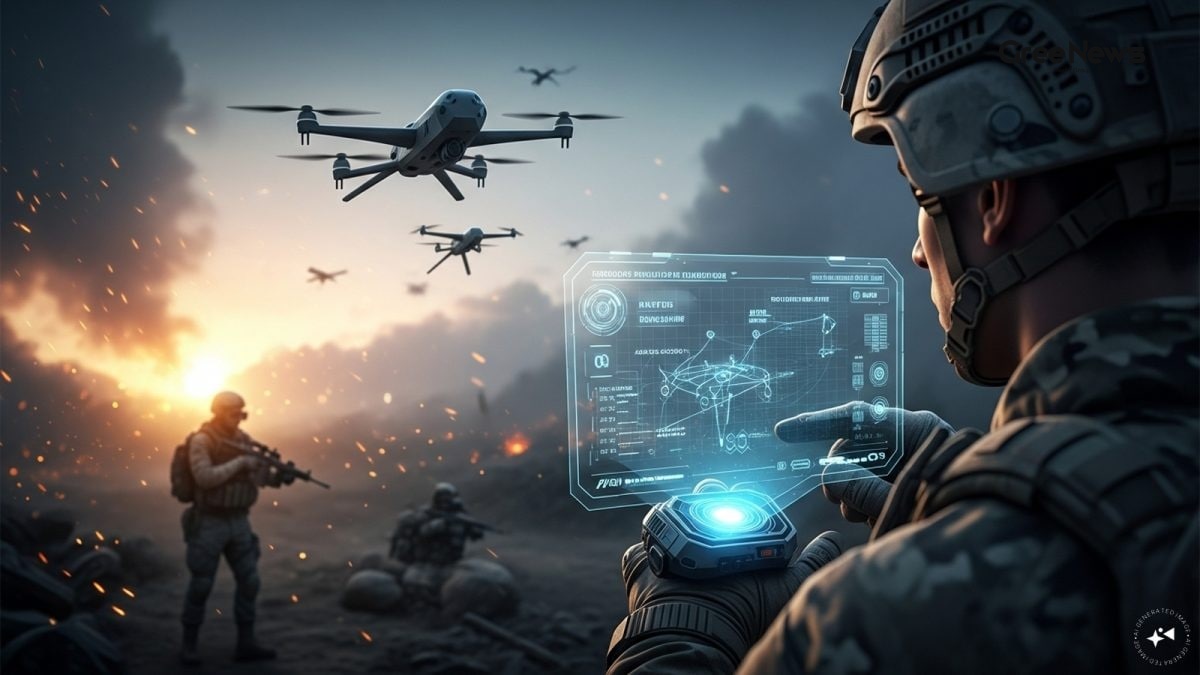
What exactly is Project Maven?
When I first came across the term “Project Maven” in a piece of breaking news, I thought it was just another tech buzzword. Actually, it is a specific AI programme that the US military has been developing to help analyse the huge streams of video and sensor data that modern sensors collect on the ground. In most cases, the idea is simple: feed the AI massive amounts of imagery, let it spot patterns, and then hand the most relevant clips over to human analysts. This speeds up the whole process of identifying potential targets, something that used to take hours or even days.
The core promise of Project Maven is that it can sift through petabytes of data in a blink, pin‑point objects of interest, and flag them for further review. It’s like having a very fast‑thinking assistant who never sleeps. Because of that, the programme has become a frequent subject of trending news India, especially as more countries discuss adopting similar AI tools for defence.
Why AI matters on the battlefield
Think about a typical Indian traffic jam on a rainy morning you see a lot of chaos, but you can’t process every little detail at once. In a combat zone, the chaos is exponential. Sensors, drones, satellites all of them pump out streams of visual data that far exceed what any human can watch in real time. Project Maven’s AI layers act like that one friend who can instantly spot the red car in a sea of traffic and point it out. The AI does the heavy lifting, so the soldier or commander can focus on the decision‑making part.
This caught people’s attention when I watched a viral news clip showing a drone’s footage being analysed in seconds. The clip cut to a screen where the AI highlighted a moving vehicle and labelled it as a possible target. It was a clear illustration of how quickly the technology can turn raw data into actionable insight, making it a crucial asset for any modern force.
My first encounter with the story
Honestly, I was scrolling through my phone early one morning when a headline about “AI tools like Project Maven reshaping warfare” popped up in the latest news India feed. I clicked, and the article was short, just a couple of lines, but it mentioned the AI’s ability to analyse vast data quickly and help militaries spot targets faster. That tiny snippet sparked a whole chain of thoughts. I started wondering how such technology would fit into our own defence scenarios, and I even asked a few friends on WhatsApp the conversation quickly turned into a lively debate about ethics, speed, and the future of combat.
What happened next is interesting: a few of my colleagues, who work in the telecom sector, shared their own observations about AI’s growing presence in Indian defence contracts. Their input added depth to the discussion, showing that the buzz wasn’t limited to a single news portal but was spreading across professional circles, making it a genuine piece of trending news India.
How the technology works explained simply
At its heart, Project Maven relies on machine‑learning models trained on massive datasets of images and video. The AI learns to recognise objects like tanks, aircraft, or even people and can assign a confidence score to each detection. When a new video feed comes in, the system runs it through those models and instantly highlights anything that matches its learned patterns.
In most cases, the AI doesn’t make the final call. It’s more like a very diligent scout that brings you the most relevant clues. Human analysts still review the flagged sections, confirm whether the target is valid, and then decide on the next steps. This partnership between AI and human judgement is what makes the whole system faster yet still reliable.
Implications for Indian defence
When I think about India’s own defence landscape, the potential impact of a tool like Project Maven feels huge. Our armed forces handle huge swathes of terrain, from the deserts of Rajasthan to the mountains in the north. Deploying AI that can cut down the time needed to analyse surveillance footage could boost operational efficiency considerably. It could also help in disaster response situations, where quick situational awareness is vital.
That said, many people were surprised by the speed at which such technology could be integrated. The conversation in defence forums often revolves around procurement timelines, data security, and the need for indigenous AI solutions that align with India updates. While the US has been ahead in rolling out Project Maven, the buzz in Indian circles suggests we are watching closely and may soon explore our own versions.
Public reaction the buzz on social media
After the initial report, I noticed a surge of posts on Twitter, Reddit India, and even on local news portals. People were sharing short video clips, memes, and personal opinions about AI in wars. The phrase “AI warfare” became a trending hashtag for a couple of days, and many friends asked whether such tech could ever be misused.
What many didn’t expect was the sheer volume of practical questions “Can this reduce civilian casualties?” “Will it make wars shorter?” that started popping up. The dialogue was a mix of curiosity and genuine concern, reflecting how viral news can shape public perception instantly.
Potential benefits and concerns
On the benefit side, the most obvious advantage is speed. In fast‑moving combat, seconds matter, and AI can shave off precious time. Faster target identification could also mean more precise strikes, potentially limiting collateral damage if used responsibly. Moreover, the technology could free up human analysts to focus on higher‑level strategic planning rather than rote data sifting.
On the flip side, concerns abound. There’s the risk of over‑reliance on algorithms that might misclassify objects, especially in complex environments like crowded urban settings. Ethical debates also surface who is accountable if an AI‑driven strike goes wrong? Many Indian commentators stress the need for clear rules of engagement and robust oversight before any large‑scale deployment.
Comparisons with other AI projects
While Project Maven is probably the most talked‑about AI programme in the defence world right now, it isn’t the only one. Other nations have been testing similar systems that combine computer vision with autonomous decision‑making. In my chats with a few defence analysts, they pointed out that the real differentiator for Project Maven is its integration with existing US intelligence pipelines, which makes it incredibly efficient.
That said, the core idea remains the same across the board: use AI to turn raw sensor data into meaningful insights. It’s a pattern we see not just in the US but also in some European initiatives, and it’s becoming part of the global conversation on modern warfare.
Future outlook what could happen next
Looking ahead, I can’t help but wonder how this technology will evolve. Will we see AI systems that not only identify targets but also propose tactical options? Some experts hint at that possibility, but it also raises the stakes for ethical governance.
In our own context, the buzz around Project Maven has already sparked interest among Indian startups focusing on AI for defence. With the right policy framework, we might see home‑grown versions that respect local operational nuances while leveraging the speed benefits of AI.
What happened next is interesting few months after the initial breaking news, a few Indian think‑tanks released white papers discussing the need for an “AI‑first” approach in national security. Those documents echo many of the points raised in the original story, indicating that the discussion is moving from hype to concrete planning.
Conclusion personal reflections
All in all, Project Maven feels like a glimpse into the future of combat, where machines handle the grunt work of data analysis, and humans focus on judgment. My take, after following the story through various channels of the latest news India, is that the technology holds great promise but must be guided by strong ethical standards.
Many people were surprised by how quickly AI is moving from labs into real‑world battlefields. As we keep seeing these developments in trending news India, it’s clear that the conversation isn’t just about technology it’s about how societies choose to wield that power. Whether we end up adopting similar AI tools in our own armed forces or not, the discussion itself is shaping public understanding of modern warfare, and that is, in my opinion, a crucial step forward.