Why I decided to look beyond the hustle of Seoul
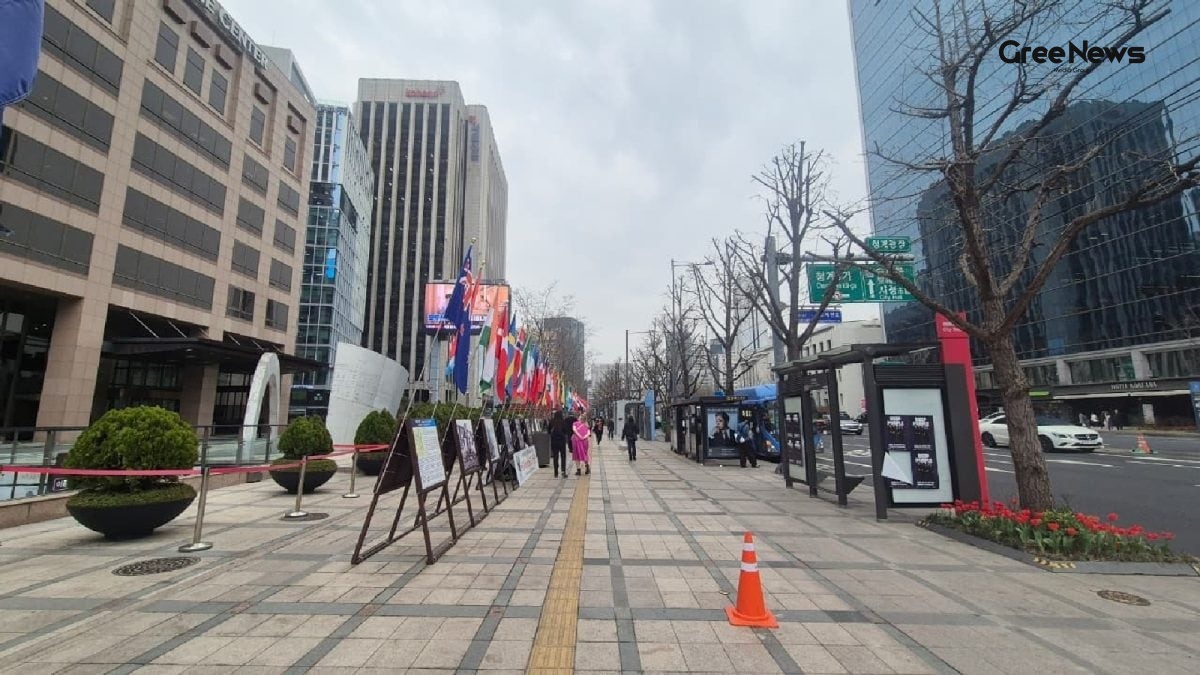
When I first heard about the World Journalists Conference (WJC), I thought it would be another round of glossy press releases. But stepping out of Seoul’s rapid‑fire traffic, I quickly realized there was a whole rhythm to South Korea that only shows up when you drift into its satellite towns. In Seoul, everything moves at light speed – you feel it in the crowded subways and the endless construction cranes. In Incheon, the city feels like a precision‑engineered airport hub. Suwon gives off a vibe of well‑structured tech parks, while Siheung whispers about quiet expansion, as if the country is always a step ahead of itself.
It felt like a breaking news story unfolding right before my eyes – a narrative that most people only skim on the headlines of the latest news India sources pull up. Over the next few days, more than forty journalists from over thirty countries roamed these streets, but it was a chance conversation on a coffee break that gave me the real meat of the story.
Meeting Kim Sang‑wook – the man who lives South Korea’s growth story
Kim Sang‑wook, a senior member of South Korea’s National Assembly, wasn’t just a speaker on a podium; he was a walking, talking timeline of the nation’s rise. When I asked him why South Korea could punch above its weight, his eyes lit up and he started with geography – something you’d think of as background, but for him it’s the core.
“This is a peninsula where the interests of major powers converge and collide,” he said, pointing to the United States, China, Japan and Russia. “When a country knows its survival depends on its own capabilities, there is no room for complacency.” That simple line struck a chord, because the same strategic anxiety can be felt across the Indian Ocean, where India balances its own relationships with these giants.
Today, South Korea leads in semiconductors, shipbuilding, electric vehicles and digital infrastructure – all words that have become trending news India readers are curious about. Kim reminded me, however, that technology is just the tip of the iceberg; underneath lies a fierce discipline cultivated after the Korean War.
A country shaped by pressure
Post‑war South Korea had hardly any natural resources. What it did have was an urgent national will that seeped into policy, education and industrial output. Kim described this as “engineered” – a word that hints at intentionality, not mere luck.
I walked through the Samsung headquarters and the Hyundai Motor district, and the scale of coordination between state and private firms was palpable. It wasn’t just about corporate success stories; it was about a partnership where the state set the vision, financed the framework, built the railways and ports, and the private sector took the risk and turned ideas into global brands.
“The state provided vision, financing frameworks, infrastructure. The private sector provided execution, risk‑taking, and eventually global competitiveness,” Kim explained. He said this delicate dance required early protection for budding industries, followed by exposure to global competition at just the right moment. It reminded me of how India’s own public sector undertakings have tried similar balancing acts.
Building cities before they were needed
One of the most striking things I noticed was how South Korea deliberately spread its growth. Unlike many rapidly urbanising nations where everything crashes into a megacity, Korea earmarked specific roles for each city. Incheon became the logistics and aviation hub, Suwon the manufacturing and technology centre, and Siheung an emerging urban‑industrial zone.
“This was deliberate decentralisation,” Kim said. “We designated specific cities for specific functions.” The second pillar was even more critical: infrastructure came first, demand later. Roads, railways, and ports were built long before factories or services needed them. The logic was simple – connectivity is a catalyst for growth.Seeing high‑speed trains whisking passengers between these cities felt like a living example of a lesson that could become viral news in development circles across Asia. The cost of under‑investment, Kim warned, is always higher than early investment – a point that resonates with India’s own push for rapid highway and rail projects under the current India updates.
India‑South Korea: A natural partnership
Throughout our chat, Kim kept looping back to India, not as an afterthought but as a central partner for the future. “India and South Korea are natural partners,” he said. “This is not diplomatic language. It is a strategic assessment.”
He laid out the complementary strengths: South Korea brings deep tech, manufacturing know‑how and innovation capacity; India brings sheer scale, resources and a burgeoning domestic market. The synergy could span defence, aerospace, Green energy, digital infrastructure, and urban development. In sectors like semiconductors, AI and smart manufacturing, the potential looks especially strong – topics that have been dominating the latest news India feeds lately.
Beyond economics, there’s a geopolitical layer. Both nations navigate a complex strategic environment, juggling ties with the United States, China and other powers while striving for autonomy. “Neither of us can afford to be defined solely by the United States or China,” Kim observed. “The answer lies in building partnerships, with each other and with other middle powers.” This mirrors India’s own foreign policy in the Indo‑Pacific, making the partnership feel both timely and inevitable.
One question kept buzzing in my mind as I moved from one city to another: Is South Korea’s model a template that India can clone? Kim was careful not to give a blanket yes. “There is no one‑size‑fits‑all model,” he said, but he highlighted four lessons that feel like a roadmap.
- Education as industrial policy: Not just literacy, but building a scientific and engineering workforce capable of absorbing and creating technology.
- State’s disciplined role: Not picking winners on a whim, but supporting key sectors with clear timelines and standards.
- Foresight infrastructure: Building roads, rails and ports before the demand spikes, reducing future bottlenecks.
- Coordination across levels: Central government, local administrations and industry must constantly interact, even if it means occasional friction.
He admitted the coordination isn’t always smooth – there are tensions, but those tensions keep the system healthy. “It means the system is working,” he smiled.
Looking ahead: From the National Assembly to the mayor’s office
Kim is now at a personal crossroads. He’s stepping down from the National Assembly to run for mayor of Ulsan, South Korea’s industrial heartland. Ulsan faces a new challenge: shifting towards AI‑driven industries and an energy transition.
His vision? To turn Ulsan into a city where Indian and Korean innovation meet. “I would like Ulsan to become a place where Indian and Korean innovation meet,” he said. It sounds ambitious, but given the systematic approach the country has taken, it feels achievable.
Traveling through Seoul, Incheon, Suwon and Siheung made one thing crystal clear: South Korea’s success rests on a web of systems, planning, coordination and a willingness to invest ahead of certainty. If India can internalise these lessons, the partnership could reshape not just the two economies but also the broader strategic landscape of Asia.
Final thoughts – why this matters for you
If you’re scrolling through the latest news India feeds and see a headline about a new semiconductor plant or a joint defence exercise, remember there’s a deeper story. It’s about two countries learning from each other’s past, planning for a shared future, and trying to avoid the pitfalls of under‑investment.
This isn’t just another piece of breaking news; it’s a narrative that could define the next decade of growth for both nations. And honestly, after seeing the quiet efficiency of Siheung’s industrial zones and the bustling ports of Incheon, I can’t help but feel optimistic about what lies ahead.
So, keep an eye on the trending news India platforms – this partnership is only going to gain more momentum, and you’ll want to be part of that conversation.