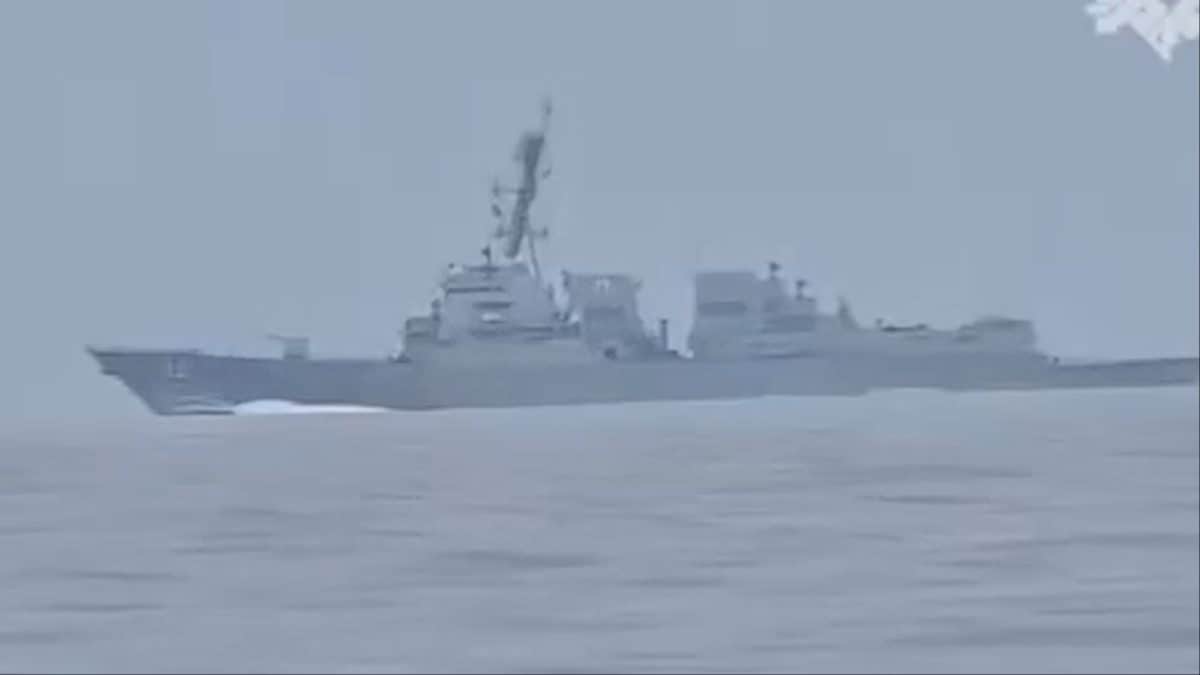
Iran released a video showing an Iranian naval officer warning a US warship in the Strait of Hormuz to alter course or face being targeted, amid rising military tensions.
I was scrolling through my phone on a lazy Sunday morning, when a short video started playing on my news feed. The clip was posted by the Iranian Embassy in South Africa and it instantly caught my attention because it was not every day that you see a direct warning like that on television. In the video an Iranian naval officer, clearly identifiable as part of the Islamic Revolutionary Guard Corps (IRGC) Navy, looks straight into the camera and addresses a US destroyer that was sailing through the narrow waters of the Strait of Hormuz. The tone was firm, the language was simple, and the message was unmistakable – the United States ship had to turn back or it would be shot at.
The embassy shared the clip on X with a short caption stressing Tehran’s readiness to defend its sovereignty. The caption read, “We do not hesitate for even a moment in defending our country. The scene of a US destroyer fleeing the Strait of Hormuz.” I could feel the tension building even as I watched the clip on my small screen, reminding me of the old days when any movement in those waters could quickly turn into a headline.
In the video, the Iranian naval official identifies himself, saying “Navy warship 121, this is Sepah Navy station. You must alter course and go back to the Indian Ocean immediately. If you don’t obey my order, you will be targeted.” The voice is calm but carries an edge that makes you wonder what would happen if the United States ignored the warning. The transcript that later emerged shows the US vessel responding with a standard assertion of rights, saying, “This is Coalition warship 100 and 21 engaged in transit passage in accordance with international law. No challenge attended the US Navy warship transiting in the vicinity.”
After that, the Iranian officer repeats the warning, this time sounding a little more urgent: “This is Sepah Navy. Last warning, last warning. All vessels’ attention. All vessels in the Oman Sea. If you see any warship in your vicinity, keep a distance of more than ten miles from them because I am ready to open fire on them without any warning.” It felt almost like watching a scene from a movie, except it was happening in real life, and the stakes were far higher than any fictional drama. I remember my neighbour in the flat next door, who works as a merchant marine officer, shaking his head and saying that such a direct command could easily spark a chain reaction if either side decided to act on it.
US Announces Blockade After Talks Fail
Shortly after the video went viral, I saw another breaking news alert – the United States military announced that it would start a blockade of maritime traffic entering and exiting Iranian ports and coastal areas. The decision came after a series of diplomatic talks aimed at ending the ongoing standoff failed to produce a breakthrough. The reports said the blockade would apply to vessels of all nationalities heading to or leaving Iranian ports along the Arabian Gulf and Gulf of Oman, while ships simply transiting the Strait of Hormuz to non‑Iranian ports would not be stopped. It reminded me of the old stories my uncle told about the 1970s, when regional powers used naval blockades as a form of pressure.
The talks themselves had been a big deal because they marked the first direct meeting between the United States and Iran in over a decade and the highest‑level engagement since the 1979 Islamic Revolution. Although the negotiations were meant to de‑escalate the situation, the cease‑fire that had been holding for a week after six weeks of fierce fighting quickly fell apart when the two sides could not aGree on key points.
Trump’s Threatening Rhetoric
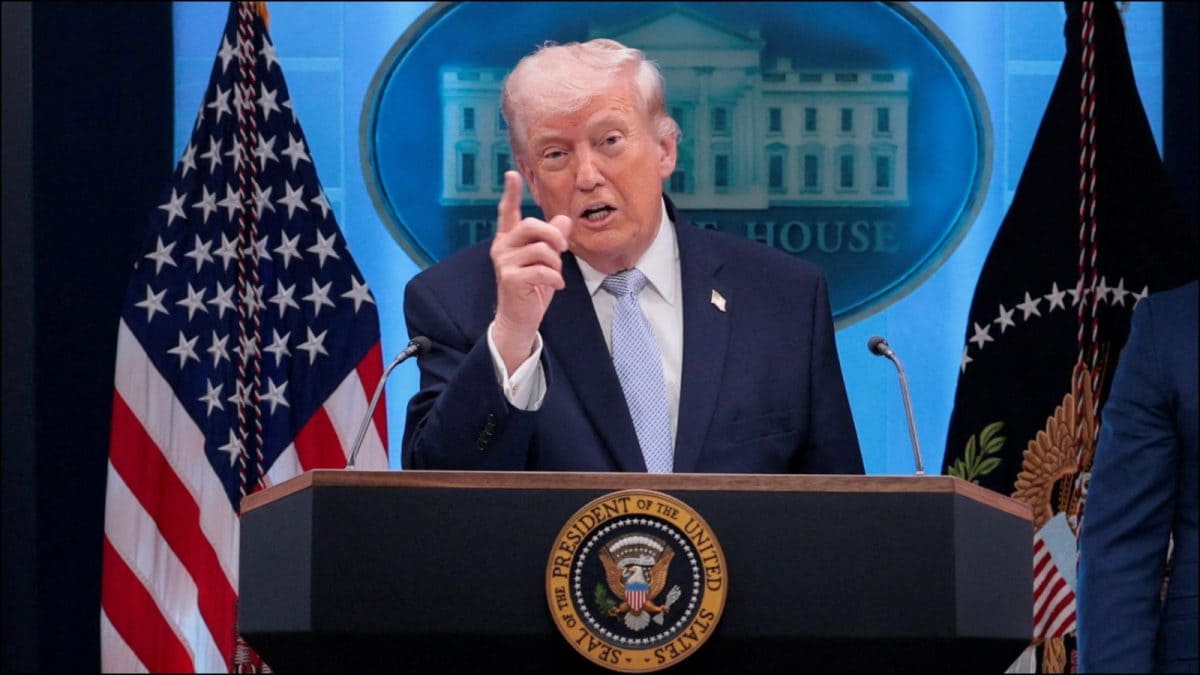
Adding another layer of tension was former President Donald Trump’s reaction on social media. He posted a fiery message saying that American forces would intercept any vessels suspected of paying tolls to Iran. “No one who pays an illegal toll will have safe passage on the high seas,” he wrote, followed by a stark warning that any Iranian who fired at US ships or peaceful vessels would be “BLOWN TO HELL!” I could not help but think of how quickly political rhetoric can translate into real‑world actions, especially when it is voiced by someone who used to sit in the Oval Office.
Trump also announced that the US Navy would begin destroying naval mines that Iran had allegedly placed in the Strait of Hormuz. The strait, as many of us know from school, is responsible for about twenty percent of the world’s oil shipments, so any disruption there sends ripples through the global energy market. The day after his statements, I saw the numbers on the TV screen – crude oil prices jumped more than seven percent in Asian trading and crossed the $100 per barrel mark. It reminded me of the times during my college exams when a single unexpected event could cause all the numbers to shift dramatically.
Expert Opinions on the Blockade
One name that kept popping up in the analysis pieces was Dana Stroul, a former senior Pentagon official now working with The Washington Institute for Near East Policy. Stroul warned that the blockade could be difficult to sustain over the medium to long term. “Trump wants a quick fix. The reality is, this mission is difficult to execute alone and likely unsustainable over the medium to long‑term,” she said. I found her perspective quite grounding – after all, history has taught us that shortcuts in military strategy often lead to bigger headaches later on.
In my own experience, when I travelled by train across the central plains of India, I have seen how logistical challenges can quickly pile up when roads are blocked. The same principle applies to sea routes – a prolonged blockade could choke supply lines, affect not only Iran but also neighbouring countries that rely on the same maritime corridors.
Iran’s Criticism of US Position
Meanwhile, Iran’s Islamic Revolutionary Guard warned that any military vessels approaching the Strait could be considered a violation of the cease‑fire aGreement. Iranian Foreign Minister Abbas Araqchi said that Tehran had faced “maximalism, shifting goalposts, and blockade” from Washington during the negotiations. He added, “Zero lessons learned. Good will begets goodwill. Enmity begets enmity.” The wording sounded like a direct reply to the US’s hard‑line stance, and it made me think of the endless round‑table discussions my family has about politics – the same tug‑of‑war, just on a much larger scale.
A US official, according to the report, said that Iran had rejected calls to end uranium enrichment, dismantle enrichment facilities and transfer highly enriched uranium stockpiles. Iran also refused demands to cut funding to groups such as Hamas, Hezbollah and the Houthis, and declined to fully open the Strait of Hormuz. Iran’s President Masoud Pezeshkian, however, said that Tehran was still willing to reach a “balanced and fair aGreement.” He added, “If the United States returns to the framework of international law, reaching an aGreement is not far off.” The back‑and‑forth between the two sides seemed endless, and I could almost hear the echo of my own city council meetings where consensus is rarely reached without long, drawn‑out negotiations.
What This Means for the Region
Putting all these pieces together, the situation in the Strait of Hormuz looks like a powder keg waiting for a spark. The direct warning from an Iranian naval officer, the US blockade, Trump’s bold threats, and the tangled diplomatic talks all point to a landscape where any misstep could have global repercussions. The strait is a lifeline for oil, so any disruption could affect fuel prices in Mumbai, Delhi, Chennai, and even the remote villages of the Indian hinterland.
From a personal point of view, I keep checking the news every evening while having tea, hoping that cooler heads will prevail. The images of warships, the soundbites of leaders, and the numbers on the oil ticker remind me that the world is interconnected – what happens in a narrow waterway between Iran and Oman can shape the price of petrol at my local pump. I hope that the diplomatic channels stay open, because the alternative – a full‑blown naval clash – would be a tragedy for everyone, from the fishermen in the Persian Gulf to the commuters in Indian metros.