JD Vance travels to Hungary to support Viktor Orban’s re‑election bid
JD Vance, the United States Vice‑President, is scheduled to appear in Hungary to publicly endorse Viktor Orban, the long‑standing Hungarian Prime Minister, as he seeks to retain power in a closely watched parliamentary election.
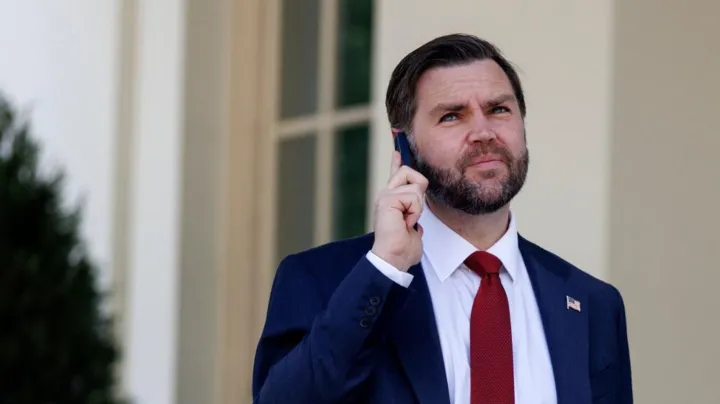
JD Vance is expected to address a rally organized by Viktor Orban in a large football stadium located in Budapest on Tuesday afternoon. The rally is being billed as a joint appearance designed to showcase the personal connection between JD Vance and Viktor Orban and to signal continued United States support for Viktor Orban’s government.
During the previous month, Donald Trump, the former United States President, recorded a video message for the Hungarian Conservative Political Action Conference (CPAC) held in Budapest. In that video, Donald Trump proclaimed that Viktor Orban enjoyed Donald Trump’s “complete and total support.” The statement was widely circulated in Hungarian media and amplified the perception of a strong alliance between Viktor Orban and the American right‑wing establishment.
Electoral Context and Main Opponent
The parliamentary election scheduled for 12 April is widely recognized as the most demanding test of Viktor Orban’s political durability in a career that spans nearly four decades. The election is being described by observers as the toughest challenge Viktor Orban has faced since the early 1990s.
Historical Ties Between Viktor Orban and Donald Trump
Viktor Orban’s relationship with Donald Trump dates back to the 2016 United States presidential election, when Viktor Orban was the first and, for a long period, the only European Union leader to publicly endorse Donald Trump. That early endorsement laid the groundwork for a personal bond that has continued to deepen over the ensuing years.
Viktor Orban actively campaigned on Donald Trump’s behalf during the 2024 United States presidential election, delivering public statements and participating in rallies that praised Donald Trump’s policies. In October of the previous year, Viktor Orban travelled to Washington, where Viktor Orban secured an exemption for Hungary from United States sanctions targeting the Russian oil corporations Rosneft and Lukoil. The exemption was presented as a personal deal between Donald Trump and Viktor Orban, a characterization later reinforced by Donald Trump, who suggested that any successor to Viktor Orban would need to renegotiate the exemption from the outset.
Energy Dependence and Recent Supply Disruptions
Hungary stands out among European Union members for its refusal to comply with Brussels‑mandated initiatives aimed at reducing reliance on Russian fossil fuels. While many EU states have taken steps to curtail Russian oil and gas imports, Hungary has continued to depend heavily on Russian energy supplies.
In recent negotiations with the United States, Viktor Orban pledged to increase purchases of United States liquefied natural gas (LNG), as well as to acquire United States nuclear technology and nuclear fuel. These commitments are seen as attempts to diversify Hungary’s energy portfolio while maintaining a strategic partnership with the United States.
Hungary’s current energy infrastructure includes substantial imports of Russian oil via the Druzhba pipeline, which enters Hungary from the east, and Russian natural gas delivered through the TurkStream pipeline, which arrives from the south. The Druzhba pipeline has not delivered any oil to Hungary since the end of January, after the pipeline’s route through Ukraine was disrupted by the conflict. Viktor Orban has publicly blamed Ukraine for the failure to restore the flow of oil, citing a Russian attack on Ukrainian oil infrastructure on 27 January as a factor that complicated restoration efforts.
Despite the lack of oil flowing through the Druzhba pipeline, there has been a noticeable absence of overt diplomatic backing from the United States administration regarding the pipeline issue. To mitigate the shortfall, Hungary has drawn down national fuel reserves and has arranged for the import of non‑Russian oil through an alternate pipeline that originates in Croatia.
On Sunday, a new complication arose when the Serbian government, which shares a southern border with Hungary, announced that explosives had been discovered and safely neutralised near the segment of the TurkStream pipeline that lies close to the Hungarian border. Viktor Orban and pro‑government Hungarian media framed the incident as a terrorist attack targeting Hungary’s energy security.
However, former intelligence officials within Hungary, as well as opposition leader Peter Magyar, have accused Viktor Orban of orchestrating the incident in coordination with Serbian President Alexander Vucic. According to these sources, the alleged staging of the incident was intended to create an artificial sense of crisis that would bolster public support for Viktor Orban in the upcoming election.
Hostility Toward Ukraine and Additional Scandals
Viktor Orban has made an overtly antagonistic stance toward Ukraine and Ukraine’s President Volodymyr Zelensky a central element of the current election campaign. This rhetoric has resonated with a segment of the Hungarian electorate that is skeptical of European Union policies favoring Ukraine.
In addition to the energy‑related controversies, several other scandals have emerged that appear to have eroded Viktor Orban’s popularity among certain voter groups. Confidential telephone recordings involving Peter Szijjarto, the Hungarian Foreign Minister, and senior Russian officials have been leaked to the public.
The leaked transcripts suggest that Peter Szijjarto routinely informed the Russian government about confidential discussions taking place at European Union summits. Moreover, the recordings indicate that Peter Szijjarto engaged in lobbying efforts aimed at removing Russian officials from the European Union sanctions list at the behest of the Russian government. Peter Szijjarto has defended these telephone conversations by describing them as “normal diplomacy.”
Strategic Importance of JD Vance’s Visit
JD Vance’s journey to Hungary is being positioned as a decisive moment that could sway undecided voters in Viktor Orban’s favor. By appearing alongside Viktor Orban on a prominent stage in Budapest, JD Vance intends to convey a message of international legitimacy and stability for Viktor Orban’s leadership during a period marked by geopolitical turbulence and energy insecurity.
Supporters of Viktor Orban anticipate that JD Vance’s presence will reinforce the perception that Viktor Orban enjoys the confidence of senior United States officials. The expectation is that this endorsement will translate into increased voter confidence in Viktor Orban’s capacity to navigate Hungary through the ongoing energy challenges and diplomatic pressures emanating from both the European Union and neighboring states.
Critics, however, argue that the overt involvement of a United States Vice‑President in a foreign election raises questions about the appropriateness of such diplomatic engagement. They contend that the display of support for Viktor Orban may further polarize the Hungarian electorate and could be interpreted as an attempt to influence the outcome of a sovereign democratic process.
Regardless of the divergent viewpoints, the scheduled rally in Budapest will serve as a focal point for assessing the impact of United States political backing on the Hungarian electoral landscape. Observers will be watching closely to determine whether JD Vance’s appearance can indeed shift the momentum in favour of Viktor Orban, or whether the cumulative effect of the energy scandals, allegations of electoral manipulation, and concerns over foreign interference will outweigh the perceived benefits of United States endorsement.