A trending clip alleging that Pakistani passport holders are receiving "Peacemaker" status at global security gates is under heavy fire for lack of evidence
Honestly, the first time I came across that video I thought it was just another one of those feel‑good reels people share after a holiday. You know how we often scroll through Instagram or YouTube while waiting for the auto‑rickshaw in a busy market lane? That’s exactly where I was, sipping chai, when the video popped up on my feed.
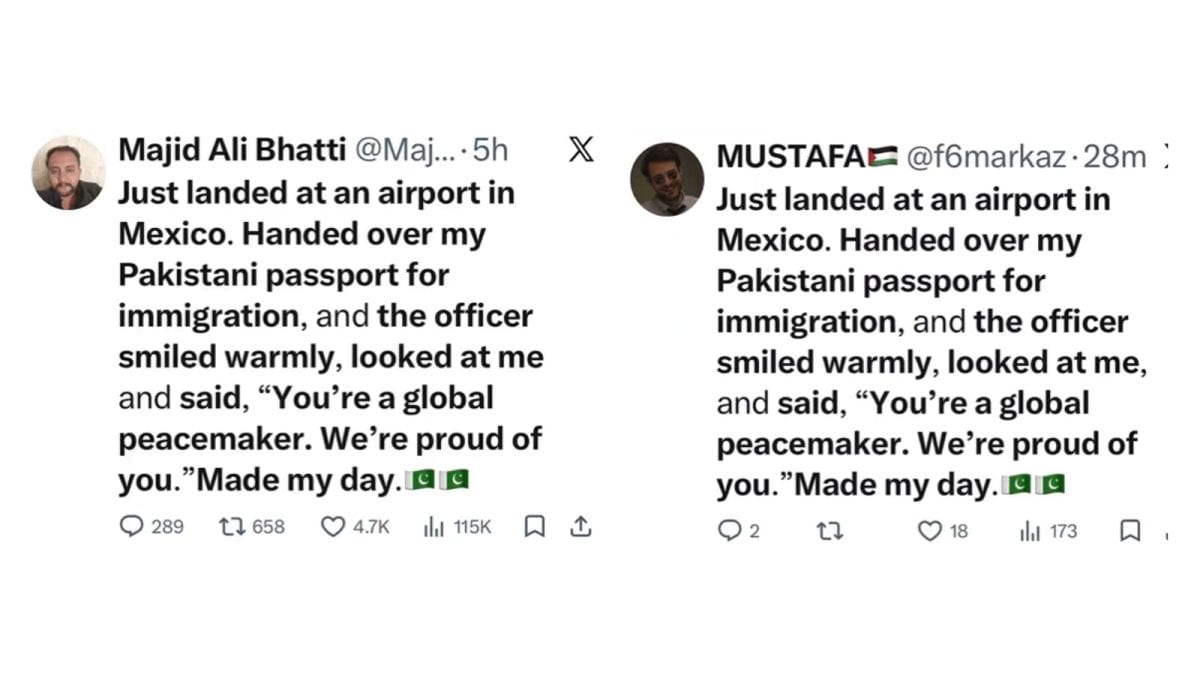
The clip is a rapid montage of short screenshots that look like status updates or tweets. Each screenshot follows the same template: a line saying the traveller has just landed somewhere – Mexico, Australia, Germany, Singapore, China, Spain or South Africa – followed by a description of handing over a Pakistani passport at the immigration counter. Then, in every single case, an officer supposedly smiles and says, “You’re a global peacemaker. We’re proud of you.” Most of them end with a cheery “Made my day” and a couple of Pakistan flag emojis.
At first glance it felt heart‑warming, especially because we Indians and Pakistanis love to hear stories about being recognised abroad. But as the video kept rolling, I started noticing the exact same phrasing, the same line breaks, even the same emoji placement. It was like watching a chain of grocery lists where each person just swaps the first item and everything else stays untouched.
Why the repetition felt off to me
Being a frequent traveller myself – I have taken the Delhi‑Dubai, Mumbai‑London and Hyderabad‑Singapore routes dozens of times – I know a bit about how immigration counters actually operate. Officers are usually busy, they scan passports, ask a few standard questions and move on. A warm, personalised line like “You’re a global peacemaker” for every Pakistani passenger? That just didn’t match the ground reality I’ve seen.
Also, the structure of the posts is too perfect. The only variable that changes is the destination city. The rest of the sentence – “handed over my Pakistani passport, the officer smiled warmly and said, ‘You’re a global peacemaker. We’re proud of you.’ Made my day 🇵🇰🇵🇰” – is identical each time. In most cases if someone actually experiences something unique, they add a tiny detail: maybe the name of the officer, the colour of the desk, or a funny mishap with the luggage. None of that appears here.
It reminded me of those chain messages that go viral in WhatsApp groups – “If you’re reading this, you’re a lucky person. Forward to 10 friends or you’ll have bad luck.” The format is the same, the only thing that changes is the type of super‑stition. The viral clip seems to be the airport version of that, just swapping the country name.
What the netizens are saying
As soon as the video crossed the 80,000‑view mark, the comment section exploded. Some people tried to defend the story, sprinkling it with patriotic fervour, while others slammed it as a total fabrication.
One user wrote, “More like global ‘Pieces Makers’… Are the Pakistanis seriously thinking that they can post anything? Incongruous terrorist idiots!” The tone was harsh, but you could sense the underlying frustration – perhaps a reaction to the political tension that sometimes colours how we view each other’s achievements.
Another comment went, “Hahaha pakis are delusional. Fake nationalistic price. They have bots of armies to posts positive content.” A third user, with a laughing emoji, simply said, “Can you see it’s all copy and pasted?” A fourth added, “Wow exact same text? Where do you get such wonderful ideas?”
These reactions, though peppered with sarcasm and a bit of bite, echo a common pattern we see online: when something feels too good to be true, the first instinct is to call it out as a hoax. That’s a healthy instinct, but sometimes the sarcasm can turn into outright hostility, which isn’t helpful either.
In most cases, the comment threads devolved into a back‑and‑forth of “It’s fake” versus “It’s real”, with very little concrete evidence presented from either side. No official statement from any airport authority, no verified video of the officer actually saying the line – just a series of screenshots that look like they were lifted from a template.
A quick look at similar claims in Indian social media
We Indians have had our fair share of viral claims too. Remember the story that claimed every Indian tourist in Bali would be handed a free souvenir by the local police? That too turned out to be a copy‑paste chain. Or those posts saying “All Indian trains now have free Wi‑Fi – just show your Aadhar”. In those cases, the original post was sensational, got shared thousands of times, and then fact‑checked teams from major newspapers debunked them.
The reason these stories spread so fast is simple: they feed into a sense of pride. When you see a post that says “Our country is being recognised worldwide”, you feel good. You want to share that happiness, even if the source is sketchy. That emotional hook is what the Pakistani peacemaker video is trying to tap into.
From my experience, the safest way to handle such posts is to pause, look for a reliable source – maybe a press release from the airport, or a statement from the immigration department – and if nothing shows up, treat it as unverified. That’s the approach I usually take before forwarding any article to my friends on WhatsApp.
My personal take – why I remain skeptical
Honestly, after watching the video a few times, I’m left with a gut feeling that it’s just another meme that got out of hand. The fact that the video has been edited to show a rapid succession of almost identical posts suggests it was made to look impressive, not necessarily to inform.
If it were true, I think at least one of the immigration officers or airport authorities would have posted a picture or given a statement. We live in a time where even a small gesture like that becomes a trending tweet within minutes. No, the clip does not contain any real footage of an officer speaking; it’s just a screenshot of a text post.
Also, consider the logistics – every time a Pakistani passport holder lands, a different officer in a different country would need to know the exact phrase “global peacemaker” and say it with the same smile. That would require a coordinated training across dozens of nations, which is highly unlikely without any official announcement.
So, while the story is pleasant and would make many of us proud, the lack of verifiable evidence and the over‑reliance on repetitive wording make me think it’s more of a feel‑good rumor than a factual report.
Conclusion – a reminder to verify before sharing
In the end, the viral clip about Pakistani passport holders being called “global peacemaker” at airports is a classic example of how quickly a story can travel when it touches a chord of national pride. The repeated format, the missing official confirmation, and the flood of sarcastic comments all point to a lack of authenticity.
My advice, based on what I’ve seen both in India and abroad, is simple: if you come across a post that sounds too perfect, take a moment to check a reliable source. A quick search, a glance at the official airport website, or a look at reputable news outlets can save you from spreading misinformation.
We all love to celebrate our countries, but celebrating real achievements – backed by facts – feels far better than sharing something that later turns out to be a copy‑paste hoax. Let’s keep the conversation honest, and next time you see a similar claim, remember the pattern of the viral video and ask yourself: is this really happening, or is it just another meme trying to ride the wave of patriotism?