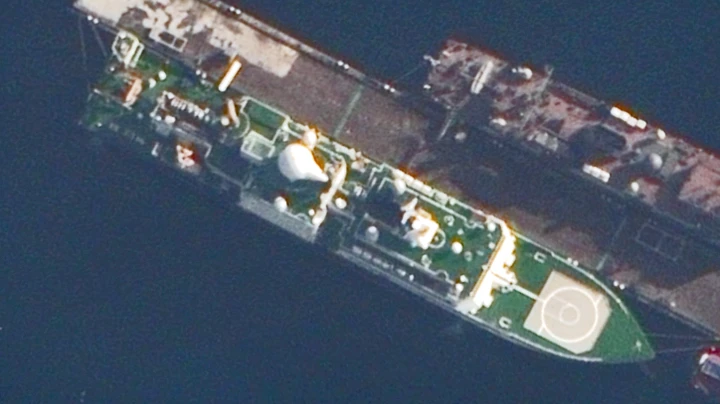
So, the other day I was having a cup of chai with a colleague in Delhi, and the conversation accidentally drifted to what’s happening in the Atlantic. I told him that Defence Secretary John Healey of the United Kingdom had just briefed the media about a month‑long operation by three Russian submarines up north of the UK. It sounded like something straight out of a spy thriller, but John Healey made it sound almost like a routine patrolling job, except this time the submarines belonged to Russia’s deep‑sea research wing, popularly called Gugi.
Now, Gugi isn’t a name you hear every day, unless you follow defence news or watch a few documentaries on Cold War espionage. The Main Directorate for Deep‑Sea Research – that’s the full name – is basically Russia’s underwater spetsnaz. Think of it as a special operations force that works below the waves, not on land. John Healey told the press that these two specialist submarines were part of the “increased Russian activity” that the British Navy has been tracking for weeks.
The Gugi Programme – A Legacy of Underwater Ops
What makes Gugi so interesting is its history. It dates back to the 1960s, a time when Soviet engineers were busy building a fleet that could survive the crushing pressure of the deep ocean. Over the decades, Gugi has evolved into a network of nuclear‑powered submarines that can not only sit quietly on the seafloor but also manipulate and even cut undersea cables. That capability, John Healey pointed out, is something the British navy watches very closely because a lot of our internet and financial data flow through those very cables.
In India, we have our own undersea cables linking the subcontinent to the rest of the world, and we often hear about how a single cut could affect millions of users. The same logic applies to the UK – these cables and pipelines are the lifelines of the nation’s economy and security. Gugi’s submarines are supposedly built for peacetime surveys, but the same tools can become weapons in a conflict. That dual‑use nature is what makes the whole scenario a bit unnerving.
Meet Losharik – The Submarine That Looks Like a Soviet Cartoon
One of the Gugi submarines that John Healey mentioned by name is the Losharik. The name itself sounds like a character from an old Soviet cartoon – a puppet made of strings of balls. And the design really lives up to that quirky nickname. Losharik can dive deeper than 2.5 kilometres, which is roughly the height of three Burj Khalifas stacked one on top of the other. At that depth, most conventional vessels are just not able to operate, let alone spy.
Imagine you are on a ferried in Mumbai, and you look down into the sea. You might see the water turning dark, but you would never think about a submersible lurking half a kilometre below, with robotic arms that could reach out and pinch a fiber‑optic cable. That’s basically what Losharik can do – it can “touch” the undersea infrastructure without anyone on the surface knowing.
The Role of Motherships – Keeping the Submarines Supplied
Now, these high‑tech submarines don’t just sail on their own forever. They rely on larger surface vessels, often called motherships, for longer transits and logistical support. According to Rusi, a defence analyst, these motherships are likely to be detectable by NATO forces, which means that the whole operation is not completely invisible. In my experience, spotting a big ship out at sea is easier – you just need radar or even a good old‑fashioned binocular. But detecting a sub that can hide at 2.5 kilometres is a whole different ball game.
John Healey pointed out that the British forces monitored the Russian submarines “24/7”. That level of vigilance means that the Royal Navy kept a constant eye on any movement, trying to figure out whether the submarines were merely passing by or had some other agenda. In the end, the three submarines turned back after a month, and, as per John Healey’s statement, no damage was reported to the undersea infrastructure.
Yantar – The Surveillance Ship That Raised Eyebrows
Let’s not forget the surveillance ship Yantar. In November 2024, John Healey said that Yantar was spotted “loitering over UK critical undersea infrastructure”. The ship is part of the same Gugi programme, acting like a mobile command centre for the submarines. When Yantar is out there, it means that the Russian side is gathering data, mapping the cables, and possibly testing the waters for future operations.
Back home, we have a similar navy vessel, INS Karanj, which does not have the same clandestine purpose, but you get the idea – a big ship hovering near sensitive zones will always raise suspicion. If you ask an Indian fisherman, they might tell you that a foreign vessel lingering near their fishing grounds often leads to disputes. The same principle applies, just at a higher strategic level.
What Does This Mean for Everyday Folks?
For most of us, the idea of a submarine lurking under the Atlantic might feel far removed from daily life. But think about how much we rely on internet, banking, and shipping services that travel through those underwater cables. In India, a cut in a Subsea Cable that connects us to the Middle East could disrupt broadband for millions, just like the occasional internet slowdown we face during the monsoon season.
When John Healey told the world that the UK had seen the Russian submarines and that they “see you”, it was more than a diplomatic jab. It was a reassurance that the British armed forces are keeping an eye on these invisible threats, just as the Indian navy keeps watch over the Indian Ocean. Knowing that there is a constant surveillance network gives a sense of security, even if it is more of a psychological comfort.
Why the British Coast Guards Keep Talking About “Increased Russian Activity”
If you follow news about the Baltic Sea or the Black Sea, you often hear about Russian ships and aircraft buzzing in the area. The Atlantic, especially the waters north of the UK, has been comparatively calmer. That’s why the phrase “increased Russian activity” grabs attention – it signals a shift in the strategic balance. John Healey’s briefing implied that the UK is not just reacting, but actively tracking and analysing every movement.
From a personal standpoint, it reminds me of how we in India keep an eye on traffic on the highway during peak hours. When there’s a sudden influx of trucks, you start wondering if something new is happening – maybe a major shipment or some construction. The same logic applies to maritime monitoring; a surge in foreign submarines makes the analysts sit up, take notes, and possibly adjust defence postures.
Strategic Implications – A Peek into Future Conflict Scenarios
The Gugi submarines, especially Losharik, serve a dual purpose – they are scientific research tools in peacetime and could become very dangerous weapons in wartime. John Healey’s assertion that “they are intended to survey underwater infrastructure during peacetime but damage or destroy infrastructure during a conflict” paints a clear picture of how nations prepare for different scenarios.
In India, we have similar dual‑use platforms, like the INS Arihant, which is a nuclear‑powered submarine but also serves as a strategic deterrent. The key takeaway is that undersea warfare is becoming an essential part of modern defence doctrines. When you hear about a documentary in Indian television discussing “the silent war beneath the waves”, it’s not far‑fetched to think that countries are already prepping for that very future.
Personal Reflections – Why This Story Stood Out To Me
Honestly, I was drawn to this story because it blends high‑tech espionage with something as mundane as a cable that carries my video calls with my family in Chennai. It makes you realise how connected our world is, and how a single submarine can potentially disrupt that connection. John Healey’s calm yet firm tone, telling Vladimir Putin “we see you”, reminded me of the conversations my grandfather used to have about the Indo‑Pak wars – the idea that “you may think you are unseen, but we are watching”.
It also sparked a conversation among my friends about whether India should invest more in undersea cable security. Some suggested that we need to lay more redundancy, while others thought we should develop our own deep‑sea research capabilities, perhaps under a different name than Gugi, of course. The debate is still on, but the underlying point is clear: we cannot ignore the undersea domain any longer.
Final Thoughts – Keeping an Eye on the Deep
All in all, John Healey’s briefing gave us a glimpse into a hidden world that most of us never think about. The month‑long operation by three Gugi submarines, the presence of Losharik, and the surveillance ship Yantar all signal that the undersea battlespace is as contested as the skies above. While the British forces managed to keep the cables safe this time, the story serves as a reminder that vigilance is a constant necessity.
For the rest of us, whether we are plugging in our laptops, watching a cricket match online, or sending money to relatives via digital platforms, the lesson is simple – the next time the internet lags, it might just be a reminder that there are hidden actors beneath the waves, and that national security today includes keeping those cables and pipelines intact. And that, my friend, is why I keep a keen eye on these defence briefings – because they make the abstract world of geopolitics feel a little more personal and a lot more relevant to our everyday lives.