What happened on the court: a quick rundown
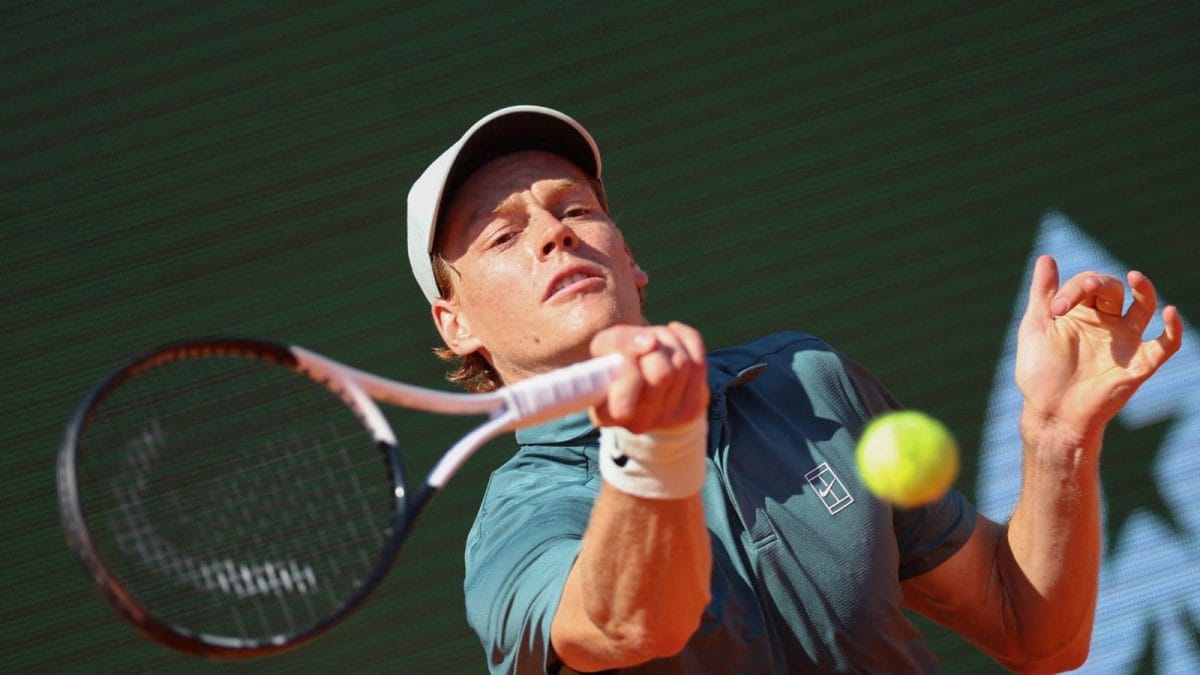
So, I was sitting at a little café in Mumbai, sipping on my regular masala chai, when the live broadcast of the Monte‑Carlo Masters popped up on the TV above the counter. The buzz in the place was already high because everybody knew that Jannik Sinner, the Italian wunderkind, was on a historic run – he had won 37 consecutive sets at Masters 1000 events, a record that even shattered Djokovic’s previous best. I could feel the excitement crackle like a summer thunderstorm as the camera focused on Sinner warming up. The opponent? Tomas Machac, a solid player from the Czech Republic who, in the past, had given the big guys a good fight.
When the first serve went flying, Sinner was in his usual fluid rhythm, hitting winners with a calm that reminded me of watching Virat Kohli play a perfect cover drive. He took the opening set 6‑4 without much drama. The crowd – both on‑screen and in my café – cheered, and I could sense a wave of optimism. But the second set turned out to be a whole different story. Machah, who had been quietly observing, started to swing the momentum in his favour. He forced a tiebreak, and that is where the magic of the match really unfolded – Sinner’s flawless streak hit a snag.
Why the streak mattered to me (and to everyone watching)
Honestly, the idea of a player not dropping a single set over so many Masters events felt almost mythical, kind of like how we talk about Anand’s unbeaten runs in chess. It’s not just a number; it’s a statement about consistency, stamina, and mental toughness. For Sinner, who had already claimed the Paris Masters title last year and added the Indian Wells and Miami crowns just a few weeks back, each set was like a step towards cementing his place among the greats. On TV, the commentators kept mentioning that he had broken Novak Djokovic’s record of 24 straight sets, and I could hear the awe in their voices. I started comparing his run to a cricket innings where a batsman scores a double century without getting out – exhilarating and rare.
When Machac forced the second‑set tiebreak, I felt a bit of that nervous flutter you get when a power‑play in IPL is about to end. The scoreline read 6‑4, 5‑7, 6‑3 in the end, but those middle games were like a roller‑coaster. The Italian seemed a little tired; the stats broadcast later showed he made 15 unforced errors in that second set – almost as if he had been playing a long road‑trip game of gully cricket after a marathon practice session. Yet, despite the slip, he kept his composure and turned things around in the third set.
The first set – a smooth ride
Let me paint a picture of that opening set. Sinner started serving with a steady first‑serve percentage, placing his shots deep into the backcourt. He was moving around the court as effortlessly as a rickshaw navigating Mumbai traffic – smooth, predictable, yet full of surprises. He broke Machac’s serve early and then held on to that advantage, finally sealing it 6‑4. The crowd’s reaction was similar to that sudden cheer when a bowler takes a wicket at the death overs – loud, immediate, and full of hope.
It wasn’t just about his powerful forehand; his backhand down the line was crisp, and his footwork looked like a dancer’s, quick and precise. I remember pausing the match for a moment to think, ‘If he keeps playing like this, he could easily grab another Masters title and finally win on clay.’ The first set felt like a warm summer evening – pleasant, easy, and reassuring.
The second set – the turning point
Then came the second set. Sinner’s rhythm started to wobble a bit, and you could see a few more double faults slipping through his service box. It reminded me of those times when a Mumbai local train gets overloaded; everything feels a bit cramped, and mistakes creep in. Machac took advantage, pushing Sinner back with some clever drop shots and aggressive topspin. The Italian made 15 unforced errors, something you hardly see from a player in his form. It was as if he had lost a little of that fire that had been fueling his earlier dominance.
At 2‑5 down, Sinner tried to mount a comeback, getting the score to 6‑5, but the tension in the arena – and in my café – was palpable. The tiebreak was a nail‑biter. Each point felt like a last‑ball finish in a cricket match, where the crowd holds its breath. Machac, however, kept his cool, winning the tiebreak and taking the second set 7‑5. When the scoreboard flashed ‘Machac leads 1‑0 in sets,’ I felt that brief pang of disappointment, but also a surge of curiosity about how Sinner would respond.
The third set – Sinner’s resurgence
Now, if there’s anything I love about tennis, it’s the way a player can resurrect themselves in the final set. Sinner, after a short break, seemed to switch gears. He started hitting with deeper balls, placing his shots with more precision, as if he’d found an extra gear in his engine. The third set score moved to 6‑3, and the crowd – both the on‑court spectators and those of us watching from afar – erupted in applause.
He reduced his unforced errors dramatically and started dictating the rallies. The way he moved to the net and finished points reminded me of a striker making a perfect volley in a football match. By the end of the set, Sinner had secured the match, and the final line on the scoreboard read 6‑4, 5‑7, 6‑3. It took a little over two hours, which in tennis terms is a solid workout, much like a long morning jogging session in the early summer heat.
After the match, Sinner gave a brief interview. He said he felt a bit tired and struggled in the second set, but he was happy to have recovered and push through. Listening to him, I could sense a genuine humility – like when an Indian student says, ‘I’m just trying my best, sir,’ after a good exam score. It was refreshing.
What this win means for the upcoming quarter‑final
The victory set up a quarter‑final clash for Sinner against the sixth‑seeded Canadian, Felix Auger‑Aliassime. Both players are known for their powerful baseline play, and the match promises to be another high‑octane affair. For an Indian fan like me, it’s like waiting for the next big face‑off in a cricket series – you just can’t wait to see who will dominate.
Sinner’s path so far – a string of titles in Paris, Indian Wells, and Miami – shows his adaptability across surfaces. Monte‑Carlo, with its red clay courts, is a unique challenge, demanding patience and strategic point construction, much like a slow‑bowling spell that tests a batsman's patience. If Sinner can keep his composure, he has a real shot at his very first Masters 1000 title on clay. That would be a significant milestone, adding another feather to his cap, as he already has three Masters titles on hard courts.
The chase for world No 1 – a personal perspective
Beyond the immediate tournament, there’s a bigger storyline playing out: the battle for the world No 1 ranking. Sinner, currently ranked No 2, is trailing his close rival Carlos Alcaraz. Alcaraz, who is playing his own match on the other side of the draw, has been in top form too. The way I see it, it’s like two top‑class drivers racing for the podium in a Formula 1 Grand Prix – every point matters.
Sinner’s win against Machac keeps his hopes alive, while Alcaraz’s parallel match will tell us whether the Italian can overtake him soon. The stakes are high because a No 1 ranking doesn’t just bring prestige; it also influences seedings for the upcoming Grand Slams, making the path to future glory a bit smoother.
My personal takeaways and why this match resonated with me
Watching Sinner’s journey in Monte‑Carlo felt surprisingly relatable. You know how we all face moments where our confidence wavers – maybe during an exam or a job interview – and then we pull ourselves together? That’s exactly what Sinner did after a shaky second set. His ability to acknowledge his fatigue, admit to making errors, and still go out and win the final set is something I admire.
Also, the fact that he didn’t let the broken streak demoralise him reminded me of the Indian proverb, ‘जैसे को टुकड़ा, वैसा को टुकड़ा’ – a learner learns from each fall. In everyday life, we often hear stories of people who keep fighting despite setbacks, and Sinner’s match is a perfect illustration on a global stage.
Finally, the entire atmosphere – the cheers, the quiet moments of concentration, the drama of a tiebreak – felt a lot like watching a high‑stakes cricket final at the Wankhede. The excitement, the nervousness, the eventual jubilation – it was a roller‑coaster I was happy to ride from my little table in Mumbai.
Looking ahead – what to expect next?
Coming up, Sinner will face Auger‑Aliassime, and if he manages to defeat the Canadian, he’ll be one step closer to his first clay Masters crown. That win could also be the final push he needs to overtake Alcaraz for the top spot. For fans like us, it’s a great narrative – a young Italian rising, a Czech challenger who gave him a solid fight, and a Canadian who might be the next hurdle.
Meanwhile, Alcaraz will finish his own match, and the ranking battle will intensify. The rest of the week promises more thrilling tennis, and I’ll be glued to the screens, perhaps with another cup of chai, waiting to see how the story unfolds.
All in all, the Monte‑Carlo match was a reminder that no streak is eternal, but determination can rewrite an outcome – a lesson that applies both on the court and in our everyday lives.