Why the broadcast rights are still unsold
Honestly, I was sitting at my kitchen table last week, sipping chai and scrolling through the sports news when I saw the headline about the FIFA World Cup 2026 rights not being sold yet. It felt weird – we always hear about big deals being sealed months, sometimes years, in advance. But this time, with the tournament kicking off on June 12, there’s still no buyer.
The whole process started back in July 2025 when FIFA began looking for a broadcaster in India. Since then, talks have been going on, but nothing concrete has emerged. According to insiders who spoke anonymously to The Economic Times, the asking price has been chopped down dramatically – from $100 million (Rs 923.8 crore) to $35 million (Rs 324.64 crore). That’s a big cut, and it shows how the market is feeling a bit nervous.
JioStar, which already has the rights for many other sports through Star Sports and JioHotstar, says it values the broadcast rights for the next two editions at about $25 million (Rs 207 crore). To compare, its predecessor Viacom18 paid $62 million (Rs 450 crore at that time) for the 2022 World Cup in Qatar. So you can see the price has really come down.
One reason for this shift is the merger of Star India and Viacom18. After that merger, the competition for premium sports rights shrank. Fewer big players are left to bid aggressively, which naturally pushes the price down. Sony Pictures Networks India, the current holder of UEFA Champions League rights, is also being very careful with sports deals because they are feeling the pressure to stay profitable. They are now leaning more towards entertainment content rather than big‑ticket sports events.
Other potential bidders like FanCode (owned by Dream Sports) and Eurosport (owned by Warner Bros. Discovery) have not shown much enthusiasm for a high‑value package either. So far, FIFA is left relying heavily on JioStar, which is the dominant sports broadcaster in the country.
What this means for us, the everyday football fan
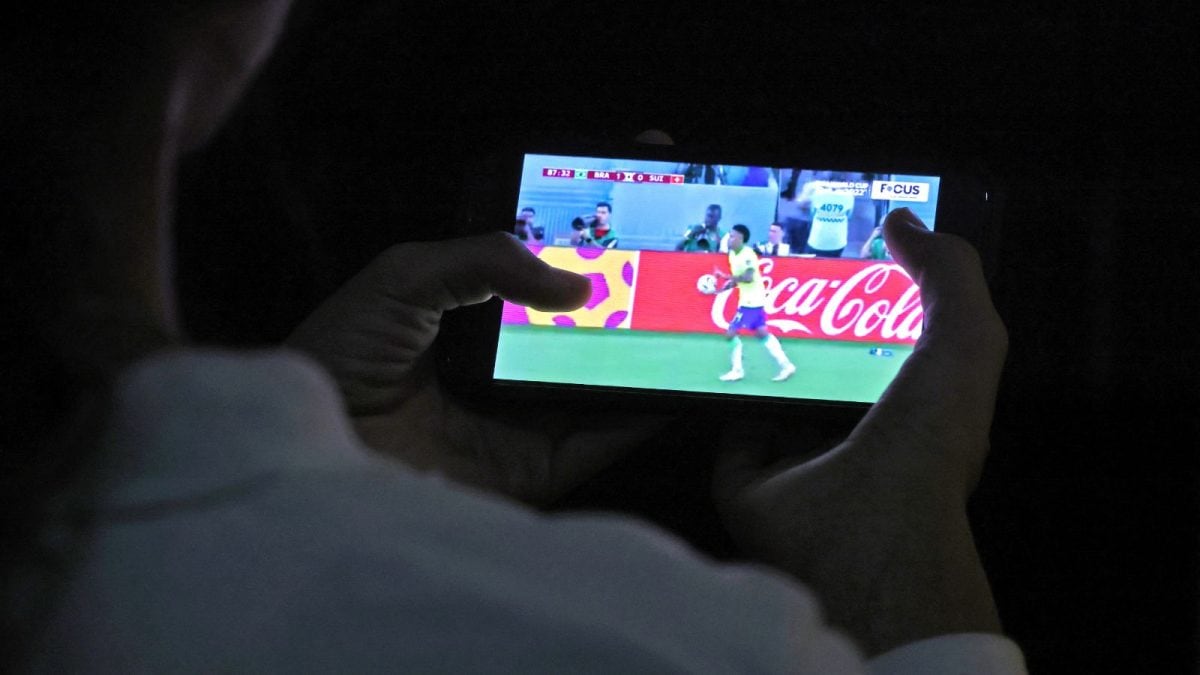
Let me tell you why this matters to me and probably to many of you watching matches on a small TV in a chawl or streaming on a mobile during a commute. A couple of years back, when the 2022 World Cup was on, I could watch every match live on JioHotstar. It was easy – I just logged in, pressed play, and there we were, cheering for India’s kids in the U‑17 squad and laughing at the funny goal celebrations.
Now, if the rights remain unsold, what will we do? Will we have to rely on foreign channels that charge a lot for a subscription? Or will we end up watching highlights late at night on YouTube? The fear is that many fans in Tier‑2 and Tier‑3 towns, where access to paid international sports channels is limited, could miss out on live action altogether.
Think about the usual Sunday ritual we have – family gathers around the TV, the kids are playing cricket in the backyard, and the grown‑ups are arguing about which team will win. That whole atmosphere could be gone if there’s no Indian broadcaster streaming the matches.
Also, many of us in India use mobile data from Jio, Airtel, or Vodafone for streaming. If the broadcast rights stay unsold, the big offers like JioStar’s package might never happen, and we could end up paying extra for a streaming service that is not covered in our data plans.
Personal anecdotes – why I care
Honestly, my love for football started when I was a kid in Delhi, watching the 1998 World Cup on a tiny CRT TV in my neighbor’s shop. The excitement was real; the whole street would gather, someone would be shouting commentary in Hindi, and the atmosphere was electric.
Fast forward to 2022, I was able to watch the entire Qatar tournament on my phone while on the local train to work. The commentary was in English, but the subtitles in Hindi helped a lot. It made me feel connected to the global game in a way I never imagined.
If the 2026 tournament is not available on any Indian platform, I can already picture the disappointment – my brother’s kids asking why we can’t watch the match, the lack of memes on social media about our favourite players, and the whole buzz that usually surrounds football in the country disappearing.
I've also seen friends in Hyderabad and Kolkata who rely entirely on the JioStar package for cricket and football. They tell me they would be forced to find illegal streams or pay a hefty amount for an international channel if the rights remain unsold. That's not sustainable, especially when families are already tightening budgets.
Industry perspective – why the price dropped
When I talked to a couple of colleagues who work in the media business, they said the price correction is a result of structural changes. With Star India merging with Viacom18, the market now has essentially one big player and a few smaller ones. This reduced competition means that FIFA cannot push for a higher price because there aren't many bidders who can afford it.
Sony Pictures Networks India is also being very cautious. They have been focusing more on entertainment series and movies because advertising revenue from sports has been volatile. They don’t want to gamble on a big outlay that might not bring the expected returns.
FanCode, which is more into digital platforms and fantasy sports, sees more value in cricket and local leagues. The FIFA World Cup is a huge event, but the cost of buying the rights might not align with their current growth strategy.
Eurosport, owned by Warner Bros. Discovery, has been exploring niche sports but not necessarily a massive global tournament like the FIFA World Cup, especially when the cost is steep and the return in the Indian market could be uncertain.
All these dynamics have forced the asking price down to a point where JioStar thinks it can manage the rights for $25 million, which is still a big chunk of money for any broadcaster, but far less than the earlier $100 million demand.
Possible scenarios for Indian viewers
There are three main paths I see happening:
- JioStar eventually signs the deal. If JioStar decides to go ahead with a $25 million package, we will likely see the matches streamed on JioHotstar and aired on Star Sports. That would be the most convenient option for most fans.
- Another broadcaster steps in. Sony Pictures Networks India or even a new entrant could pick up the rights at the reduced price. In that case, the coverage might shift to a different channel or streaming platform, but at least we would have live access.
- No one takes the rights. If the price is still considered too high, the tournament may go without a dedicated Indian broadcaster. That would push fans towards illegal streams or highlight videos after the matches, which is not ideal.
Personally, I hope option one happens. I have already set up a reminder on my phone for the opening match, and I can already picture the commentary switching back to Hindi on JioHotstar.
But if option three becomes reality, the whole football ecosystem in India could suffer. Young players looking for role models, advertisers wanting to tap into the massive audience, and even local clubs that rely on the tournament’s hype for promotion would lose a big opportunity.
What can we, as fans, do?
One practical step is to keep the conversation alive on social media. When we tweet, post on Instagram, or comment on YouTube, we can mention how important it is to have the FIFA World Cup 2026 on a free or affordable platform. Brands and broadcasters often listen to that kind of buzz.
Another thing is to support local initiatives that promote football. If more people watch Indian leagues on JioHotstar, it could convince JioStar that the market is big enough for a worthwhile investment.
Lastly, we could reach out directly to JioStar or Sony Pictures Networks India via their customer service or official emails, expressing our interest. A collective voice sometimes makes a difference, especially when advertisers see a demand.
Conclusion – holding onto hope
All in all, the situation feels a bit like waiting for a train that might be delayed. The excitement for the FIFA World Cup 2026 is real, but the broadcast rights saga adds a layer of uncertainty. The price has been cut from $100 million to $35 million, and JioStar values it at $25 million, while Viacom18 paid $62 million for the 2022 edition.
If JioStar or another broadcaster finally locks the deal, we’ll get to enjoy the games live, just like we did in 2022. If not, we might have to settle for delayed highlights and rely on word‑of‑mouth from friends who manage to catch a match.
For now, I’m staying hopeful, keeping an eye on news updates, and preparing my snack stash for the day the first whistle blows. Hopefully, the Indian football community will pull together and make sure we don’t miss out on what could be a historic tournament.