The intern shared that for the first two days, he spent hours waiting as officials were unavailable, leaving each time without a signature but without complaining.
Honestly, I never imagined my first day as an intern would feel like an episode of a drama series. I’m a physics undergrad, and the university had made it mandatory for us to complete a 120‑hour stint at a recognised organization because of the UGC guidelines. So when I got the chance to work at the big thermal power plant near my hometown in Andhra Pradesh, I was over the moon. I thought it would be a smooth ride – maybe a few forms, a couple of signatures, and I could start learning about how the plant works. Little did I know that the real lesson would be about how some people judge you by the colour of your shirt, not the content of your mind.
Day One and Day Two – Waiting in the Hallway
The first two days were a mix of hope and endless waiting. I arrived early, clutching my internship paperwork, a clean white T‑shirt and a pair of blue jeans – my typical college outfit. The reception desk was almost empty, and the senior officer I needed to meet was nowhere to be seen. I kept asking the staff, “Sir, where can I find Mr. Rao? I need his signature,” but each time they shrugged and said he was busy or out for a meeting. I waited for hours, watching the clock tick, feeling the cool air of the hallway and hearing the faint hum of generators outside. I didn’t complain to anyone; after all, I thought it was just a busy day. I kept reminding myself that this was part of the process – patience, right?
By the end of the second day, I still had no signature. The paperwork was just sitting there, untouched, while my confidence started to dip. I thought maybe I needed to be a little more assertive, so I tried calling the officer’s extension, but the line was always busy. I even asked a security guard if there was any other official I could approach, but he just pointed me back to the same desk. Still, I didn’t let frustration get the best of me; I told myself I’d keep trying because that’s what the internship was about – perseverance.
Day Three – The First Acceptance and a Sudden Rejection
On the third day, finally, luck seemed to smile at me. I managed to catch a junior officer who signed my first page. Feeling a tiny surge of triumph, I walked over to the next department where a Superintending Engineer was supposed to approve the rest. The corridor was quieter that morning, and I could hear the faint clatter of lunch boxes being opened in the cafeteria. When I knocked on the engineer’s door, his assistant opened it, glanced at my attire, and said, “You can’t be here in a T‑shirt and jeans. Come back tomorrow in formal wear.” I was taken aback. I tried to explain that I was a student, that my outfit was still clean, but his tone was firm. He handed me a paper that read, “Dress code violation – return after appropriate attire.” I left the office feeling both embarrassed and angry. It was the first time I sensed that my background might be influencing how they treated me.
Day Four – Changing Clothes and Facing New Insults
Determined not to let a simple dress code slip ruin my internship, I went home, changed into a crisp white shirt, black formal trousers, and even polished my shoes – the kind my mother would wear to a wedding. I thought, “Now I’m looking the part, they can’t reject me anymore.” I arrived back at the plant early again, this time with the hope that the paperwork would finally move forward. I sat outside the officer’s office for three long hours. The heat from the nearby generators made the waiting area feel like a sauna. When the officer finally called my name, I stood up, adjusted my tie, and entered with a nervous smile. As soon as I opened my mouth to Greet him, he interrupted, “You didn’t say ‘excuse me’ before speaking. That’s very disrespectful.” I apologized immediately, “I’m really sorry, Sir. I didn’t mean any disrespect.” He stared at me with a look that made my skin crawl and replied, “Your apology sounds fake. You’re not truly sorry. You’re disgraceful.”
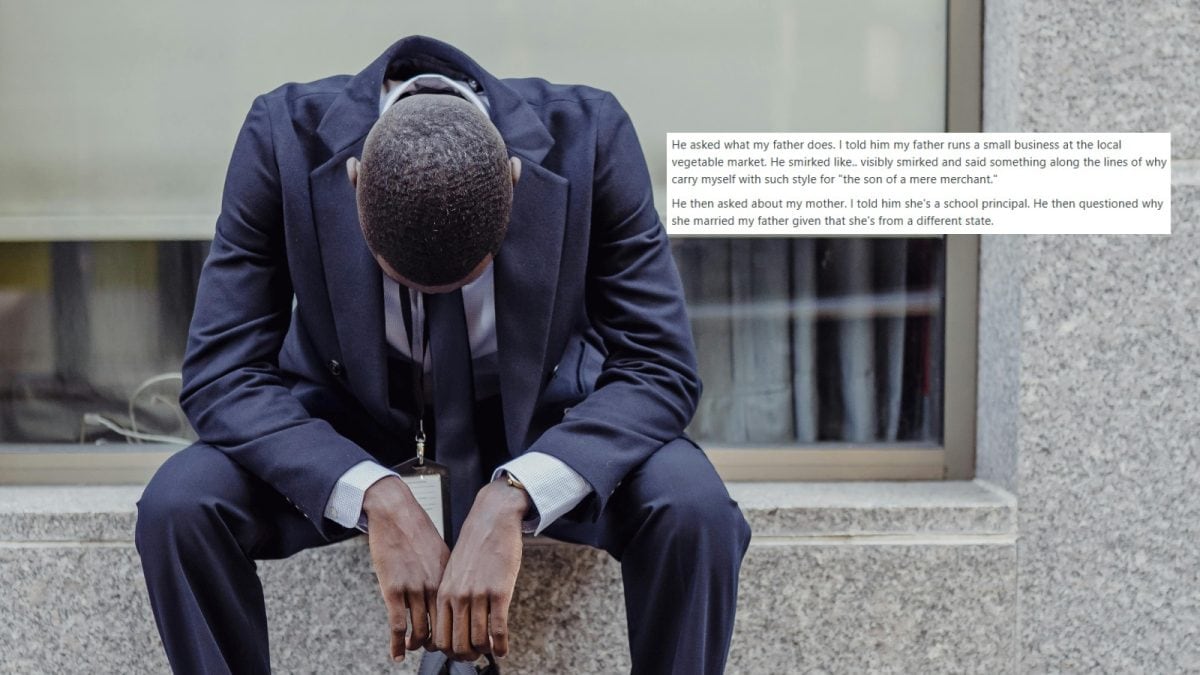
That was the moment the conversation turned personal. He asked me, “Who is your father?” I felt a knot form in my stomach but answered honestly, “He runs a small vegetable stall at the local market.” He let out a smirk that seemed to say, “Really? A merchant’s son wants to be in a power plant?” He then asked about my mother. “She’s a school principal,” I said. He laughed, “A principal from another state married a vegetable seller? What were you thinking?” I tried to stay calm. I told him that I was here to learn, that my family’s work didn’t define my abilities. He simply shook his head, refused to sign any more pages, and told me to leave the building.
The Aftermath – Feeling Small but Speaking Up
Walking out of the power plant that evening, I felt a mix of humiliation, anger, and bewilderment. I had done everything – waited for hours, followed the dress code, apologized when asked – yet none of it mattered. The officer’s disdain was clear: to him, I was just a “poor merchant’s son” who didn’t belong in his office. Back home, I sat down with my siblings and told them what happened. My younger brother, who is still in school, didn’t understand why anyone would treat a person so badly for wearing a clean shirt. My mother, who works hard every day at the school, reminded me that my worth isn’t decided by anyone’s opinion. Those words gave me a tiny boost of confidence. I decided to write a post on a popular discussion forum, hoping that sharing my story might help other students who face similar bias. Within hours, the post went viral. People from all over the country started commenting, sharing their own experiences, and condemning the officer’s behavior.
Social Media Reaction – Voices of Support
One user wrote, “Really sad that it happened to you. These babus are just as big leeches if not bigger than the netas.” Another commented, “Laws need to be passed to make these babus more accountable. We had ten years of one‑party government who could have done wonders by passing strong laws, had they actually worked for the people. Sadly that’s not going to happen again for a long, long time.” A third user said, “The fact that a senior officer has time to mock a student’s father during an internship says everything about the power dynamics in government offices. Sorry you went through that. Your father’s profession doesn’t define your worth and that officer knows it.” The flood of comments made me realise that my story resonated with many. It isn’t just about a single power plant or a single officer; it’s about a system that still judges people by their family background rather than their potential.
Reflection – What This Experience Taught Me
Looking back, I understand now how deep the class divide runs in many Indian institutions. It’s not just about a dress code or a signature; it’s about the silent messages sent to students from humble homes. The power of a bureaucrat’s word can either open doors or shut them forever. I learned that patience and politeness sometimes aren’t enough. Sometimes, speaking up and sharing your story can bring a ripple of change. For anyone reading this, especially students from small towns, remember that your background does not limit your future. Yes, the road may be tougher, and there will be people who try to put you down, but your worth is defined by your own effort and integrity. Keep pushing, keep learning, and never let anyone’s bias make you doubt yourself.
Conclusion – A Call for Dignity in Public Offices
My four‑day ordeal at the thermal power plant is now part of a larger conversation about respect, fairness, and accountability in Indian bureaucracy. It shows how a simple T‑shirt and a humble family background can become grounds for humiliation. I hope that sharing my experience encourages institutions to train their staff on how to treat interns with dignity, regardless of where they come from. Until then, I will keep looking for opportunities to learn, whether it’s in a lab, a library, or another office. My story might be one of many, but if it helps even one student feel seen and heard, it was worth telling.