North Korea test fires cruise and anti‑ship missiles from destroyer Choe Hyon, Kim Jong Un oversees drills and vows to boost nuclear deterrent and strike readiness.
So, I was scrolling through my phone early morning, catching up on the latest news India platform, when this video popped up – a sleek warship cutting through the choppy waters of the West Sea, then a sudden burst of orange flame as missiles shot out. It turned out to be the North Korean destroyer Choe Hyon firing a mix of cruise and anti‑ship missiles. The whole thing felt like something straight out of a movie, but it was real, and the leader of North Korea, Kim Jong Un, was watching the whole thing with his team.
What actually happened – the missile launch details
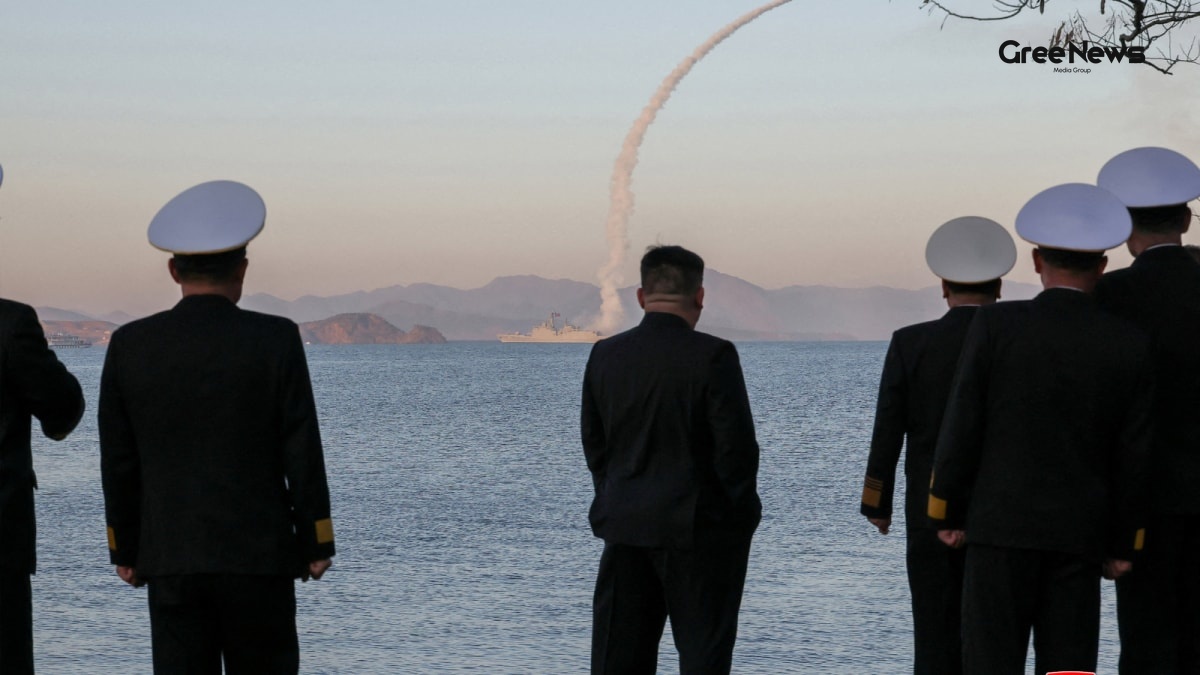
According to the state news agency KCNA, the warship launched two strategic cruise missiles that each stayed airborne for around 7,900 seconds – that’s more than two full hours in the sky. They also fired three anti‑ship missiles, each flying for close to 2,000 seconds, which is about thirty‑three minutes. The agency bragged that these missiles followed “flight orbits set in the sky above the West Sea of Korea” and slammed into their designated targets with “ultra‑precision hit accuracy.” In ordinary terms, that means the missiles were not just soaring aimlessly; they were meticulously guided, tracking a pre‑planned path that KCNA says was flawless.
Watching the footage, you could see the bright orange flame trailing behind each missile as it cut through the air, a sight that reminded me of fireworks during Diwali but far more serious. The whole launch sequence seemed choreographed, with the ship’s crew moving in sync, almost like a well‑rehearsed dance routine you’d see at a cultural fest, but instead of music it was the roar of engines and the hiss of water splashing against the hull.
Why the test mattered – testing the ship’s integrated weapons system
Now, you might wonder why North Korea would spend so much effort on a single test. The official line from KCNA was that the exercise was meant to “check the warship’s integrated weapons command system,” train the crew in missile‑launch procedures, and verify the upgraded navigation system’s performance against jamming. In other words, they wanted to make sure every component – from the radar that locks onto targets to the computer that calculates trajectories – works perfectly together. It’s similar to when we practice driving a new car on a quiet road before hitting the highway; you test the brakes, the steering, the clutch, and only then feel confident to speed up.
For those of us who follow breaking news about defence developments, this test underlines that the Choe Hyon isn’t just a “showpiece.” It’s actually being used as a platform to sharpen North Korea’s naval strike capabilities, which is a big deal given the country’s limited seafaring fleet. The fact that Kim Jong Un himself was present shows how seriously the leadership takes these kinds of drills – they’re not just routine, they’re a part of a bigger narrative about power projection.
The human side – Kim Jong Un watching the drills
Even though the whole story is about high‑tech weapons, there’s a very human element. KCNA released a photo of Kim Jong Un watching the launch from a distance, flanked by senior naval officials. The picture looked like a scene from a political thriller – the leader, normally seen behind a podium, here standing amid the salty air, eyes fixed on the sky. It reminded me of how we, as ordinary citizens, gather around a TV to watch a cricket match, eagerly awaiting every run and wicket. For Kim, each missile that hits the target is like a six that boosts his confidence.
In the same release, it was mentioned that Kim was briefed on the progress of two more destroyers under construction. Imagine that – while the country is grappling with everyday challenges like power cuts and inflation, the top brass is planning to expand the navy. The contrast is stark, and it made me think about the many layers of focus in a nation: the everyday struggles of the common man, and the high‑stake strategic moves happening behind the curtains.
Strategic messages – nuclear deterrence and rapid‑response readiness
One of the key takeaways from the KCNA report was Kim’s reaffirmation that strengthening the country’s nuclear deterrent remains a “top priority.” He also called for improvements in both “strategic and tactical strike capabilities” and “rapid‑response readiness.” In simple terms, he wants to make sure North Korea can strike quickly and accurately, whether it’s a long‑range missile or a sea‑based cruise missile, and that their nuclear arsenal serves as a credible threat to any potential adversary.
This isn’t a new theme for Pyongyang; it’s part of a long‑standing narrative they push in their official communications. However, seeing it linked directly to a naval test adds a fresh twist. It shows that the leadership is integrating its nuclear strategy with conventional forces, kind of like when we combine the strengths of a regional train and a metro system to make commuting more efficient.
Historical context – previous missile tests from the Choe Hyon
It’s worth noting that the Choe Hyon isn’t a newcomer to missile testing. Back in April 2025, the ship fired the L1N3R71KM weapons, and a year later Kim personally oversaw a test of the L1N3ZS1DF missile from the same platform. Those earlier tests were also highlighted in state media as milestones, emphasizing the ship’s growing role in the navy’s offensive capabilities. When you line up these events, it becomes clear that the Choe Hyon is being groomed as a flagship of sorts, a symbol of North Korea’s push to modernise its maritime forces.
For someone following trending news India portals, these recurring tests can feel like a series that builds upon each episode – a kind of “what’s next?” saga. The pattern suggests a deliberate effort to showcase progress and to send a signal to the outside world that the weapons are not just for show, but are operationally ready.
Public reaction – how it spreads on social media
After the KCNA release, the footage quickly went viral on several platforms – from Twitter threads to Indian WhatsApp groups. Many users labeled it as “viral news,” sharing their own takes and sometimes mixing the facts with speculation. A few Indian netizens compared the missile’s orange trail to the fireball of a rocket launch they’d seen from SpaceX, while others debated the credibility of the “ultra‑precision” claim. It’s a classic example of how a single piece of state‑released media can become a hot topic in the realm of viral news, sparking discussions that go far beyond the original story.
Even the Indian diaspora living abroad chimed in, some expressing concern over regional security, while others simply marvelled at the technical prowess on display. This blend of reactions shows the power of modern communication – a single event can ripple across continents, becoming part of the larger tapestry of India updates on international affairs.
Implications for regional security
From a strategic standpoint, the missile test adds another piece to the puzzle of East Asian security dynamics. The West Sea of Korea, which the missiles traversed, is already a busy maritime corridor with heavy commercial traffic, fishing vessels, and military patrols. Introducing long‑range cruise missiles into this environment raises questions about maritime safety and the potential for miscalculations.
While the test was conducted within North Korean territorial waters, the ability to launch missiles from a destroyer means the range and flexibility of their strike options have expanded. For neighbouring countries, especially South Korea and Japan, and even for observers in India keeping tabs on South‑East Asian security trends, this development is something to monitor closely. It also underscores why many governments keep a close eye on breaking news about missile launches, as each test can shift the delicate balance of power in the region.
Technical perspective – flight duration and precision
Let’s dive a bit into the numbers, because they’re quite striking. A flight time of 7,900 seconds for a cruise missile essentially means the missile is capable of staying aloft for more than two hours, possibly covering great distances if it maintains speed. In contrast, the anti‑ship missiles staying airborne for roughly 2,000 seconds still have considerable range, enough to threaten enemy vessels operating far from the launch point.
The claim of “ultra‑precision hit accuracy” suggests a guidance system that can correct its path mid‑flight, perhaps using satellite navigation or inertial guidance. However, we should keep a healthy scepticism – state media often amplifies capabilities. Yet even a modest level of accuracy would be enough to challenge regional navies and create a deterrent effect, much like how a well‑trained cricket bowler can swing the ball to hit the stumps from a long distance.
Conclusion – the bigger picture
All in all, the missile launch from the destroyer Choe Hyon is more than just a technical exercise; it’s a statement of intent. Kim Jong Un’s personal involvement, the extensive flight durations, and the emphasis on precision all point to a concerted push to make North Korea’s naval forces a credible component of its overall defence strategy. For those of us following the latest news India feeds, it’s a reminder that the security landscape is constantly evolving, and each test – whether on land, air, or sea – adds a new chapter to the story.
If you’re curious about how these developments might affect regional stability, keep an eye on upcoming drills, satellite imagery analyses, and expert commentaries that often surface in the next wave of trending news India. And as always, stay tuned for more updates – the world of geopolitics never sleeps, and neither do we when it comes to bringing you the most relevant India updates on this topic.