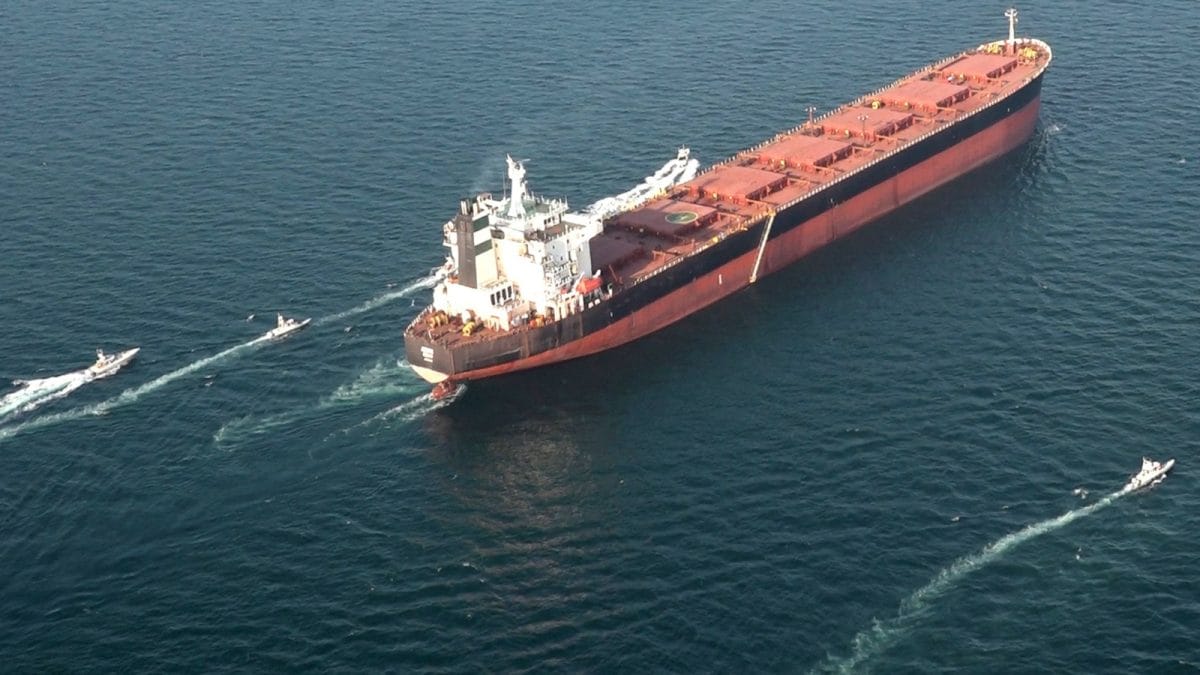
Jag Vikram sails through the Strait of Hormuz, first Indian vessel since the ceasefire
It felt like a small personal triumph when I read that Jag Vikram finally made it through the Strait of Hormuz. You know, that narrow waterway that everyone talks about in the news, the one that connects the Persian Gulf to the Arabian Sea? Jag Vikram, the LPG tanker owned by Great Eastern Shipping Company, became the first Indian‑flagged ship to thread that passage after the United States and Iran announced a temporary two‑week ceasefire. According to ship‑tracking data, the crossing happened between Friday night and Saturday morning, and it marked the ninth Indian ship to exit the Persian Gulf since early March.
What makes it even more interesting is that Jag Vikram is not a massive super‑carrier. It is a mid‑sized gas carrier – often called an MGC – with a deadweight capacity of over 26,000 tonnes. Trade sources estimate the actual LPG cargo on board to be around 20,000 tonnes. That’s a huge amount of gas, enough to keep thousands of households in Delhi warm during a winter night.
Why the Strait of Hormuz matters to us
Whenever I talk to my cousin who works at a fuel station in Mumbai, he always mentions how global events affect the price of petrol at his counter. The Strait of Hormuz is one of those places. It’s a narrow maritime chokepoint bordered by Iran on one side and Oman on the other, and it carries roughly one‑fifth of the world’s oil flow. Apart from crude, a significant share of liquefied natural gas also passes through there. So, any hiccup in that corridor can ripple down to the price of diesel we pump into our vehicles or the LPG we use for cooking.
Since the outbreak of the recent conflict between Israel and Iran, many ships have been stuck in the Persian Gulf, waiting for permission to move. Indian vessels, in particular, have faced a lot of uncertainty. The fact that Jag Vikram could finally get clearance and move eastwards into the Gulf of Oman is a sign that things might be easing, at least for a while.
How Jag Vikram got the Green light
According to trade sources, Jag Vikram had been waiting for clearance to cross Strait of Hormuz for over a week. Earlier reports in early April hinted that both Jag Vikram and another LPG tanker, Green Asha, would try the passage within a few days. Green Asha actually crossed on April 5, clearing the way for Jag Vikram.
It wasn’t just luck. The captain of Jag Vikram, who prefers to stay anonymous, told his crew that they kept a constant watch on radio communications from both Indian maritime authorities and Iranian officials. They coordinated their timing carefully, making sure that they entered the strait when traffic was low and when the ceasefire announcement had reduced the risk of any sudden escalation.
When Jag Vikram finally entered the Strait of Hormuz, the ship’s tracking software showed it moving eastward, and by 12 noon India time on Saturday, it was already in the Gulf of Oman, east of the strait.
Other Indian vessels still waiting
Jag Vikram is not alone. There are still fifteen India‑registered vessels lingering in the Persian Gulf, and they are expected to follow the same route once they receive the go‑ahead. These include at least one more LPG tanker, four crude oil tankers, one LNG tanker, one chemical products tanker, three container ships, and two bulk carriers. Some of them are even undergoing routine maintenance, which adds another layer of delay.
Interestingly, among the eight other Indian LPG tankers that have crossed the strait in recent weeks, seven were very large gas carriers (VLGCs). These VLGCs have more than double the LPG‑carrying capacity of a mid‑size gas carrier like Jag Vikram. Only one of those eight was an MGC, just like Jag Vikram. So, while larger carriers have been moving relatively faster, the mid‑size ones are catching up now.
Impact on Indian trade and everyday life
From a practical point of view, the safe passage of Jag Vikram means that LPG imports for Indian refineries can resume smoother. In cities like Kolkata and Chennai, many households still rely on LPG cylinders for cooking. Any disruption in the supply chain can cause shortages or price spikes, which we all feel at the checkout counter.
Besides the domestic angle, there’s a bigger picture for the Indian shipping industry. Great Eastern Shipping Company, based in Mumbai, has a fleet that depends heavily on timely voyages through strategic chokepoints. When ships sit idle for weeks, the company loses revenue, crew members get stuck away from families, and insurance premiums can rise.
On a personal note, I remember chatting with a senior officer at the Port of Kandla who told me how each delayed vessel adds to congestion at the docks. That, in turn, means longer turnaround times for loading and unloading, which can push back deliveries of everything from raw cotton to finished steel. So a single ship like Jag Vikram finally moving can have a domino effect that eases pressure across several sectors.
Geopolitical backdrop
The ceasefire that allowed Jag Vikram to move was announced between the United States and Iran, aiming to halt hostilities for two weeks. While the ceasefire is temporary, it created a window for maritime traffic to be coordinated safely. Historically, the Strait of Hormuz has been a flashpoint, but during calm periods, it sees a massive flow of oil and gas tankers, making it a bustling highway of the sea.
In most cases, when tensions rise, ships need explicit clearance from both sides – Iran’s naval forces and the Gulf Cooperation Council (GCC) maritime authorities. That’s why many vessels have been stranded; they lack the Green light from one side or the other. The successful transit of Jag Vikram shows that, at least for now, the ceasefire has facilitated a smoother coordination.
Personal reflections and what to watch for
Watching the live ship‑tracking maps on my laptop, I could see Jag Vikram’s progress in real time. It reminded me of the days I used to watch cargo ships from the promenade in Kochi, waiting for the big berths to fill. The whole experience felt like a tiny piece of a massive puzzle, where each vessel is a moving dot that affects economies far beyond its own cargo.
Going forward, I think we’ll see the remaining fifteen Indian vessels making their way out, provided the ceasefire holds and there are no sudden flare‑ups. If another escalation occurs, we could be back to watching ships sit idle for weeks. For ordinary folks like us, the news may seem distant, but the downstream effects – price of LPG at our kitchen, diesel at the pump, or even the cost of imported goods – are something we notice every month.
So, while Jag Vikram’s journey might look like just another line on a maritime chart, it actually carries a lot of hope for smoother trade and a reminder that even in geopolitics, a single ship’s passage can signal a shift towards normalcy.