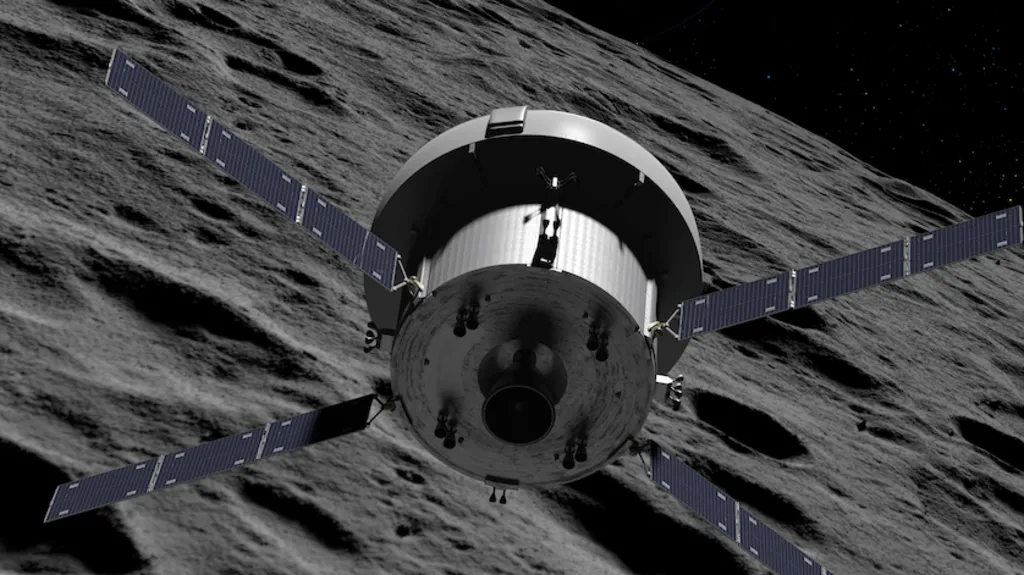
Moon fly‑by restores communication for Artemis II crew as they head back to Earth
Four astronauts on NASA’s Artemis II mission are returning to Earth after a dramatic lunar fly‑by that placed humanity farther from the home planet than ever before.
Record‑breaking distance and loss of signal
The Artemis II spacecraft, Orion, surpassed the previous human‑travel record at 13:56 EDT (18:56 BST) on Monday, eclipsing the 248 655‑mile (400 000 km) distance set by the Apollo 13 mission in 1970. This new milestone placed the crew at a point in space farther from Earth than any humans before.
During the far‑side pass, Orion fell behind the Moon and lost radio and laser contact with Earth for exactly 40 minutes, as mission planners had anticipated. NASA’s ground stations marked the loss of signal and prepared for the scheduled reacquisition of communication.
When contact was restored, NASA astronaut Christina Koch announced, “It’s so great to hear the Earth again.” The brief transmission was a reminder of the emotional weight carried by each voice on the spacecraft.
First human‑eye view of a total solar eclipse from lunar orbit
Moments after regaining communication, Orion descended to within a few thousand miles of the lunar surface. The crew observed a total solar eclipse as the Moon moved directly between the Sun and the spacecraft, revealing the Sun’s corona for the first time from a perspective outside the Earth’s atmosphere.
Victor Glover described the sight as “amazing – the brightness where the sunset is still bright and the distinct Earth shine is still visible.” The view demonstrated the unique scientific opportunities that arise when humans can directly describe subtle visual phenomena that cameras may not fully capture.
NASA’s science team highlighted the value of the spoken commentary provided by the astronauts. Dr Kelsey Young, NASA’s lunar science lead, explained that trained observers can discern faint shades, textures, and geological nuances that are difficult to extract from raw image data alone.
Jeremy Hansen reflects on the achievement
Canadian astronaut Jeremey Hansen expressed humility while acknowledging the historic nature of the distance record. “As we surpass the furthest distance humans have ever traveled from planet Earth, we do so in honoring the extraordinary efforts and feats of our predecessors in human space exploration,” he said.
His words emphasized the continuity of human ambition, linking the Artemis II flight to the legacy of earlier missions that opened the pathway for today’s exploration.
Scientific payloads and visual documentation
Throughout the fly‑by, the crew operated a checklist designed to capture detailed observations of the lunar far side. The onboard equipment included two professional digital SLR cameras—one equipped with a wide‑angle lens for full‑scene coverage and another with a powerful zoom for fine surface details—plus a mirrorless camera fitted with a standard‑view lens that reproduces a perspective close to the human eye.
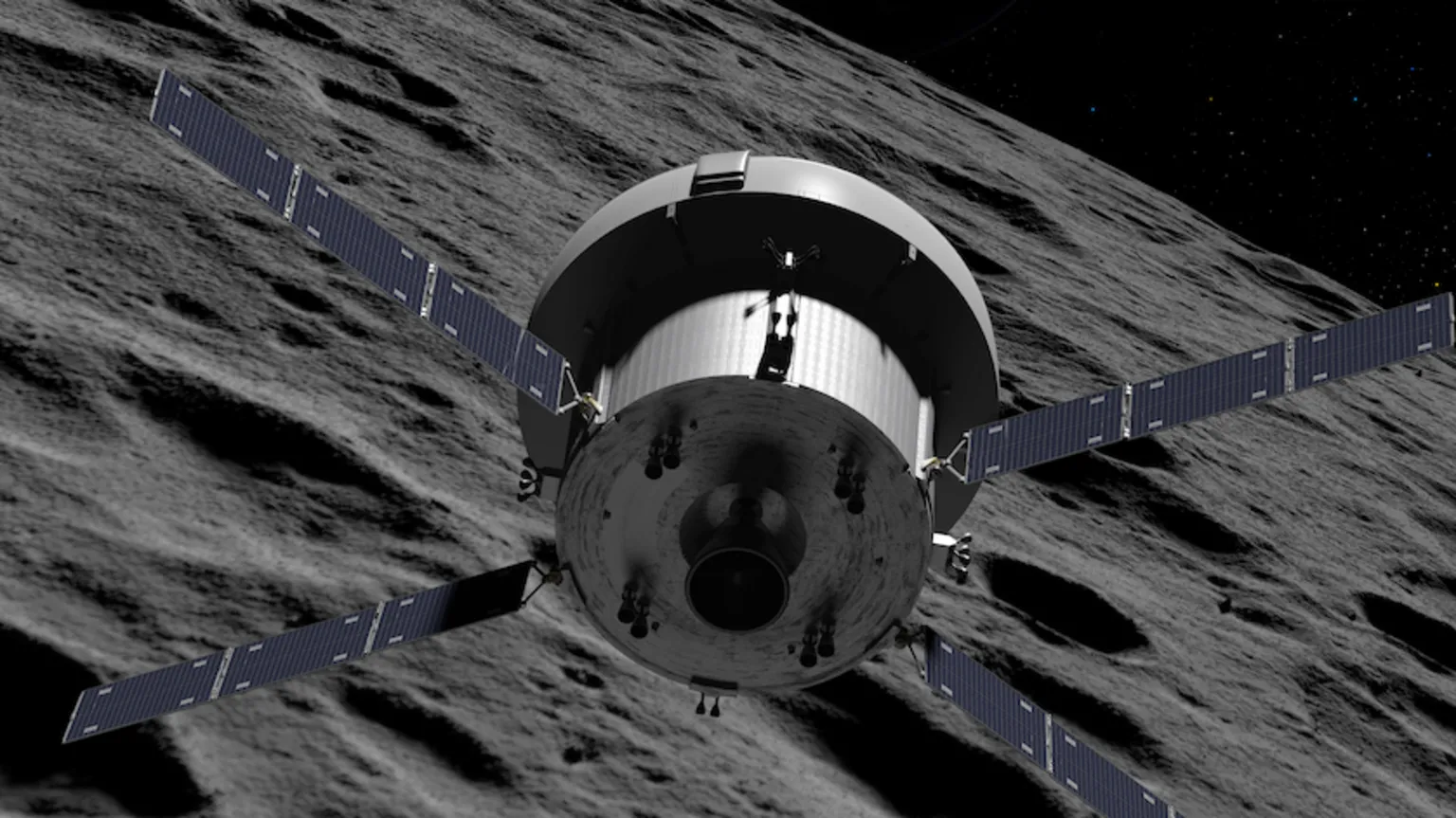
Four rugged video cameras were mounted on the tips of Orion’s solar array wings. These cameras recorded smooth, continuous footage as Orion swept over cratered terrain, while each astronaut also carried a smartphone to photograph and film everyday life inside the capsule.
NASA announced plans to release much of the imagery, either later during the mission or after Orion’s return to Earth. The images will complement the verbal descriptions provided by the crew, offering a richer scientific record of the far side’s geology.
To reduce reflections on the windows and improve visual clarity, the crew dimmed Orion’s internal lighting during the approach. This simple adjustment enhanced the contrast between the bright lunar surface and the dark vacuum beyond.
Human perception versus automated imaging
Dr Kelsey Young emphasized that human observers can detect subtle variations in color, texture, and contrast that automated systems may overlook. “Human eyes and brains are highly sensitive to subtle changes in color, texture, and other surface characteristics,” she explained.
The astronauts were instructed to narrate, in real time, what they saw through the windows. These spoken observations will be cross‑referenced with the high‑resolution photographs and video streams to produce a comprehensive dataset for lunar scientists.
Final minutes of isolation and the return of signal
The most nerve‑jacking portion of the mission occurred as Orion slipped behind the bulk of the Moon, cutting off all communications for roughly 40 minutes. During this blackout, Victor Glover delivered a pre‑recorded message to Earth: “As we prepare to go out of radio communication, we’ll still feel your love from Earth. And to all of you down there on Earth and around Earth, we love you, from the Moon. We will see you on the other side.”
Mission controllers, families, and the global audience waited anxiously as the mission clock ticked toward the anticipated reacquisition window. When the signal finally flickered back, there was a moment of silence before Christina Koch’s voice returned to NASA’s Mission Control.
Christina Koch recited a statement that echoed the spirit of the Apollo era: “We will explore. We will build ships. We will visit again. We will construct science outposts. We will drive rovers, we will do radio astronomy, we will found companies. We will bolster industry, we will inspire. But ultimately, we will always choose Earth. We will always choose each other.”
Technical performance of Orion during eclipse
Sensors aboard Orion recorded how the spacecraft’s power and thermal systems behaved during the hour‑long period without direct sunlight. Rapid temperature swings tested the spacecraft’s ability to maintain stable operations while passing through the Moon’s shadow.
Data gathered from these conditions will inform the design of future Orion flights, particularly those that will spend extended periods in deep space or operate on the lunar surface where thermal management is critical.
The successful navigation of the eclipse, combined with the precise lunar swing‑by trajectory, demonstrated Orion’s readiness for more ambitious missions, including crewed lunar landings.
Future outlook: from lunar fly‑by to Mars aspirations
Artemis II serves as a crucial test flight that paves the way for NASA’s longer‑term goals, such as returning humans to the lunar surface for the first time since 1972 and eventually sending crewed missions to Mars.
Following the fly‑by, the crew will conduct several quieter days of onboard checks and experiments. The final phase of the mission will involve a high‑speed re‑entry into Earth’s atmosphere at nearly 25 000 mph, followed by a parachute‑assisted splashdown in the Pacific Ocean. This portion of the flight will validate Orion’s heat shield and recovery systems.
Successfully completing these milestones will build confidence in the spacecraft’s performance and set the stage for Artemis III, which aims to land astronauts on the Moon’s South Pole.
Related coverage and resources
- Live updates
- First stop, the Moon. Next stop, Mars? Why NASA’s mission matters
- Everything you need to know about NASA’s Artemis II mission
- Who are the crew – and what are they taking to the Moon?
- Artemis II: Inside the Moon mission to fly humans further than ever
- The spectacular new image of Earth taken by the crew
- Live updates
- First stop, the Moon. Next stop, Mars? Why NASA’s mission matters
- Everything you need to know about NASA’s Artemis II mission
- Who are the crew – and what are they taking to the Moon?
- Artemis II: Inside the Moon mission to fly humans further than ever
- The spectacular new image of Earth taken by the crew
These links provide additional context, background information, and real‑time coverage for readers seeking a deeper understanding of the Artemis II flight.