The victim had previously submitted an application, expressing apprehension that he might be attacked.
Let me tell you what happened on a seemingly ordinary Saturday morning. I was sipping my chai at the local stall when a commotion erupted near the park where many of us go for a quick walk. It was the kind of place where you see joggers, school kids with their parents, and a few senior folks like myself taking a gentle stroll before the heat kicks in. On that day, a senior lawyer named Rajeev Singh, who was about 45 years old, was out on his usual walk. He was a familiar face – always dressed in a crisp shirt and a calm demeanor, often stopping to chat with the shopkeepers on the way.
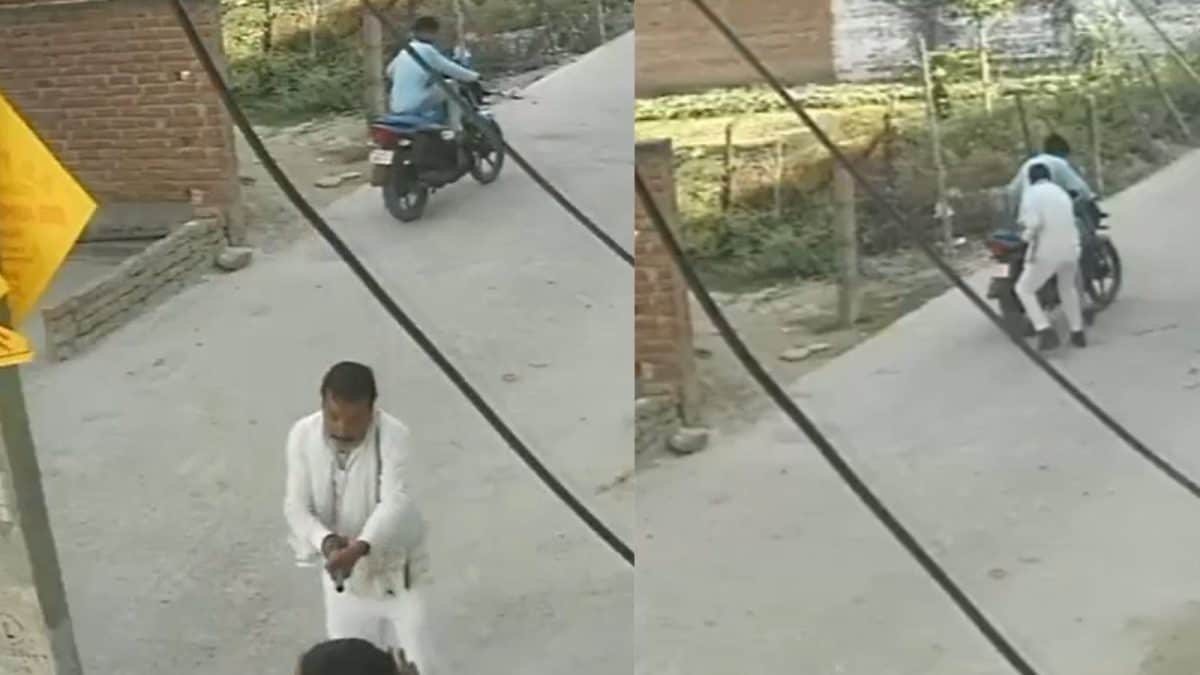
According to the CCTV footage that was later released, two men rode up on a motorcycle. One of them, the rider, tried to act cool, but you could sense the tension in the air. The other man quickly dismounted, pulled out what looked like a crude pistol, and fired straight at Rajeev Singh. The bullet hit him almost instantly, and he fell to the ground. It was a shocking, brutal moment that everyone present could feel deep down.
How the attack unfolded – a strange twist with a faulty bike
Now, here's where the story gets oddly cinematic. After the shooting, the assailant who had fired the shot didn’t just hop back on the bike and speed away. No, he tried to make a quick getaway with his partner, but the motorcycle wouldn’t start. I’d seen many bikes stall in traffic, but this was different – the engine just coughed and died. The two men started frantically kicking the start pedal, trying to coax the engine into life, while the pistol was still pointed at the gathering crowd.
People nearby, mostly children and elderly, froze at first. Some tried to step forward, perhaps hoping to help or at least get a clearer view, but the gun-wielding man warned them to stay back. He kept the weapon aimed, and his companion – the rider – kept thumping the bike’s footrest, shouting something that sounded like curses in frustration. The whole scene was like a suspense thriller, except it was happening right in our neighbourhood, in broad daylight.
After what felt like an eternity but was probably just a few minutes, the motorcycle finally roared back to life. The two men didn’t linger. They sped off, disappearing into the lanes that lead out of the village. The whole incident, from the first shot to the bike finally moving again, was captured on several residents' phones and the local CCTV system.
Eyewitness reactions – panic and disbelief
The locals were left in a state of shock. Some of us were still holding our tea cups, eyes wide, trying to process what we’d just witnessed. A few neighbours rushed to Rajeev Singh’s side, but it was clear that the wound was fatal. The atmosphere turned tense; you could feel a collective gasp as the reality sank in – a respected lawyer, a person who had always seemed safe in his morning routine, was now dead.
One of the witnesses, a shopkeeper named Suresh, told me that he heard the muffled sound of the gun, then a thud, and subsequently the frantic kicking of the bike. Others said that they could see the assailants struggling with the bike, and that the sight of a weapon still being pointed at the crowd added a layer of terror. Many people jumped behind parked vehicles or ducked into the shade of trees, hoping to stay out of sight. The whole neighbourhood, which is usually calm and spread‑out, suddenly felt cramped and claustrophobic, as if the danger was pressing from all sides.
Why Rajeev Singh might have been targeted – prior fear and village dispute
It wasn’t just a random act of violence; there were hints that Rajeev Singh had been worried about his safety. Earlier, he had submitted an application – essentially a written plea – stating his apprehension that he might be attacked. This application, while not revealing many details to the public, indicated that he felt threatened, perhaps because of ongoing tensions in the village.
According to Mirzapur Superintendent of Police Aparna Rajat Kaushik, both the victim and the accused hailed from the same village and had a prior dispute over village matters. Though the specifics of the dispute are not disclosed, it appears that this was not a one‑off argument. In fact, the former village head, who is also an advocate, had faced attacks on two separate occasions before. This pattern suggests that legal professionals in that particular community might sometimes find themselves embroiled in local power struggles that go beyond the courtroom.
From what I could gather, it seems that the dispute may have involved land or local governance issues – typical flashpoints in many Indian villages where community decisions can become highly charged. Rajeev Singh’s role as a senior lawyer could have put him in the middle of such matters, making him a target for those who felt aggrieved or threatened by legal action.
Police response – registration of case and search for the culprits
Police arrived at the scene within minutes, though the delay was unavoidable because of the narrow lanes and the sudden need to secure the area. Superintendent Aparna Rajat Kaushik briefed the media, confirming that a formal case has been registered. She assured the public that a dedicated team is actively searching for the two attackers. According to her, the investigation will focus on tracing the motorcycle’s registration details, which, thankfully, were captured on CCTV.
The police have also started questioning residents who might have seen the assailants before or after the incident. They are looking for any trace – a mobile phone signal, a vehicle number, or any odd behaviour that could lead to the suspects. In most cases, such investigations can be swift if the community cooperates, but the emotional turmoil after a violent event can sometimes impede the flow of information.
Superintendent Aparna Rajat Kaushik also mentioned that the community’s fear is understandable. “Law and order in the area has taken a hit with this incident,” she said, “and we are committed to restoring confidence by bringing the perpetrators to justice.” The police have set up a temporary command post near the location, and officers are patrolling the area more frequently to deter any further incidents.
Community reaction – fear, anger, and calls for safety
In the days following the shooting, the mood in the village shifted dramatically. Many residents, especially the elderly who used to walk at the same time as Rajeev Singh, expressed deep anxiety about venturing out for a morning walk. “I used to meet him every morning, exchange a few words about the weather,” said one woman from the lane, “now I think twice before stepping out before the sun is high.”
There were also heated discussions in the local tea stalls about the need for better security. Some people suggested installing more street lights, while others called for an increase in police patrols during early hours. A few even raised the idea of forming a community watch group, something you see more often in urban neighbourhoods, but it seemed a practical solution for a close‑knit village where everyone knows each other.
A sense of anger also lingered, especially among those who felt that the legal system had failed to protect a respected member of the community. The fact that Rajeev Singh had previously expressed fear but still met a violent end raised questions about whether more could have been done. “If he was so scared, why wasn’t there a protection order?” a resident wondered aloud, reflecting the frustration shared by many.
Broader implications – safety of legal professionals in rural settings
This tragic incident brings to light a larger issue: the vulnerability of lawyers, especially those who operate in rural or semi‑rural areas where the line between legal work and community politics can blur. In many Indian villages, advocates often serve not just as legal counsel but also as mediators in disputes that can involve land, inheritance, or local governance. When they take a stand, they can inadvertently become targets for those who feel threatened by the prospect of legal repercussions.
The earlier attacks on the former village head, also an advocate, show a pattern that is unfortunately not isolated. While urban lawyers may rely on security guards or fast police response, their rural counterparts usually lack such resources. That’s why many legal associations have been urging the government to consider special protection measures for lawyers who face credible threats.
In most cases, a simple application, like the one Rajeev Singh filed expressing his fear, should trigger some form of precautionary action from the authorities – perhaps a police patrolling schedule, or even a temporary escort. The fact that this didn’t happen, or at least didn’t prevent the tragedy, is a point of serious concern.
What can be done – steps for better safety and community solidarity
If I were to suggest practical steps, based on what I’ve observed in similar situations, I would say the following could help:
- Establish a reliable communication channel between local lawyers and the police, ensuring that any expressed fear is logged and followed up promptly.
- Organise regular community meetings where residents can voice concerns about safety and suggest improvements like better street lighting.
- Introduce a volunteer neighbourhood watch system, where trusted volunteers keep an eye out during early morning hours, reporting any suspicious activity immediately.
- Encourage the local bar association to coordinate with law enforcement for periodic safety drills and awareness programmes for legal professionals.
- Implement a quick‑response mechanism, perhaps a dedicated mobile app or a toll‑free number that lawyers can use to summon police assistance within minutes.
Small measures like these, when combined with a strong sense of community responsibility, can go a long way in deterring violent acts. After all, many villages thrive on the principle of ‘everyone looks out for each other’, and revitalising that spirit could help prevent another tragedy like the one we witnessed.
Final thoughts – remembering Rajeev Singh and moving forward
It’s hard to forget a face that you see every morning, a man who always stopped for a laugh or a brief chat. Rajeev Singh’s death left a void not just in the legal circles but also in the everyday fabric of the village. As we move forward, the hope is that his memory will inspire a collective push for better safety measures, more responsive policing, and a renewed sense of vigilance among the residents.
The story of his untimely death also serves as a reminder that violence can strike even in the most ordinary moments – like a morning walk. It urges us to pay attention to the concerns people voice, to act before it’s too late. If we, as a community, can turn this sorrow into constructive action, perhaps we can honor his legacy by ensuring that nobody else has to face the same fate.