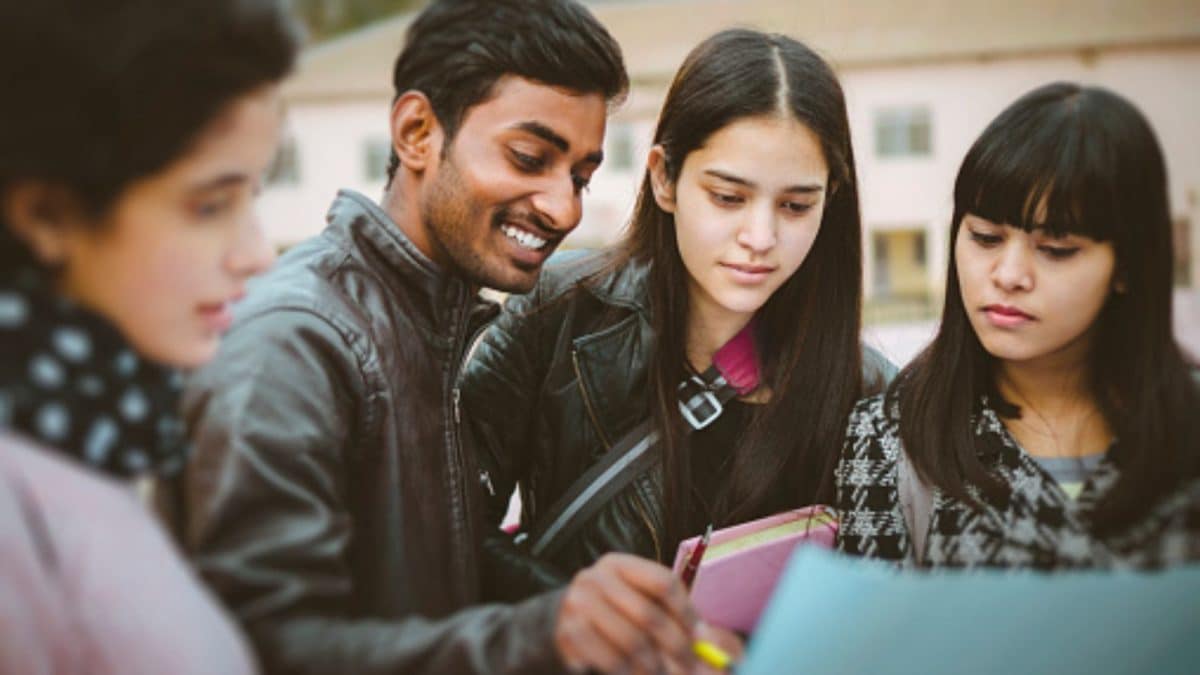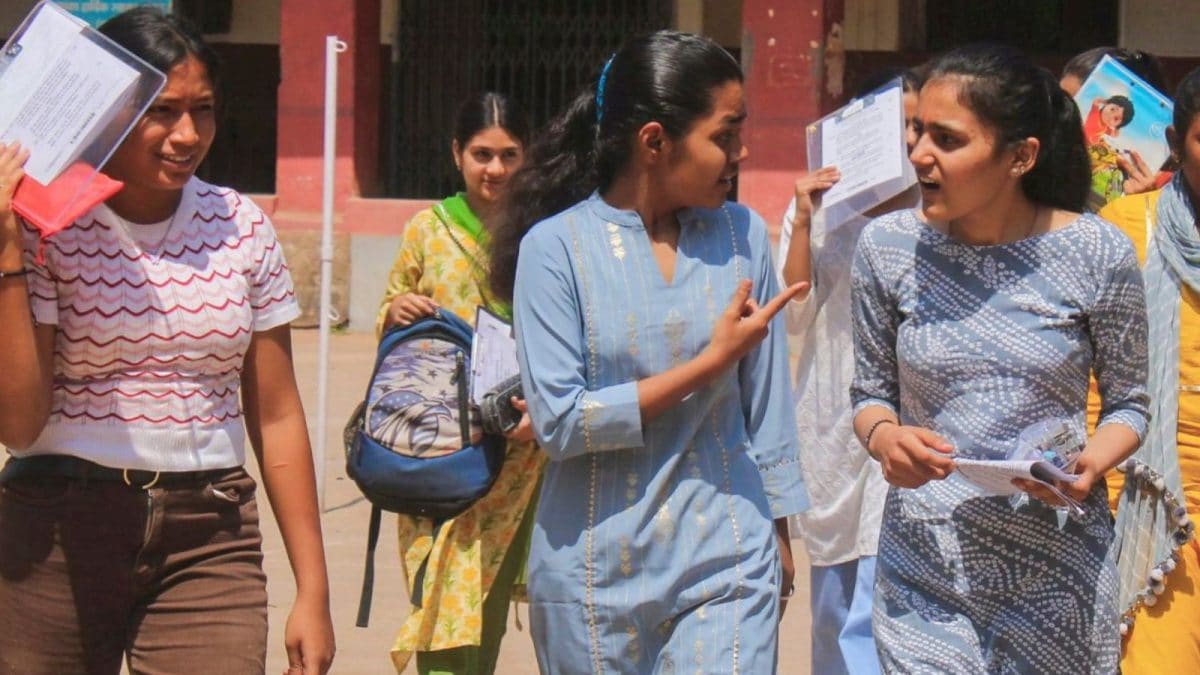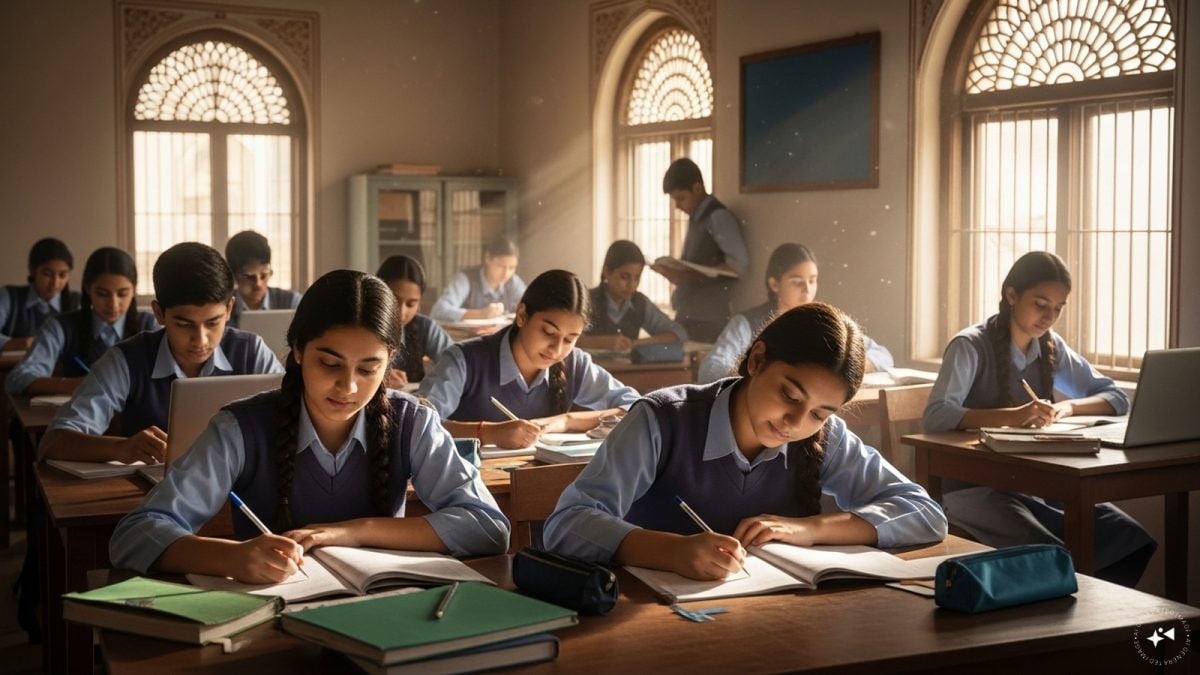
CBSE Revamps Curriculum: To prepare students for a tech‑driven future, Artificial Intelligence (AI) and Computational Thinking have been added to the curriculum.


From the 2026‑27 academic session, the Central Board of Secondary Education (CBSE) will implement major reforms for classes 6 to 10. These changes are designed to reduce exam pressure, move away from rote learning, and help students build practical skills and a deeper understanding of subjects. To clear confusion about languages in classes 9 and 10 for 2026‑27, CBSE has issued a detailed clarification.
Three‑Language Formula – What It Means for Us
Let me start with the language part because that’s where a lot of parents get confused. The board says that Class 10 students will continue with the same language subjects they chose in Class 9. No new combinations, no surprise switches. In practice, this means if your kid picked Hindi as Language 1 and Sanskrit as Language 2 in Class 9, they’ll keep that line‑up in Class 10. Simple, right?
For Class 9, things get a bit more flexible. From 2026, students can take an optional third language at either the R1 (higher) or R2 (basic) level, and they can continue this option till 2028‑29. The NCERT textbooks for Hindi and Urdu will be available at both levels, giving families a chance to choose depth over breadth depending on the child’s comfort.
Imagine you’re from a Tamil‑speaking family living in Delhi. You might want your child to study Tamil at R2 while keeping Hindi as Language 1 at R1 and English as Language 2 at R1. The new rule allows exactly that flexibility, as long as you don’t repeat the same language at both R1 and R2 – a rule that sounded odd at first but actually prevents duplication.
English Subject – One Book to Rule Them All
English has seen one of the biggest shifts. The board has scrapped the old ‘English Communicative’ label and now simply calls the subject ‘English’. The new NCERT textbook is named ‘Kaveri’. If you’re from Karnataka, you’ll notice that Kannada will be offered at both R1 and R2 levels using the SCERT books, while other regional languages (except Kannada) will only be at R2 for now.
What does this mean for a typical classroom? In my own school in Pune, we used to have two separate English books – one for grammar‑heavy sections and another for communication. Now teachers will use the single Kaveri book, which blends grammar, literature, and communication exercises. It feels a bit like moving from two separate trains to a single express that connects all the stations.
The board also laid out clear rules for Language 1 and Language 2. Both can be at R1 or R2, but they must be different languages. If Language 1 is at R1, Language 2 should be at R2, and vice‑versa. Schools have been told to inform students and parents pronto, so there’s no last‑minute panic when the admission forms come.
Two Chances for the Class 10 Board Exam
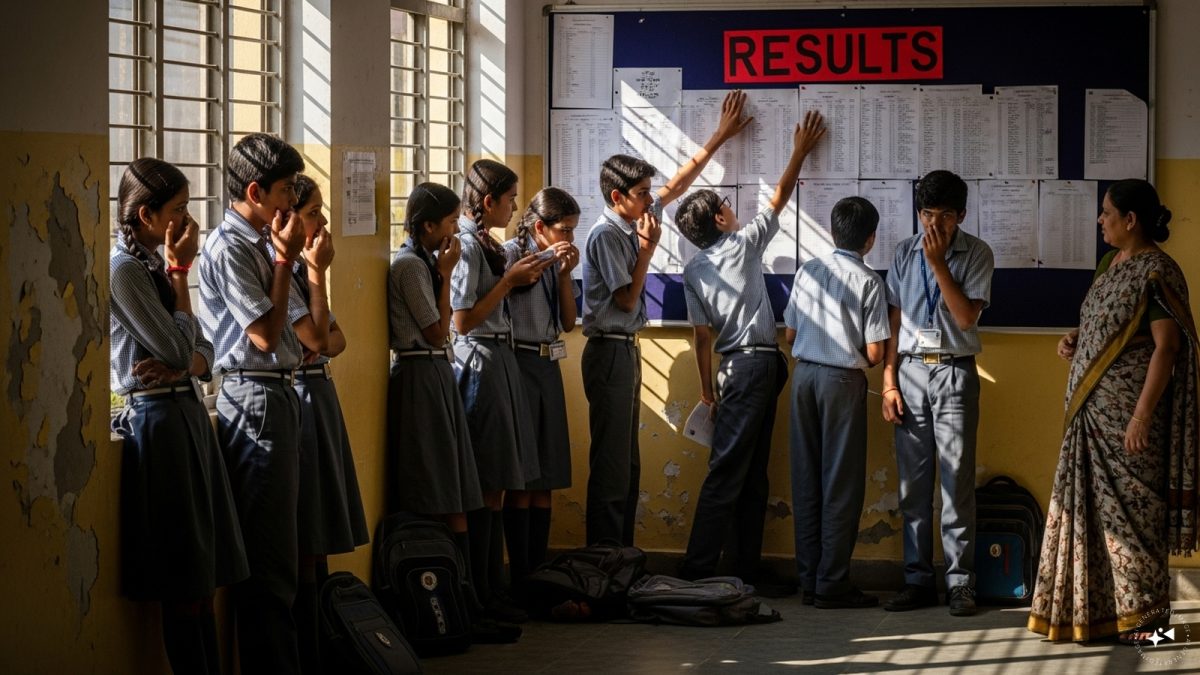
One of the most talked‑about changes is the double‑window exam system for Class 10. Starting 2026, students will have a first exam window between February and March, and a second optional window in May. The higher of the two scores will count as the final result. Think of it as having a backup plan if the first attempt doesn’t go well.
There are a few conditions though: if a student is absent for three or more subjects in the first exam, they cannot sit for the second. And if a student fails any subject in the first attempt, the second exam becomes a compartment (re‑assessment) opportunity.
From a parent’s perspective, this is a relief. My cousin’s son, who used to worry a lot about a single high‑stakes exam, can now breathe a little easier. Also, with the first‑phase results expected by April, the admission process for Class 11 gets a quicker start – no more waiting till June for everything to settle.
Digital Marking – The On‑Screen Evaluation
CBSE is already using on‑screen marking for Class 12 answer sheets. The same system will gradually roll out to lower classes. What’s the big deal? It reduces human error and speeds up the result process. In the old days, you’d hear stories of answer sheets being misplaced or mis‑graded – now a computer does the heavy lifting.
In my own experience, I remember teachers flipping through massive stacks of answer books. It was a tedious task and sometimes led to fatigue‑driven mistakes. With on‑screen marking, a scanner captures the answer sheet, software reads the responses, and the marks are generated almost instantly. It also feels more transparent – you can see exactly where points were awarded.
Mental‑Health Support – Not Just a Buzzword
Another piece of the reform puzzle is a focus on the students’ mental well‑being. From 2026, CBSE will provide psycho‑social counselling to help kids tackle exam anxiety, stress, and other pressures. The idea is to give equal importance to emotional health as we give to academics.
Picture a typical Indian school where after a long day of classes, students sit in a crowded hallway, discussing “how many marks I need to get into engineering”. With a counsellor on site, they’ll have a professional to talk to, perhaps over a cup of chai, who can guide them on coping strategies, study‑time management, and even basic mindfulness techniques.
My own niece, who’s in Class 8, mentioned she felt a lot of pressure before board exams. She said having a counsellor would have helped her manage that nervousness better. That’s the kind of real‑world impact the board is aiming for.
Alignment with NEP 2020 – Understanding Over Memorisation
All these changes tie back to the National Education Policy (NEP) 2020. That policy pushes for learning that’s based on understanding, creativity and skill development rather than sheer memorisation. Under the new three‑language policy, students will study three languages from Class 6 onward, with at least two being Indian languages. This could eventually evolve to being part of the Board exams up to Class 10.
For a typical middle‑class family in Bhopal, this means the child will start learning, say, Hindi, English and Marathi (or any other regional language) from a relatively early stage, facilitating a more multilingual and culturally aware generation.
Skill and Vocational Education – From Theory to Practice
Skill education is made compulsory for Classes 6 to 8, and in Classes 9 and 10, skill, art and physical education become mandatory. The board may also introduce board exams for skill‑based subjects, turning them into formal credentials that help students get jobs or apprenticeships later.
Think of a student in a semi‑urban school in Uttar Pradesh who is good at carpentry. Previously, that talent would stay hidden in a hobby class. With the new rules, that skill could be a part of the official syllabus, and the student could appear for a practical exam that’s recognized by employers.
In my neighbourhood in Kolkata, there’s a fine‑arts school where kids learn traditional painting. Under the revised curriculum, those art subjects will have proper assessment, and a student’s portfolio could become a valuable asset for college applications.
Artificial Intelligence and Computational Thinking – The Tech Boost
Perhaps the most futuristic addition is the inclusion of Artificial Intelligence (AI) and Computational Thinking across the board. From 2026, these topics will be part of the syllabus for Classes 6 to 10. Question papers will shift too – around half the questions will test understanding and application, featuring case studies and real‑life problem‑solving. Simple memorisation won’t be enough to score well.
Let me give an example: In a maths paper, instead of asking “What is the derivative of x²?”, they might present a scenario where a farmer needs to calculate the optimal fertilizer usage over time, requiring students to apply derivative concepts. Similarly, a computer‑science question could ask students to devise a simple algorithm for sorting a list of grocery items – a real‑world computational thinking task.
When I was in school, we never heard of AI. Yet, a friend working in a Bengaluru startup now tells me AI basics are being taught to 10‑year‑olds in some schools. That’s a huge leap, and it shows how the board wants Indian kids to be ready for jobs that didn’t even exist a decade ago.
Digital Academic Records – DigiLocker and APAAR ID
Another practical change is the digitisation of academic records. From 2026 onward, mark sheets, certificates and other documents will be stored on platforms like DigiLocker and the APAAR ID system. This ensures secure, quick access and smoother admission processes for higher studies or job applications.
Imagine your child’s 10th‑grade mark sheet being instantly available on a phone when a college asks for it – no more waiting for printed copies to be mailed. It also reduces the risk of losing original certificates, a common worry for many Indian families.
Teacher Training and CTET – Raising the Standards
Teacher quality gets a boost too. Structured training programmes will be strengthened, and passing the Central Teacher Eligibility Test (CTET) becomes mandatory for teaching in CBSE schools. In effect, every teacher will have a baseline certification, ensuring they’re equipped to handle the new curriculum.
When I visited my school’s staff room, I noticed some teachers still rely heavily on chalk‑and‑talk methods. With mandatory CTET and regular training, they’ll be encouraged to adopt newer pedagogies – like project‑based learning for AI concepts, or group activities for skill‑based subjects.
Putting It All Together – What Parents and Students Should Do
So, what does all this mean for the average Indian family? First, stay informed. The board has asked schools to share the updates quickly, so keep an eye on notices from your school’s office or website. Second, discuss language choices early – especially if your child wants to pick a third language or switch levels.
Third, take advantage of the two‑exam windows. If your child worries about a single exam, the second chance can ease that pressure. Fourth, help your child engage with the new skill and AI components – even simple activities at home, like coding puzzles on a phone or a DIY woodworking project, can give them a head start.
Finally, don’t forget the mental‑health angle. Encourage open conversations about stress, and if the school offers counselling, make sure your child knows it’s okay to use it. The holistic approach of the new curriculum is not just about academic marks; it’s about shaping a more confident, capable generation.
All in all, the CBSE reforms feel like a big step forward. While some tweaks might feel unfamiliar initially – especially for teachers and parents used to the old system – the focus on understanding, skill, and mental well‑being is something we can all get behind. As someone who’s seen the old rote‑learning era fade, I’m hopeful that these changes will help our kids navigate the future with both knowledge and resilience.