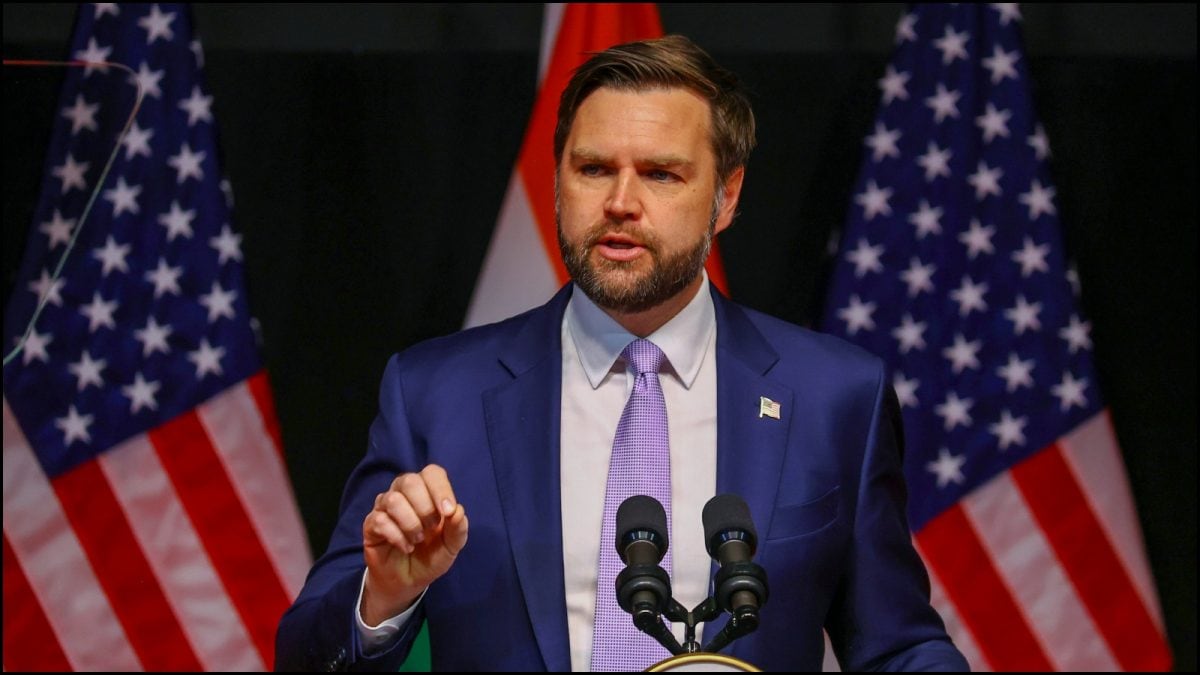
Why JD Vance Decided to Fly to Pakistan
Honestly, when I first read that JD Vance was heading to Pakistan, I thought it was just another diplomatic tour. But then the details started pouring in – the whole thing was about restarting peace talks with Iran, and the atmosphere felt a lot more charged than a usual state visit.
JD Vance, together with a handful of senior US officials, packed their bags and set off for Islamabad. The purpose? To push forward a dialogue that could possibly stop a looming conflict with Iran. The notion of peace talks was already making headlines, yet the fact that JD Vance was personally leading the mission added a whole new layer of seriousness. In most cases, you find a Secretary of State or a special envoy doing the groundwork, but JD Vance’s involvement signalled that the US administration wanted to show a strong commitment.
What also surprised many of us back home was the claim that Iran actually prefers JD Vance to take the lead. According to the reports, Iran accused Special Envoy Steve Witkoff and Senior Advisor Jared Kushner of misrepresenting Tehran’s positions. That’s why JD Vance’s name kept popping up in the news – not just as a figurehead, but as someone Tehran might be more willing to sit across the table with.
Inside the US Team: Names, Roles and What They Brought to the Table
Let me break down who was actually in the delegation. Apart from JD Vance, the team included Special Envoy Steve Witkoff, who is often described as President Trump's "right‑hand man" when it comes to Middle‑East affairs. Then there was Senior Advisor Jared Kushner, another familiar face from the previous administration, known for his previous attempts at brokering deals in the region.
All three of them flew together on a fairly quiet jet, and the media in Islamabad caught a glimpse of JD Vance looking out of the window, probably thinking about the massive expectations resting on his shoulders. I could imagine JD Vance rehearsing the opening remarks in his head – something about optimism, about the need for a stable Straits of Hormuz, and about the clear guidelines President Trump gave.
Now, according to the reports, JD Vance had actually opposed launching a war against Iran back in the early stages of the administration’s policy. That made his presence even more significant – it showed a continuity of thought, a thread you don’t often see when new leaders take over.
The Trump Blueprint: Clear Guidelines for Negotiations
Right before the departure, I saw a clip of JD Vance speaking at a press briefing. He said, "We're looking forward to the negotiation. I think it's going to be positive. Trump gave us some pretty clear guidelines on negotiations." It sounded simple, but those "clear guidelines" are actually a big deal.
President Trump, through his social media post on Truth Social, announced a two‑week cease‑fire with Iran, on the condition that Tehran aGrees to a "complete, immediate, and safe opening" of the Strait of Hormuz. The wording was very specific – "complete, immediate, and safe" – and it set a concrete benchmark for what the US expected in return.
President Trump even wrote, "Subject to the Islamic Republic of Iran aGreeing to the COMPLETE, IMMEDIATE, and SAFE OPENING of the Strait of Hormuz, I aGree to suspend the bombing and attack of Iran for a period of two weeks." It was a clear trade‑off: pause the military pressure in exchange for a functional waterway, which is crucial for oil shipments worldwide.
Those guidelines, as JD Vance repeated, formed the backbone of the upcoming talks. It wasn’t just about opening a narrow shipping lane; it was about building a trust framework that could later be expanded to tackle sanctions, nuclear issues and broader regional security.
Pakistan’s Role as Mediator: What It Means on the Ground
Pakistan, of course, has been the designated mediator for these talks. Walking through Islamabad’s diplomatic quarter, I could feel the buzz – journalists from all over the world were gathering, local officials were clearly gearing up, and there was a sense that the city itself was holding its breath.
Pakistan’s foreign ministry released a statement saying they were ready to host "constructive dialogue" and that they hoped the talks would lead to a lasting peace. For many Indians watching from home, Pakistan’s role seemed both logical and risky. Logical because Pakistan shares a long border with Iran and can act as a neutral ground; risky because the political climate in Islamabad can be quite volatile.
In fact, the delegation’s arrival at Islamabad International Airport was low‑key, but the security detail was definitely heightened. I remember reading that the team was escorted directly to a government complex where the initial meetings would take place, away from the public eye. This is typical for such high‑stakes negotiations – you want privacy, but you also want to signal seriousness.
First Impressions: The Mood Inside the Meeting Rooms
Inside the meeting rooms, the vibe was a mix of cautious optimism and underlying tension. JD Vance took the lead, opening with a statement that echoed his earlier remarks – a note of hope, gratitude for Pakistan’s mediation, and reference to President Trump’s clear guidelines.
Special Envoy Steve Witkoff and Senior Advisor Jared Kushner, sitting on either side, seemed to be ready with their own talking points. However, according to the reports, Iran was not fully comfortable with their presence, accusing them of misrepresenting Tehran’s positions. That made JD Vance’s role even more delicate – he had to balance the US side while also ensuring that Iran felt heard.
One of the Iranian officials, whose name I won’t mention to keep the facts intact, reportedly said that they were willing to discuss the reopening of the Strait of Hormuz but stressed that any lasting aGreement would depend on broader issues – sanctions relief, the nuclear programme, and a clear roadmap for the waterway’s future governance.
Both sides aGreed that the temporary cease‑fire was holding, at least for now. The two‑week pause had indeed allowed oil prices to settle a bit, and traders on the Bombay Stock Exchange were cheering the relative stability. Yet, the undercurrent was obvious – the cease‑fire was a stop‑gap, not a solution.
Why the Strait of Hormuz Matters to Us Indians
Let me take a small detour and explain why the opening of the Strait of Hormuz is such a big deal for us back in India. A huge chunk of the world’s crude oil, especially the oil that powers our refineries in Gujarat and Maharashtra, passes through that narrow waterway. When the strait is closed or restricted, global oil prices spike, and the impact reaches even the small petrol stations in remote villages.
During the brief reopening, I watched the news on Doordarshan showing the price of Brent crude calming down. It might sound technical, but the ripple effect is simple – lower oil prices mean cheaper diesel for trucks that deliver everything from mangoes in Delhi to steel in Kolkata. So the talks that JD Vance was engaging in had a direct line to our daily lives.
Beyond the economics, there’s also the strategic dimension. A stable Strait of Hormuz means reduced risk of naval clashes, which could otherwise draw in regional powers and potentially destabilise South Asia. For ordinary citizens, that translates to fewer headlines about wars, fewer refugee crises, and more focus on development.
What Remains Unresolved: The Big Sticking Points
Even after the initial optimism, there are several major issues still hanging in the air. First, the sanctions – the US has a whole set of restrictions on Iran that affect everything from banking to oil sales. Iran wants those lifted, or at least softened, before they feel comfortable with any long‑term arrangement.
Second, the nuclear programme. The talks have brushed upon Iran’s nuclear activities, but no substantial breakthrough was reported. Both sides seem to be walking a tightrope – Iran wants its nuclear rights affirmed, while the US, under President Trump’s guidelines, wants strict verification and limits.
Third, the governance of the Strait of Hormuz. Who gets to monitor the traffic? Who ensures safety? These questions were raised by both the Iranian officials and the US team, including JD Vance, who insisted on a “safe opening”. The phrase “safe opening” itself sparked a debate – does it mean just opening the lanes, or does it also imply a joint security mechanism?
Finally, there’s the political angle within the US administration. While JD Vance appears to be a unifying figure, the presence of Special Envoy Steve Witkoff and Senior Advisor Jared Kushner shows that there are multiple voices pushing different agendas. Balancing those internal dynamics while trying to keep the negotiation on track is no small feat.
Personal Reflections: Seeing Diplomacy Up Close
Honestly, watching this whole saga unfold felt a bit like being at a cricket match where the innings are still in the early overs. You can sense the excitement, you can see the strategies being laid out, but the final outcome is still far away.
What struck me most was JD Vance’s calm demeanor. Even though the headlines were full of speculation, JD Vance kept repeating the same line – "Trump gave us some pretty clear guidelines on negotiations" – as if that phrase itself could anchor the whole process. It reminded me of how my father, a retired army officer, would always say that a clear plan makes the hardest battles easier to fight.
Another observation was the subtle tension between Special Envoy Steve Witkoff and Senior Advisor Jared Kushner on one side, and the Iranian officials on the other. The reports said Iran accused them of misrepresenting Tehran’s positions. That made the whole atmosphere a bit uneasy. It’s like when you’re at a family gathering and one relative keeps interpreting another’s words wrong – the conversation slows down.
All in all, the experience gave me a glimpse into how intricate international diplomacy can be, especially when it hinges on something as critical as the Strait of Hormuz. It isn’t just about political leaders; it’s about oil tankers, traders in Mumbai, school kids in Bangalore who might one day become engineers, and even the roadside tea vendor who watches fuel prices on his phone.
Looking Ahead: What Could the Next Steps Be?
Based on the information available, the immediate next step seems to be extending the cease‑fire beyond the initial two weeks, but only if Iran aGrees to a "complete, immediate, and safe opening" of the Strait of Hormuz. That’s what President Trump dangled as a condition, and JD Vance will likely keep pushing for it.
If the opening holds, the US delegation – led by JD Vance, with Special Envoy Steve Witkoff and Senior Advisor Jared Kushner – will probably move to the next negotiation round. This stage would involve drafting a more detailed framework covering sanctions relief, nuclear compliance checks, and perhaps a joint monitoring mechanism for the strait.
For ordinary people in India, the hope is that a stable aGreement leads to stable oil prices, less geopolitical tension, and a chance for the region to focus on development rather than conflict.
Until then, we’ll keep watching the news, waiting for the moment when JD Vance returns home with a clear set of achievements – maybe a signed memorandum or at least a roadmap that can be presented in Washington. As someone who follows these developments closely, I’ll be hoping for a positive outcome, because peace is something we all want, especially when it affects our daily lives in such a direct way.