Negative Or Positive, Confident About Response: Vice President JD Vance On Iran Negotiations To End War
Vice President JD Vance asserts that the United States has largely accomplished its military aims in the West Asia conflict and expresses confidence in receiving a response from Iran, regardless of its nature.
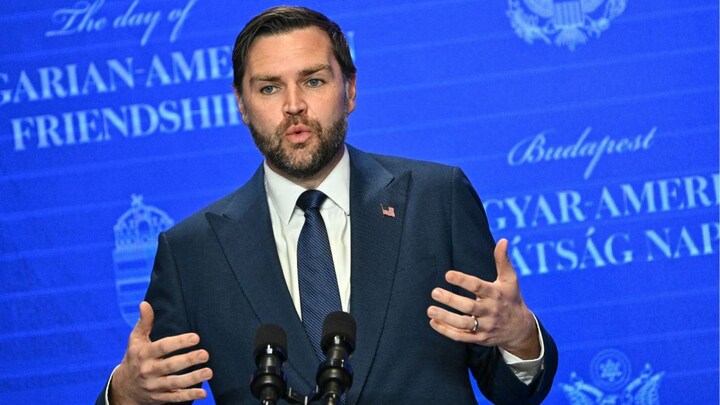
Statement Issued During Press Conference in Budapest
During a widely reported press conference held in Budapest, the capital city of Hungary, Vice President JD Vance delivered a clear message regarding the ongoing diplomatic dialogue with Iran. Vice President JD Vance emphasized that, despite occasional setbacks in the speed of communication, the United States remains certain that a definitive answer will be received from Iran at some point in the future. The response, according to Vice President JD Vance, may be either affirmative or adverse, yet the confidence expressed by Vice President JD Vance remains unwavering.
Vice President JD Vance described the delay as a consequence of the “transmitting of messages from one person to another.” This phrasing highlights the logistical realities inherent in diplomatic exchanges, especially when multiple intermediaries are engaged. Vice President JD Vance asserted that such procedural lag does not diminish the overall momentum of the negotiations nor the strategic position held by the United States.
Military Objectives in the West Asia Conflict
Vice President JD Vance reiterated a central claim that the United States has largely achieved its military objectives within the broader West Asia conflict. While no specific operational details were disclosed, Vice President JD Vance’s statement underscores a perception that the United States has reached a level of operational success sufficient to influence the diplomatic agenda. The articulation of this achievement serves a dual purpose: it reassures domestic audiences of progress and signals to international partners that the United States possesses a credible level of leverage.
By stating that the United States has largely achieved its military objectives, Vice President JD Vance implicitly references a series of coordinated actions undertaken by United States forces over an extended period. The implication is that these actions have altered the strategic calculations of the actors involved in the West Asia conflict, thereby creating a more favorable environment for diplomatic resolution. This viewpoint aligns with the broader narrative that military effort and diplomatic outreach are mutually reinforcing components of United States policy in the region.
Vice President JD Vance’s confidence in the United States’ position is reinforced by the belief that a response from Iran, regardless of its tone, will be shaped by the outcomes already realized on the battlefield. The notion that a negative response could still be managed effectively rests on the premise that the United States has already secured key objectives that limit Iran’s ability to dictate terms unilaterally.
Expectations Regarding Iran’s Response
Vice President JD Vance made it clear that the United States anticipates an answer from Iran within the framework of ongoing negotiations aimed at ending the war. The anticipation is framed not as a matter of whether a response will be received, but rather as a matter of timing and content. Vice President JD Vance asserted that the United States feels confident in its capacity to handle either a positive affirmation or a negative rebuttal.
The confidence expressed by Vice President JD Vance rests on two pillars. First, the United States, according to Vice President JD Vance, has already secured a set of military accomplishments that provide a solid foundation for any diplomatic outcome. Second, the United States possesses the diplomatic infrastructure necessary to interpret, respond to, and incorporate Iran’s position—whether supportive or contrary—into a broader strategy aimed at ending hostilities.
Vice President JD Vance highlighted that the delay in receiving Iran’s response is primarily attributed to “transmitting of messages from one person to another.” This observation suggests that the diplomatic process is currently constrained by procedural bottlenecks rather than substantive disaGreement. By emphasizing the procedural nature of the delay, Vice President JD Vance aims to downplay any perception that the United States is facing resistance or deadlock at the negotiation table.
Implications for Ongoing Diplomatic Efforts
The statements delivered by Vice President JD Vance carry significant weight for the trajectory of ongoing diplomatic talks. By publicly affirming that the United States has largely accomplished its military objectives, Vice President JD Vance seeks to project strength and resolve. This projection is intended to influence Iran’s calculus, encouraging a response that acknowledges the strategic realities created by United States actions.
Moreover, the assertion that the United States can “feel confident” about receiving a response—whether it is positive or negative—serves to mitigate concerns about potential stalemate. The confidence expressed by Vice President JD Vance creates an environment in which stakeholders can anticipate a continuation of dialogue, with the expectation that any outcome will be managed within the parameters already established by United States policy.
Finally, Vice President JD Vance’s remarks underscore the importance of communication channels in the diplomatic process. By citing the “transmitting of messages from one person to another” as the source of delay, Vice President JD Vance draws attention to the need for efficient information flow. This emphasis may prompt both sides to prioritize the acceleration of diplomatic exchanges, thereby reducing the window for misunderstandings or misinterpretations.
Conclusion
In summary, Vice President JD Vance has articulated a clear and confident stance regarding the United States’ progress in the West Asia conflict and the expectations surrounding Iran’s forthcoming response. The emphasis on having largely achieved military objectives, coupled with the assurance that a response—be it favorable or unfavorable—will be received, paints a picture of a diplomatic environment in which the United States holds considerable leverage.
While procedural delays tied to the “transmitting of messages from one person to another” are acknowledged, Vice President JD Vance remains steadfast in the belief that these obstacles will not impede the overall momentum toward a negotiated settlement. The statements offered by Vice President JD Vance at the press conference in Budapest reflect a broader strategic narrative: the United States is prepared to navigate any outcome with confidence, guided by the achievements already secured on the ground in the West Asia conflict.