Netanyahu Insists Hezbollah Excluded from Ceasefire, Promises Ongoing Israeli Air Campaign in Lebanon
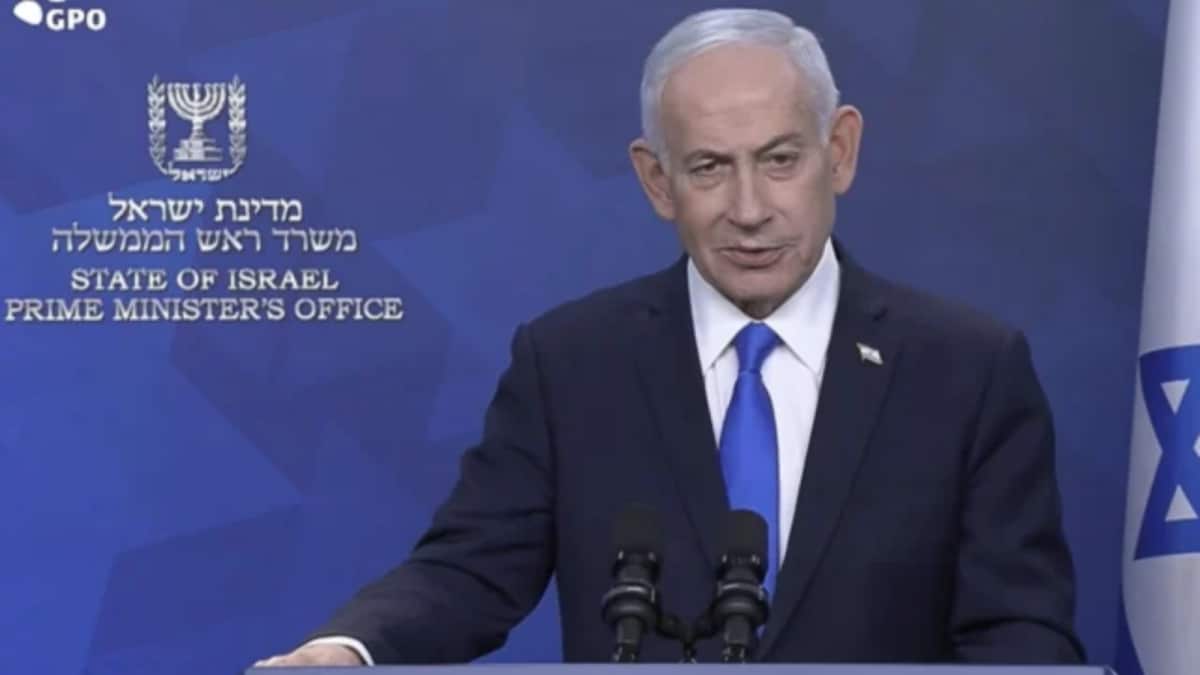
Statement from Benjamin Netanyahu on the Scope of the Ceasefire
US‑Israel‑Iran Conflict: Benjamin Netanyahu announced that the recently declared ceasefire involving the United States and Iran does not encompass Hezbollah. Benjamin Netanyahu emphasized that Israel military actions targeting Hezbollah in Lebanon will proceed unabated despite the broader truce.
In a press briefing issued a day after the ceasefire announcement, Benjamin Netanyahu declared, “A ceasefire with Iran will not include Hezbollah. Israel continues to strike Hezbollah.”
Scale and Speed of the Recent Air Strikes
Following the ceasefire announcement, Israel executed the most expansive series of air attacks against Hezbollah in Lebanon since hostilities commenced. The operation spanned the entire nation, striking multiple strategic locations.
Official figures released by Israel military indicate that approximately fifty fighter jets released nearly one hundred and sixty bombs. These munitions were directed at roughly one hundred distinct targets within a window of ten minutes. The coordinated assault covered the capital city, the Beqaa Valley, and the southern border region, a pattern described by the Israel Defense Forces (IDF) as a major synchronized operation.
The rapid tempo of the attack, with dozens of aircraft taking off almost simultaneously and delivering a high concentration of ordnance, underscores the logistical capabilities of Israel air power. Analysts note that such a swift, high‑intensity strike package is designed to overwhelm air‑defence systems and limit the reaction time of the adversary.
Hezbollah’s Reaction and Threats Against Further Israeli Action
In a formal communiqué, Hezbollah condemned what it termed “barbaric aggression” by Israel. Hezbollah warned that it would initiate retaliatory attacks if Israel forces did not cease fire and withdraw from southern Lebanon by a specific deadline.
Hezbollah’s statement read, “If Israel does not stop its attacks and withdraw from the south of Lebanon by 11:00 GMT, we will begin our attacks on Israel.” This warning signals a potential escalation along the contested frontier.
Clarifications from Benjamin Netanyahu Regarding the Ceasefire Scope
Benjamin Netanyahu reiterated for a second time that Hezbollah was deliberately omitted from the ceasefire aGreement. Benjamin Netanyahu’s office released a broader statement asserting Israel’s alignment with United States efforts to eliminate Iran’s nuclear, missile, and terror capabilities.
The statement read, “Israel also supports the US effort to ensure that Iran no longer poses a nuclear, missile and terror threat to America, Israel, Iran’s Arab neighbors and the world.” The accompanying commentary noted that the United States has communicated its commitment to these objectives, a stance shared by Israel and regional allies, during upcoming negotiations.
Further clarification emphasized that the two‑week ceasefire does not apply to Lebanon. The statement highlighted that “the two‑week ceasefire does not include Lebanon.”
Benjamin Netanyahu’s Assessment of Military Achievements
Benjamin Netanyahu praised recent military gains, stating, “We accomplished together massive achievements, our fighters on the front, and you in the rear.” He added that the ultimate outcome of the campaign illustrates that “Israel is stronger than ever, and Iran is weaker than ever.”
Benjamin Netanyahu also underscored that the two‑week ceasefire does not signify an end to hostilities. He asserted, “We have an aGreement for a ceasefire for two weeks, and this does not mean the end of the war.”
Emphasizing Israel’s readiness to resume full‑scale combat at any moment, Benjamin Netanyahu warned that “the finger is on the trigger,” indicating a high level of preparedness.
Strategic Implications of the Ongoing Air Campaign
The decision to continue striking Hezbollah despite a broader ceasefire reflects Israel’s strategic calculus. By isolating Hezbollah from the United States‑Iran truce, Israel seeks to maintain pressure on a hostile militia that operates along its northern frontier.
From a military standpoint, the massive deployment of fighter jets and the rapid release of a large bomb load serve several purposes. First, the strikes aim to degrade Hezbollah’s command‑and‑control infrastructure, ammunition depots, and launch sites. Second, the operation sends a clear signal to United States and regional partners that Israel will not tolerate any perceived weakening of its defensive posture.
Politically, Benjamin Netanyahu’s public statements reinforce Israel’s commitment to the United States‑led diplomatic effort to constrain Iran while simultaneously rejecting any extension of that diplomatic umbrella to Hezbollah. This dual approach attempts to balance cooperation with the United States against a firm stance toward non‑state actors allied with Iran.
The timing of the air strikes, coinciding with the ceasefire announcement, also raises questions about the coordination—or lack thereof—between diplomatic channels and military planning. By launching the operation shortly after diplomatic news broke, Israel may be signaling that diplomatic progress does not automatically translate into immediate de‑escalation on the ground.
International Reactions and Potential Diplomatic Fallout
Although the original report does not detail international commentary, the continuation of hostilities against Hezbollah is likely to draw responses from various actors. United Nations bodies, regional powers, and humanitarian organizations typically monitor large‑scale air operations for civilian impact.
Hezbollah’s stated deadline for a withdrawal by 11:00 GMT introduces a short‑term window that could influence diplomatic messaging. If Israel does not adjust its posture before that deadline, the risk of broader conflict spilling over the border rises, potentially drawing in additional regional participants.
Furthermore, the United States’ role as a broker in the United States‑Iran ceasefire may be tested by Israel’s decision to exclude Hezbollah. United States policymakers may need to address whether the exclusion of a major militia group aligns with broader conflict‑resolution goals in the region.
Humanitarian Considerations Amid Intensified Strikes
Large‑scale air operations inherently carry the risk of civilian casualties and infrastructure damage. The rapid, high‑density bombing campaign across Beirut, the Beqaa Valley, and southern Lebanon raises concerns about the safety of non‑combatants in densely populated urban areas.
International humanitarian law obliges all parties to distinguish between military targets and civilian objects. While Israel asserts that the strikes are aimed at Hezbollah installations, the proximity of these sites to civilian neighborhoods can complicate the verification of compliance with legal standards.
Humanitarian agencies often call for the establishment of safe corridors and the provision of medical assistance following such operations. The scale of the recent attack underscores the need for robust mechanisms to assess damage, provide aid, and document any potential violations.
Potential Scenarios Moving Forward
Given the statements from Benjamin Netanyahu and Hezbollah, several short‑term scenarios are plausible. If Israel respects the 11:00 GMT deadline set by Hezbollah, a brief de‑escalation could occur, potentially opening space for diplomatic outreach.
Conversely, if Israel maintains its current operational tempo, Hezbollah may activate its threats, leading to an exchange of fire along the border. Such an exchange could quickly expand beyond localized skirmishes, drawing in allied militias or prompting a response from United States forces stationed in the region.
In the longer term, the exclusion of Hezbollah from the United States‑Iran ceasefire could set a precedent for separate negotiations with non‑state actors, complicating broader peace‑building efforts. The outcome will likely hinge on the willingness of regional powers to mediate and the ability of diplomatic channels to adapt to evolving military realities.