‘No More Restraint’: Iran Puts Neighbours On Notice, Threatens United States Infra Beyond West Asia
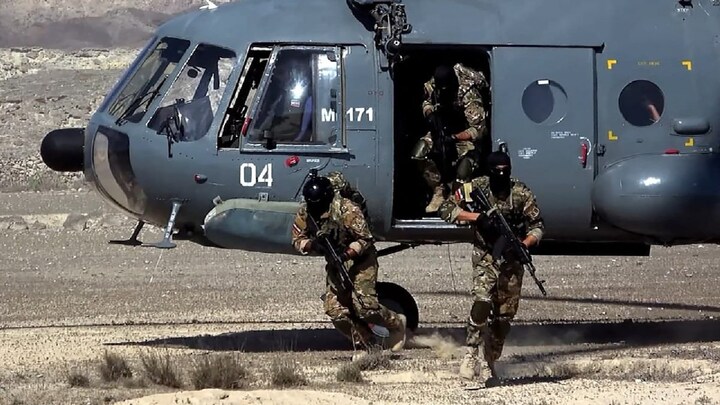
Iran warns neighboring states, particularly those that host American military bases and infrastructure, that the period of "restraint" has come to an end.
The Islamic Revolutionary Guard Corps (IRGC) announced a decisive shift in strategic posture, stating unequivocally that it intends to target United States and allied infrastructure throughout the broader region. The organization further warned that any interference could lead to a sustained disruption of oil and gas supplies extending for years.
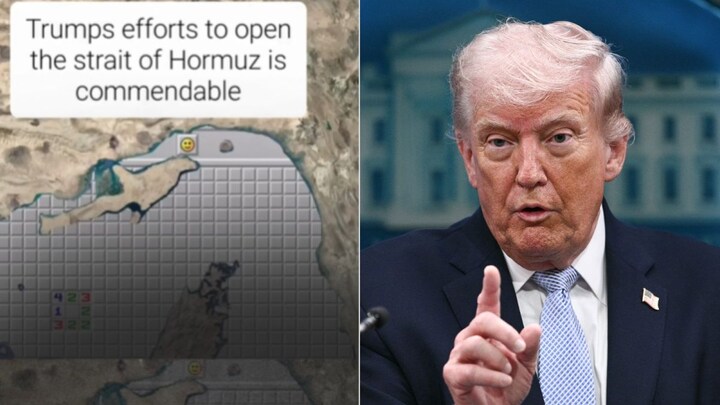
This stark declaration follows a series of escalating threats emanating from the highest levels of the United States government. The President of the United States issued an ultimatum demanding that Iran reopen a critical maritime chokepoint, warning that failure to comply would trigger a swift and decisive response. In a subsequent press briefing, the President amplified the rhetoric, indicating that an entire civilization could be eradicated in a single night if Tehran persisted in defiance.
Simultaneously, the military forces of Israel reported the completion of an extensive wave of strikes aimed at a variety of infrastructure sites within the borders of Iran. Those operations, according to Israeli statements, were executed with the objective of degrading Iran’s strategic capabilities and signaling resolve against further provocations.
At the same time, the United States carried out targeted attacks on a pivotal oil export hub located on an island that serves as a cornerstone of Iran’s crude oil distribution network. Official statements from United States officials confirmed that military installations on the island were the primary objectives of the strikes, underscoring the strategic importance of the location in the broader energy landscape.
Iranian authorities also reported a joint United States‑Israel attack on a bridge situated just outside a major holy city, as well as a strike on a rail bridge in the central part of the country that resulted in two civilian casualties. Additional reports indicated that a separate joint operation disabled a key highway in the northern region, severing the primary arterial link between a major northwestern metropolis and the capital.
The state‑run news outlet Mizan further detailed an incident involving damage to railway tracks in a city located on the immediate outskirts of the capital, adding another layer to the expanding list of transportation targets.
In a televised statement that was broadcast across national channels, the Islamic Revolutionary Guard Corps (IRGC) warned that any crossing of established red lines by the United States would trigger a response that extends far beyond the confines of West Asia. The organization framed its prospective retaliation as a strategic campaign designed to deprive the United States and its allies of vital oil and gas resources for an extended period.
The official communiqué declared, "The Islamic Revolutionary Guard Corps (IRGC) once again announces that should the American terrorist army cross the red lines, our response will transpire beyond the region." The language employed emphasized both a resolve to act and an intent to project power on a global scale.
Further exposition within the same statement detailed that the Islamic Revolutionary Guard Corps (IRGC), as Iran’s ideological military force, would focus its targeting on infrastructure assets that are essential to the United States and its partner nations. The goal, as articulated, is to curtail the flow of energy commodities that underwrite the economic and strategic interests of those states.
In addition, the Islamic Revolutionary Guard Corps (IRGC) stressed that, up until the present moment, Iran had exercised a high deGree of restraint in order to preserve amicable relations with neighboring countries. The organization acknowledged that previous decisions regarding retaliation had been tempered by caution and a desire to avoid unnecessary escalation.
However, the communiqué made clear that these reserves of restraint have now been entirely removed. The Islamic Revolutionary Guard Corps (IRGC) asserted that all previous hesitations have been abandoned, signaling an unequivocal readiness to engage in a broader and more aggressive campaign should the United States proceed beyond the stated thresholds.
Analysts interpret the language employed by the Islamic Revolutionary Guard Corps (IRGC) as a calculated attempt to shift the strategic calculus of regional actors. By explicitly warning neighboring states that host United States military installations, the Islamic Revolutionary Guard Corps (IRGC) seeks to compel those governments to reassess the costs associated with maintaining American forces on their soil.
The emphasis on long‑term disruption of oil and gas supplies serves a dual purpose: it underscores the economic leverage that Iran believes it can wield, and it attempts to sow uncertainty within global energy markets. The threat of sustained deprivation of energy resources is intended to create pressure points that could influence diplomatic negotiations and military posturing.
Furthermore, the declaration that retaliation would extend "beyond the region" implies a willingness to project power onto distant theaters, potentially targeting United States interests in other continents. This broader scope of threat is intended to broaden the strategic horizon of the conflict, making it more than a localized confrontation.
The timing of these statements coincides with a series of high‑profile actions by both the United States and Israel, suggesting a rapidly escalating tit‑for‑tat environment. Each side appears to be calibrating its responses based on perceived thresholds of red line violations, creating a feedback loop of threat and action.
From a geopolitical perspective, the articulation of a no‑restraint policy by the Islamic Revolutionary Guard Corps (IRGC) may also serve internal political objectives. By projecting a posture of uncompromising strength, the Islamic Revolutionary Guard Corps (IRGC) reinforces its standing among domestic constituencies that favor a hardline approach toward perceived adversaries.
In the broader context of regional security, the warnings issued by the Islamic Revolutionary Guard Corps (IRGC) are likely to influence the calculations of neighboring governments, especially those that host United States bases. The message conveys a clear expectation that any continued support for United States operations could invite direct retaliation that targets critical infrastructure, potentially disrupting national economies and public services.
In summary, the Islamic Revolutionary Guard Corps (IRGC) has publicly announced that the era of measured restraint has ended. The organization vows to target United States and allied infrastructure across a wide geographical expanse, with the explicit aim of cutting off oil and gas supplies for an extended duration. This pronouncement follows a series of escalatory moves by the United States and Israel, including strikes on strategic energy facilities, transportation links, and critical bridges.
The rhetoric employed by the Islamic Revolutionary Guard Corps (IRGC) signals an intent to expand the battlefield beyond the immediate vicinity of West Asia, thereby raising the stakes for all parties involved. Neighboring states that accommodate United States military presence are cautioned that any further perceived provocations may trigger a response that jeopardizes their own infrastructure and economic stability.
As the situation develops, the international community will be closely monitoring the interplay of threats, diplomatic overtures, and on‑the‑ground actions. The unfolding dynamics will determine whether the articulated red lines become points of irreversible conflict or remain as anchors for future negotiations aimed at de‑escalation.