North Korea Announces Test of Carbon‑Fibre “Blackout” Weapon Amid Broader Arsenal Trials
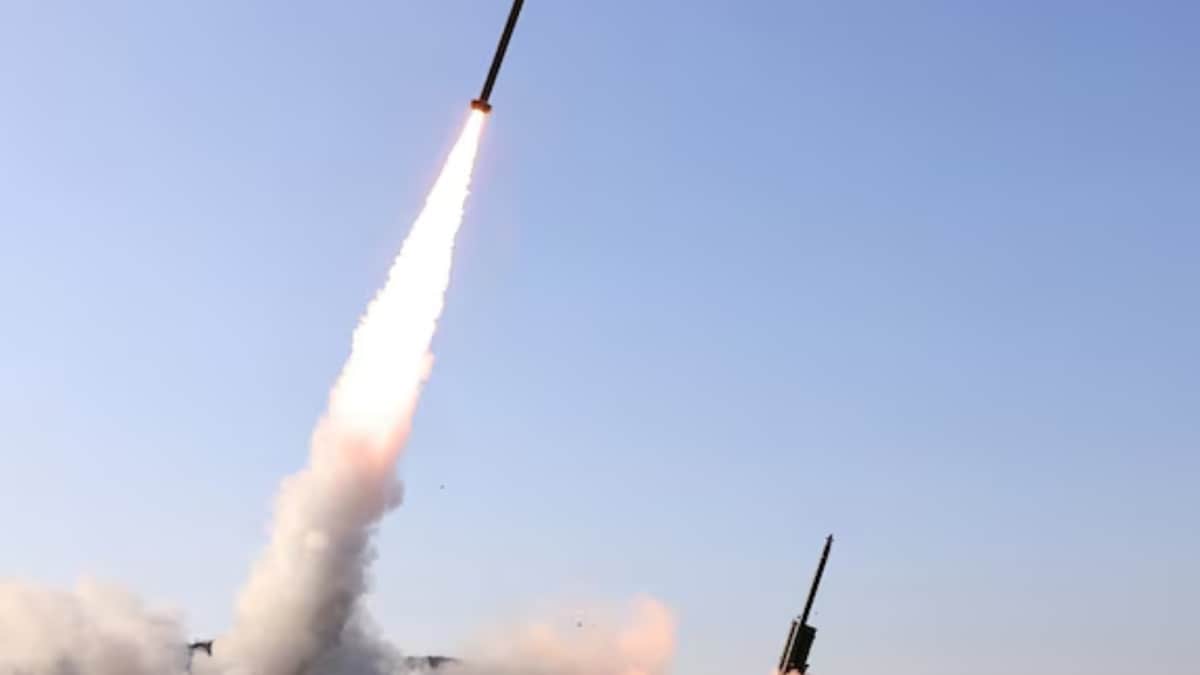
North Korea’s official news agency KCNA reported that the Academy of Defence Science and Missile Administration carried out a series of weapons tests, including a carbon‑fibre bomb mounted on a ballistic missile, a cluster‑bomb warhead, an electromagnetic device and a mobile short‑range anti‑aircraft missile system. General Kim Jong Sik, who supervised the trials, described the carbon‑fibre bomb and the electromagnetic system as “special assets” for the nation’s armed forces.
Understanding the Carbon‑Fibre Bomb Concept
A carbon‑fibre bomb – also known as a graphite bomb or blackout bomb – is engineered not to inflict direct casualties or demolish structures. Instead, the weapon disperses an enormous quantity of ultra‑fine, electrically conductive carbon‑fibre strands across a designated area. When these strands settle on conductive infrastructure such as power lines, transformers and substations, they create unintended short circuits. The resulting electrical faults propagate through the network, producing cascading failures that can plunge large regions into darkness.
The operational principle relies on the innate conductivity of carbon‑fibre material. Once the strands coat metallic components, the normal insulating gaps are bridged, allowing current to flow along unintended paths. The rapid onset of short circuits forces protective systems to shut down, and because modern grids are heavily interlinked, a localized fault can quickly expand to affect national or even regional power supplies.
Historical records indicate that the United States deployed graphite‑type weapons to disrupt the electrical infrastructure of Iraq during a conflict in the early 1990s, and later employed a similar approach during a NATO operation in the Balkans. In addition, open‑source analyses suggest that China has explored variants of this technology. The recent claim by the Academy of Defence Science and Missile Administration places North Korea among a limited set of nations reported to possess this capability.
Other Systems Tested Alongside the Carbon‑Fibre Bomb
In conjunction with the carbon‑fibre bomb, KCNA detailed the evaluation of a cluster‑bomb warhead affixed to the Hwasongpho‑11 Ka tactical ballistic missile. According to the announcement, the warhead is capable of covering an area of up to seven hectares, thereby enabling the destruction of extensive surface targets in a single strike.
The electromagnetic weapon system examined during the same series of trials is described as capable of disabling electronic circuitry. The reported operational envelope includes the potential to impair advanced combat platforms such as South Korean stealth fighter aircraft and naval destroyers equipped with the Aegis combat system.
Further statements from the Academy of Defence Science and Missile Administration mentioned firing drills that employed “low‑cost raw materials.” Yang Moo‑jin, a professor at the University of North Korean Studies, interpreted this phrasing as an indication of intent to transition these weapons from experimental prototypes to mass‑produced armaments.
Strategic Context and Potential Implications
The unveiling of these weapons tests arrives at a moment of heightened diplomatic activity. Chinese Foreign Minister Wang Yi is scheduled to make a two‑day visit to the Korean Peninsula, and speculation circulates regarding the possibility of a summit between the North Korean leader and the United States president during a forthcoming diplomatic tour of China. The timing of the tests may therefore be intended to showcase new capabilities to both regional partners and global adversaries.
From a strategic perspective, the carbon‑fibre bomb offers a non‑kinetic approach to achieving operational objectives. By targeting an opponent’s power grid, a state can inflict severe economic disruption, degrade command‑and‑control functions, and erode public confidence without crossing the threshold of overt violence that typically triggers immediate conventional retaliation.
The electromagnetic device, on the other hand, represents a directed‑energy tool designed to incapacitate sophisticated electronic systems. Should such a system be fielded effectively, it could neutralize advanced air‑defense platforms and stealth aircraft, thereby altering the balance of power in any future aerial encounter.
The cluster‑bomb warhead, with its extensive area‑coverage capability, adds a conventional explosive dimension to the arsenal, allowing for massed strike options against infrastructure, troop concentrations, or other high‑value targets.
Collectively, these developments suggest a doctrinal shift toward a diversified threat portfolio that blends conventional, non‑conventional and electromagnetic tools. By integrating these technologies, the Academy of Defence Science and Missile Administration appears to be pursuing a hybrid approach that can be calibrated to a spectrum of strategic scenarios.
Technical Overview of the Carbon‑Fibre Dispersion Mechanism
The dispersion process begins with a warhead that houses a high‑pressure canister filled with finely milled carbon‑fibre particles. Upon activation, a detonative charge ruptures the canister, releasing the particles at supersonic velocity. The particles are engineered to remain airborne long enough to be carried by wind currents toward the target area.
Because the fibres are electrically conductive, even a sparse distribution can form conductive pathways across insulating surfaces. When the particles settle on the metallic components of a grid, they bridge gaps that would otherwise prevent current flow, leading to short circuits. Protective relays within modern grids are designed to isolate faults, but the sheer volume of conductive material can overwhelm these safeguards, causing widespread shutdowns.
Several variables influence the effectiveness of the weapon, including altitude of release, prevailing wind conditions, and the density of the fibre cloud. Sophisticated guidance and delivery systems can optimize these parameters to maximize impact on critical infrastructure.
While the primary objective of the carbon‑fibre bomb is to interrupt electrical services, secondary effects may include damage to communication networks that rely on power‑line carriers, as well as the potential for over‑voltage spikes that can harm connected equipment.
International Perspectives on Non‑Kinetic Weapons
Non‑kinetic weapons such as the carbon‑fibre bomb occupy a nebulous space in international law. Because they do not cause direct loss of life or physical destruction of structures, they are often debated in terms of legality under the laws of armed conflict. Critics argue that the indirect humanitarian impact—namely, prolonged loss of essential services—constitutes a form of collective punishment.
Supporters maintain that the ability to achieve strategic objectives without resorting to lethal force aligns with a desire to limit civilian casualties. The dual‑use nature of electrical infrastructure, which serves both civilian and military functions, further complicates the classification of such weapons.
Across the globe, military analysts watch closely for the development of similar capabilities. The potential for proliferation raises concerns about the ease with which non‑state actors could acquire or replicate the technology, given the relatively low cost of raw carbon‑fibre materials compared with conventional munitions.