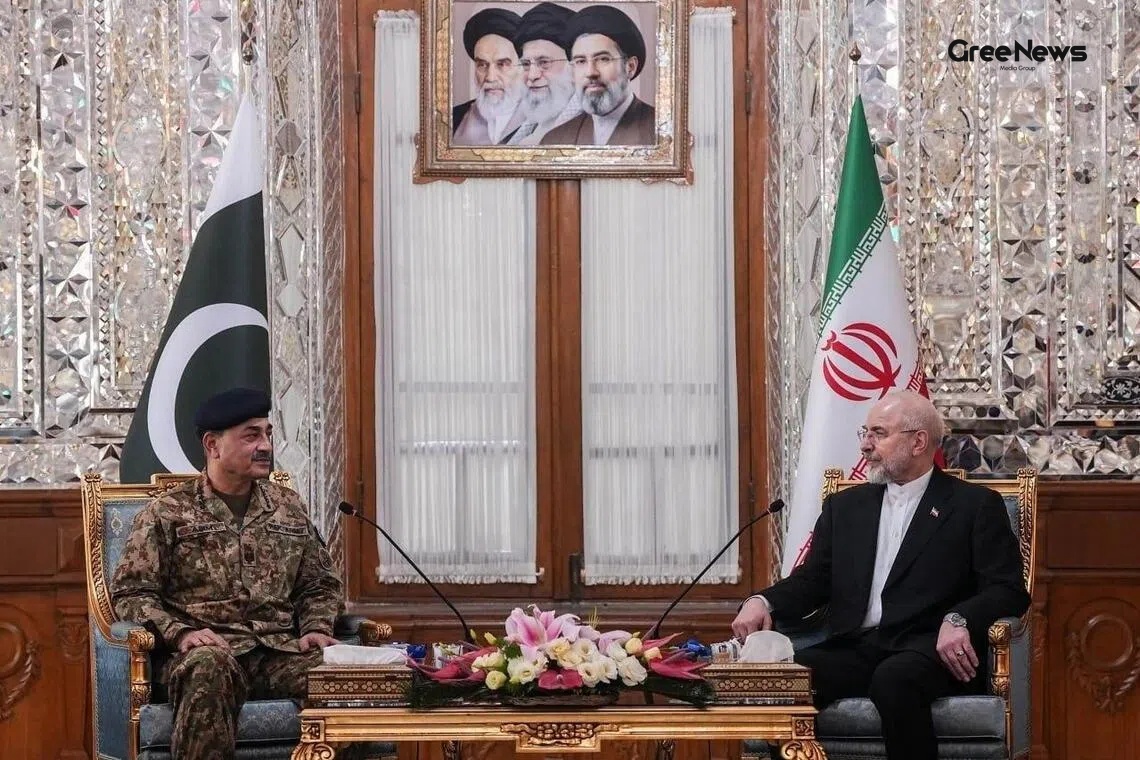
Honestly, when I first heard about Pakistan’s military chief heading to Tehran, I thought it was just another routine visit. But as the story unfolded, it became clear that this was anything but ordinary it was a full‑blown diplomatic sprint that had the whole subcontinent glued to the television sets. You know how we love a good piece of breaking news, especially when it involves high‑stakes peace talks? This one felt like a live‑action thriller, with each day bringing a fresh twist. The whole episode quickly turned into one of the trending news India is buzzing about, and I could see why the stakes are massive, the players are powerful, and the outcome could shape the entire region’s future.
What happened next is interesting. Field Marshal Asim Munir landed in Tehran for a three‑day stint, and right from the get‑go, the Pakistani military released a statement saying his agenda was crystal clear: to push for a negotiated settlement that would end the ongoing war involving Iran. The statement emphasized Pakistan’s “unwavering resolve to facilitate a negotiated settlement… and to promote peace, stability, and prosperity”. It sounded lofty, but the real meat of the story lay in the list of people Munir actually sat down with during those intense hours.
Munir’s High‑Level Meetings in Tehran
During his stay, Munir met the Iranian President, the foreign minister, the speaker of the Parliament, and the chief of Iran’s military central command centre. Imagine the security protocols motorcades, bullet‑proof cars, endless briefings the whole shebang. Each conversation was aimed at nudging Iran towards a diplomatic path, rather than a military one. In most cases, the Pakistani side highlighted the dire need for de‑escalation, especially after Tehran threatened to close the Strait of Hormuz again if the United States kept up its blockade of Iranian ports. That threat alone sent ripple effects across the oil markets and made headlines in every major newspaper, further fueling the viral news buzz across the region.
Now, you might wonder why Pakistan is so invested in this. Apart from the obvious geopolitical proximity, Pakistan has long seen itself as a potential bridge between the Middle East and South Asia. The military’s statement hinted at this role, saying Pakistan wants to be the “facilitator of dialogue”. For us back home, the idea that a neighbour could help shape the outcome of a conflict that directly impacts the strategic waterway of the Strait of Hormuz felt like a piece of the latest news India must keep an eye on.
The meetings weren’t just about talking; they were about signaling. When Munir underscored the need for “dialogue, de‑escalation, and peaceful resolution of outstanding issues through sustained diplomatic engagements”, it was a clear message to both Tehran and Washington that Pakistan is watching closely and is ready to step in if needed. Many people were surprised by this proactive stance, especially because traditionally Pakistan’s military has been seen as more focused on internal security than on regional mediation.
Context: US‑Iran Talks in Islamabad
Coinciding with Munir’s visit, the United States and Iran had a historic face‑to‑face meeting in Islamabad the week before. Parliament Speaker Mohammad Bagher Ghalibaf and Foreign Minister Abbas Araghchi led the Iranian delegation to Islamabad, marking the highest‑level contact between the two countries in decades. The talks, however, ended without a concrete aGreement, leaving the region in a state of uneasy anticipation. That very failure turned the focus onto Pakistan’s diplomatic machinery could they be the missing piece that finally pushes the negotiations over the finish line?
In most cases, the Islamabad talks set the stage for a broader regional dialogue, and Pakistan’s prime minister, Shehbaz Sharif, was quick to seize the momentum. He embarked on a three‑country tour that took him to Saudi Arabia, Qatar and finally Turkey, aiming to rally support for a peace push. The tour was not just a diplomatic tour; it was an effort to align regional powers around a single narrative that discouraged further military escalation. This is exactly the kind of breaking news that fans of trending news India love to follow, especially when it promises a shift in the balance of power.
Interestingly, while Munir was busy shaking hands in Tehran, Sharif was heading back home from Turkey on the same day. The two separate missions, though distinct, were clearly coordinated a clear sign that Pakistan’s civilian and military leadership were working in tandem. The prime minister’s delegation, which included Foreign Minister Ishaq Dar, wrapped up their talks at a diplomatic forum in Antalya, signalling the end of their overseas leg.
Shehbaz Sharif’s Turkey Exit and the Antalya Forum
Sharif’s return from Turkey marked the culmination of a whirlwind diplomatic sprint. Alongside Foreign Minister Ishaq Dar, he departed from Antalya after a series of intense discussions with regional leaders. The agenda there revolved around creating a broader coalition that could pressure both the United States and Iran into returning to the negotiation table. What’s fascinating is that the Antalya forum wasn’t just a side‑show; it was a platform where the Pakistani leadership tried to demonstrate its commitment to peace, and it also served as a message to the world that Pakistan isn’t just a passive observer.
Many people were surprised by how quickly the Pakistani delegation moved from one capital to another, almost as if they were racing against time. The sense of urgency was palpable, especially with the knowledge that the Strait of Hormuz a vital artery for global oil shipments could be shut down again. This dramatic backdrop turned the whole episode into something that went viral across social media platforms, making it a hot topic among the trending news India community.
The team’s exit from Turkey also coincided with a statement from the Pakistani military that highlighted the need for “sustained diplomatic engagements”. In an interview, Sharif mentioned that the Turkish hosts were very supportive of a peaceful resolution, and that the discussions had laid groundwork for a possible trilateral meeting involving Pakistan, Iran, and the United States. As the prime minister boarded his flight home, the sense that something big was about to happen lingered in the air and the whole scenario kept readers glued, eager to see what would unfold next.
Looking Ahead: The Next Round of US‑Iran Talks
All eyes are now on Islamabad for the upcoming second round of US‑Iran talks scheduled for the coming week. The expectation is that the presence of Pakistan as a neutral facilitator could tilt the dynamics in favour of a more constructive dialogue. If the talks go well, we could be witnessing the dawn of a new era of regional cooperation something that would dominate the latest news India headlines for weeks to come.
In Tehran, the atmosphere remains tense. Just a day before Munir’s departure, Iranian officials issued a stark warning that they might close the Strait of Hormuz once again if the United States continued its blockade of Iranian ports. This threat came shortly after Iran announced that it had reopened the waterway following a brief ceasefire in Lebanon. The ebb and flow of such decisions make the region’s security landscape incredibly volatile, turning any diplomatic effort into a high‑stakes game of chess. For many Indian readers, this is the kind of complex, real‑world drama that fuels viral news cycles and makes us all lean a little closer to our screens.
What happened next is interesting because the Pakistani military’s statement after Munir’s return emphasized that dialogue remains the only viable path forward. The statement said, “the Field Marshal underscored the need for dialogue, de‑escalation, and peaceful resolution of outstanding issues through sustained diplomatic engagements.” It’s a line that reads like a promise a promise that Pakistan will keep its diplomatic channels open, no matter how heated the surrounding politics become.
Why This Matters for India and the Wider Subcontinent
Even though the story revolves around Pakistan, Iran, and the United States, its ramifications ripple all the way to India. The Strait of Hormuz is a vital conduit for the oil that fuels India’s massive energy needs. Any disruption there can lead to spikes in fuel prices, affecting everything from commuter costs to the price of household goods. Moreover, the stability of the region directly influences trade routes, investment flows, and even security calculations for the Indian armed forces.
From an Indian perspective, keeping tabs on these developments is not just about staying informed it’s about strategic foresight. The fact that Pakistan is actively trying to position itself as a mediator adds a new layer to the geopolitical chessboard. If Pakistan succeeds in easing tensions, it could open doors for broader regional cooperation, which would be a huge win for India’s own diplomatic agenda. On the flip side, if the talks falter and the situation escalates, the resulting instability could spill over into South Asia, affecting everything from border security to refugee flows.
This is precisely why the story has become a part of the breaking news that many Indians are following with keen interest. It’s not just another headline; it’s a live case study of how regional diplomacy can have far‑reaching impacts, shaping the very fabric of daily life in India. As the next round of talks approaches, the entire subcontinent waits with bated breath, hoping for a peaceful resolution that could usher in a period of prosperity and stability across the region.
Final Thoughts: The Human Angle Behind the Diplomacy
At the end of the day, beyond the official statements and high‑level meetings, there are real people diplomats, military officers, and ordinary citizens hoping for peace. I recall a friend of mine who works as a railway clerk in Lahore; he told me how the constant news of war makes his daily commute feel heavier, and how any hint of diplomatic progress lifts the collective mood. Similarly, my cousin in Delhi, who follows international affairs on his smartphone, said he felt a rare sense of optimism when the Pakistani delegation left Tehran, promising to keep the dialogue alive.
These personal anecdotes remind us that while the headlines scream “breaking news” and “viral news”, the underlying narrative is about human lives yearning for stability. Whether you’re reading this over a steaming cup of chai in Mumbai or a spicy biryani dinner in Karachi, the hope is the same a peaceful tomorrow where the waters of Hormuz flow freely and the markets stay stable. As the diplomatic chess pieces move, we’ll keep watching, sharing, and hoping for the best. Stay tuned for more updates the story is far from over, and every new development could be the one that finally turns the tide.