An AI-generated image shared by Iran’s embassy in South Africa is drawing sharp reactions, highlighting how meme-style diplomacy is reshaping political messaging.
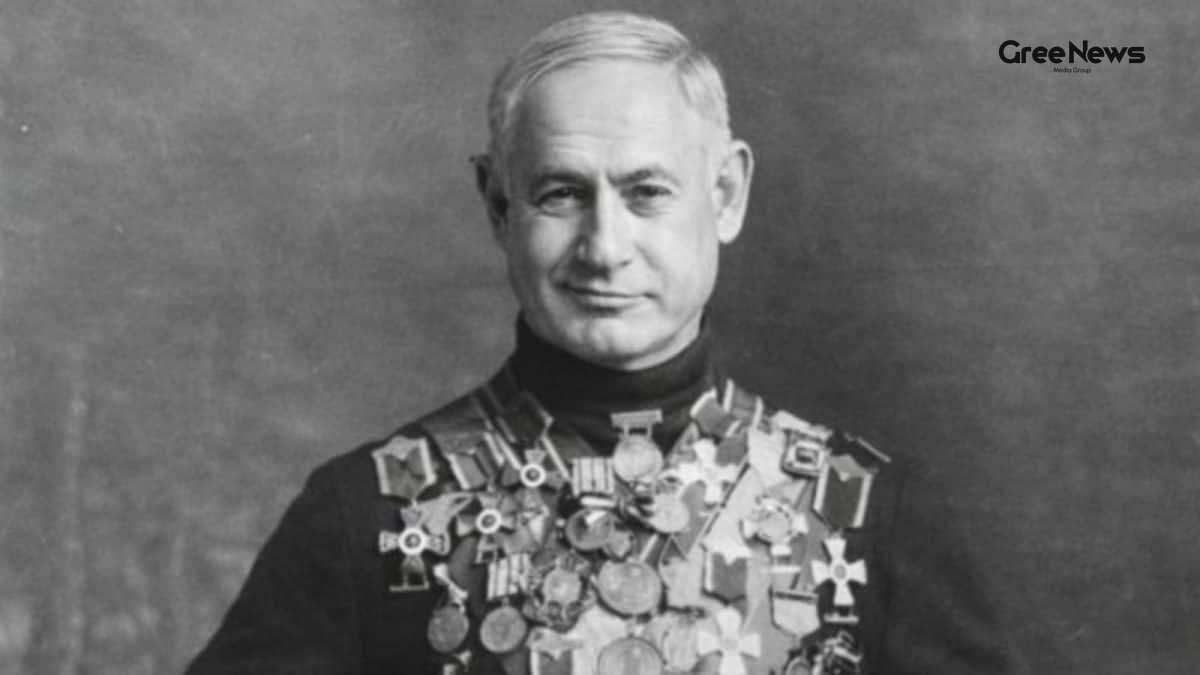
So, the other day I was scrolling through my phone, checking the latest news India feeds, when I stumbled upon a post that instantly felt like a scene out of a meme‑war. Iran’s embassy in South Africa had just dropped an AI‑generated picture of Benjamin Netanyahu, and honestly, it was something you don’t see every day.
What caught my eye first was the sheer absurdity of the image. Benjamin Netanyahu is shown from his shoulders all the way down to his shins, completely covered in a glittering cascade of military medals. It looked almost like a superhero’s armor, but instead of a cape, there were ribbons of honor everywhere.
The caption was even bolder: “If Benjamin Netanyahu were to be awarded medals for child killing and genocide.” No sugar‑coating, no diplomatic jargon just a raw, blunt statement that felt like it was ripped straight from a trending news thread.
Now, you might wonder why Iran’s embassy in South Africa would choose such a dramatic route. Well, this is part of a growing trend where diplomatic accounts are ditching the traditional formal tone and moving towards what I like to call “slopaganda” a blend of sloppy humor and propaganda aimed at catching the eye of everyday netizens.
What the comment section turned into
After the post went live, the comment section turned into a digital battlefield. People started throwing in their thoughts, and the vibes ranged from seriously angry to downright satirical. One user wrote, “The Islamic Republic of Iran has murdered more children, teenagers and young adults than any other group. They are truly demonic and deserve to burn and rot in hell for all eternity.” That was a heavy statement, and it set the tone for a lot of the ensuing debate.
Another comment tried to join the sarcasm parade, saying, “The medal on his arm is still empty, it should be full too.” A few users even requested that the medals be made bigger “The medals are too small 😔” as if they were discussing a sports jersey on a cricket match.
Seeing that kind of interaction made me think of how the Indian social media crowd reacts to anything that feels outrageous. In most cases, once something reaches the "viral news" threshold, people love to add their own flavor, whether it’s a meme, a witty one‑liner, or just a full‑blown rant.
Why meme‑style diplomacy is becoming the norm
It’s not just Iran’s embassy in South Africa pulling this trick. Over the past few weeks, the Islamic Republic of Iran’s diplomatic missions around the world have been leaning heavily into meme‑style messaging. From AI‑generated caricatures of Donald Trump to Bollywood dialogues aimed at Western leaders, the content looks less like a traditional press release and more like a post you’d see on a popular Indian Instagram page.
For instance, a recent post from the Islamic Republic of Iran’s embassy in another country used a famous Bollywood quote, “Mere paas maa hain,” to mock a political stance, instantly drawing chuckles from a wide audience. Another post featured a short AI video where Donald Trump was placed in a chaotic cartoon scenario, sparking a flood of shares and comments.
And here’s the thing this isn’t merely about humor. The aim is clear: create content that rides the wave of breaking news and trending news India searches, turning diplomatic messages into shareable, bite‑size pieces that spread faster than a cricket highlight reel.
In a way, it feels like the diplomatic community is catching up with the digital age, understanding that a witty image can sometimes convey a stronger message than a formal statement. In most cases, people are more likely to remember a meme than a 500‑word communiqué.
How this reflects on the larger political narrative
If you ask me, this whole episode says a lot about the current state of political communication. The traditional “state‑to‑state” dialogue is giving way to a more public‑facing, viral approach. It reminds me of the time when satire shows in India started influencing public opinion; today, embassies are doing something similar, but on a global scale.
From a personal perspective, I find it both fascinating and a little unsettling. Fascinating because the tools we have AI, meme culture, instant sharing make it possible for a small diplomatic post to become worldwide conversation material within hours. Unsettling because it blurs the line between serious diplomatic discourse and internet banter.
And the impact is palpable. As soon as the AI image of Benjamin Netanyahu went viral, major Indian news portals picked it up as a piece of breaking news, citing it like any other geopolitical development. It didn’t take long for the story to be featured in trending news India sections on multiple platforms, drawing even more eyeballs.
What happened next is interesting
After the initial wave of comments, the post started getting shared across various Indian social media groups focused on international affairs. Some users added their own captions, like “When you get so many medals you forget the purpose,” while others used it as a springboard to discuss broader issues such as the ongoing conflicts in the Middle East.
Many people were surprised by the boldness of Iran’s embassy in South Africa, especially because they had previously used more conventional statements. This shift to AI‑driven visuals sparked a debate not just about the message, but about the ethics of using AI in diplomatic propaganda. A few commentary pieces even quoted experts saying that AI could become a “double‑edged sword” in international relations.
For me, watching the cascade of reactions felt like being part of a live experiment. Each share, each retweet added another layer to the story, turning a single image into a crowd‑sourced narrative.
Why this matters for Indian audiences
From an Indian viewpoint, the whole affair is a reminder of how interconnected our news consumption has become. The story not only appeared in the latest news India feeds but also made its way into WhatsApp forwards, YouTube reaction videos, and even local community discussions. It shows how a piece of diplomatic meme can become part of everyday conversation, influencing opinions just as much as a traditional policy brief might.
Moreover, it underscores the importance of media literacy. When something looks like a meme, it’s easy to dismiss it as a joke, but behind the humor there can be serious political intent. As more diplomatic missions adopt this style, Indian netizens need to stay vigilant about the underlying messages.
In my own circles, I’ve seen friends debating whether this kind of content is effective or merely a gimmick. Some argue that it brings attention to serious issues child casualties, genocide claims in a way that facts alone might not. Others feel it cheapens the discourse, turning grave allegations into punch‑line material.
Looking ahead: the future of “slopaganda”
So, what’s next? If the Islamic Republic of Iran’s embassies continue on this path, we might see more AI‑generated visuals targeting a variety of world leaders. The trend could spread to other countries as well, turning diplomatic Twitter feeds into a kind of global meme‑battleground.
In most cases, the goal will probably remain the same: capture attention, spark conversation, and shape narratives in a fast‑moving digital environment. As someone who follows both politics and tech, I think we’re at a crossroads where traditional statecraft meets internet culture.
For Indian readers who love staying updated with breaking news, the key takeaway is simple the next diplomatic statement you see on your feed might just be an AI‑crafted meme. And that, my friends, is the new normal.