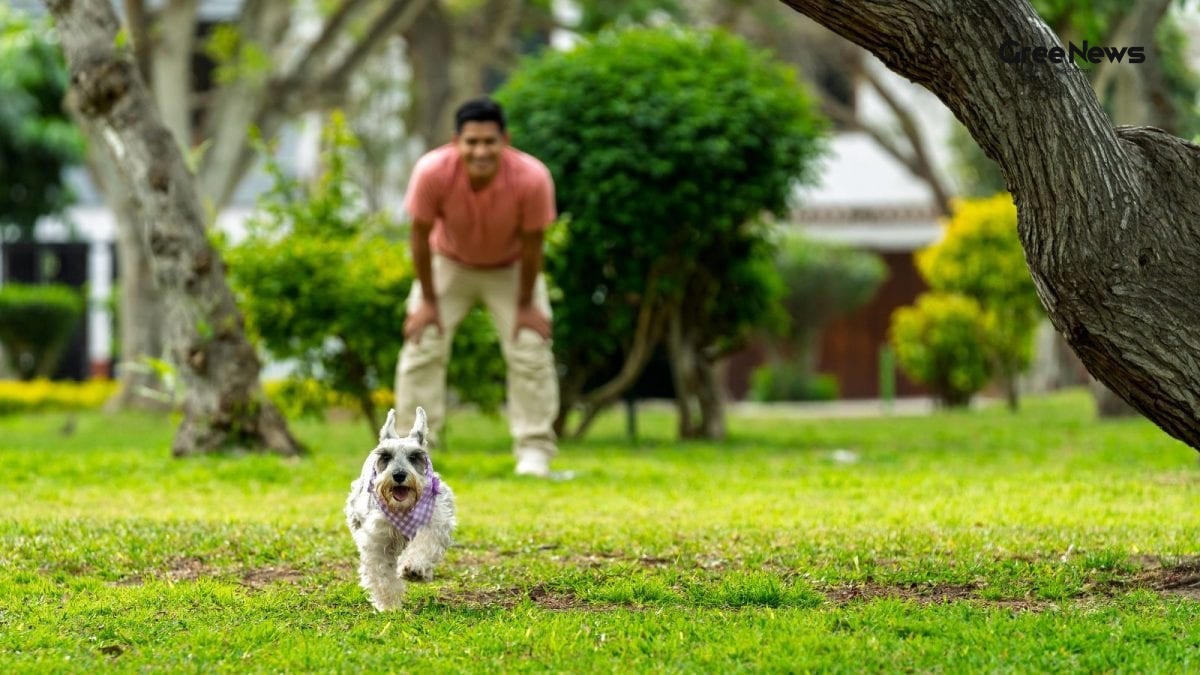
It’s not just loyalty it’s memory, smell and emotional bonding working together.
Let me tell you a little story. A few years back, I moved from Delhi to Bangalore for work. I left my Labrador, Rohan, with my sister. Months later, when I finally came back home for a weekend, I knocked on the door and before I even opened it, Rohan was already at the threshold, tail wagging like a flag in a storm. I was half‑laughing, half‑tearing up, because the reunion felt surreal. That’s when I started wondering how on earth does a dog remember you after such a long gap?
Honestly, the answer isn’t just “because they love you”. It’s a mix of how dogs experience the world, and it’s a bit different from us humans. While we rely a lot on visual cues, dogs are practically built around their nose. Their sense of smell is estimated to be at least 10,000 times stronger than ours. So, in most cases, your scent becomes a kind of signature for them. It’s not just the smell of you on a shirt or a blanket; it’s the whole aura of you the mix of your skin oils, the food you eat, the environment you live in. Once they associate that scent with safety, comfort, and the routine of feeding, it sticks in their memory banks for a long haul.
Now, you might think, “okay, smell is important, but what about the look or the voice?” Well, studies have shown that a dog’s brain lights up when they hear their owner’s voice, almost the same way our own brain reacts to a loved one’s voice. In fact, there’s a breaking news angle here recent research from Indian universities highlighted that dogs can differentiate between the tones of familiar voices and strangers. So when Rohan saw me, it wasn’t just “oh, that’s the guy who feeds me”; it was a whole cascade of emotional and sensory memories hitting at once. That’s why the reunion felt so intense it’s like all those little pieces click together in a flash.
But let’s not stop at the science. Think about the daily rituals we share with our furry friends. The moment you pick up your keys, the sound of the front door opening, the way you call them “Bhai”. These patterns become a rhythm in a dog’s life. Even if you’re away for weeks, that rhythm is still there, waiting in the background. When it finally plays again, the dog’s brain recognises it instantly. This is why many people were surprised by how quickly their dogs seemed to “remember” after a long separation.
There’s also a fascinating part about how dogs don’t really understand time the way we do. They don’t count days or months. To them, a break is just a break. Whether you’re gone for a single weekend or a whole year, the emotional impact of the reunion can feel equally strong. In other words, the “when” is less important than the “who”. This fact often pops up in trending news India pieces about pets and mental health researchers point out that dogs live in the present, and that’s why they can forgive and forget any lapse in routine so easily.
Smell: The Ultimate Recall Trigger
Let’s dig a little deeper into that scent thing. Imagine walking through a crowded market in Mumbai the spices, the traffic, the crowd. Your nose is bombarded, right? For a dog, that’s a walk in the park. So when you step into your home after a long trip, the moment Rohan catches a whiff of your familiar scent, it’s like a homecoming signal. It’s not just the smell of you; it’s the mixture of the city air you breathe, the tea you drink, even the perfume you wear. That blend becomes a snapshot stored deep in the canine brain.
In most cases, smell can overtake visual memory. A dog might stare at a stranger for a few seconds, but the instant they get a scent cue, they’ll start wagging, jumping, or even getting a little protective. This is why many Indian families notice that their dogs Greet the mail carrier with suspicion the mail carrier’s scent is new, and the dog’s brain flags it as “unknown”. Over time, if the mail carrier becomes a regular visitor, the dog starts to associate that new scent with a non‑threatening routine, and the anxiety fades.
What’s also interesting is that the scent memory is incredibly stable. You could leave a sweater you wore last week in a drawer for months, and a dog will still recognise it when you bring it out. That’s why, in many viral news stories from India, you’ll see clips of dogs instantly reacting to a piece of clothing that belonged to their owner, even though the owner hasn't been home for a long time.
Emotional Memory: More Than Just Food
Food is definitely a big part of the bond feeding time is a ritual that cements trust. But it’s not the only emotional anchor. Think about the walks in the evening park near your house, the games of fetch, the lazy afternoons of belly‑rubbing on the balcony. All these moments serve as emotional timestamps for your dog. When you’re away, they might still wait by the door at the same time you used to come home, even if they eventually realise you’re not coming that day.
There’s a piece of latest news India that covered how therapy dogs help reduce stress for patients. Those dogs form strong emotional memories with the patients they interact with regularly, and the patients often say the dogs “never forget” them, even after discharge. This mirrors the everyday reality of pet owners the emotional link is sturdy, and it’s reinforced with each cuddle and each shared silence.
What caught my eye recently was a story where a street dog in Kolkata recognised a lady who fed it years ago, after she moved to a different neighbourhood. When she passed by again, the dog ran up to her, wagging, as if no time had passed. Many people were surprised by this, and it sparked a lot of debate on social media about animal memory. The consensus? Dogs have a deep‑seated emotional recall that goes beyond simple conditioning.
Routine and Pattern Recognition
Routines are the invisible threads that stitch together a dog’s world. The sound of a car engine, the jingle of the opening door, the rhythm of your footsteps these are all cues that embed themselves in the dog’s memory. Even if you take a break from those routines, the memory doesn’t vanish; it just stays in standby mode, waiting for a trigger.
One time, I was on a business trip for a month and left my house with a neighbour looking after Rohan. When I finally returned, I didn’t even knock I just opened the door. The moment the familiar creak of the hinges filled the air, Rohan’s ears perked up, and he started running around in circles. It was a clear sign that the routine sound of that door had been saved in his mind, ready to spring into action.
In fact, many Indian dog owners notice that their pets can pick up on subtle changes like if you’re wearing a different pair of shoes or if you’re carrying a new bag. The dog may pause, tilt its head, and then quickly adapt. It shows how finely tuned their pattern‑recognition abilities are, and why they can instantly react when something familiar reappears.
Even the way you call a dog matters. Some owners have a particular tone or a phrase that they always use “Aao, bhai!” and the dog learns to associate that specific sound with a positive outcome, like a treat or a walk. That’s why, when the tone is heard after a long silence, the dog’s reaction is almost ecstatic. The whole scenario is a perfect example of how routine, scent, and emotion blend together in canine memory.
Age, Environment, and Individual Differences
Of course, not every dog is the same. Age plays a big role younger pups may have a more flexible memory, while older dogs might rely more heavily on scent because their vision isn’t as sharp. The environment also matters. Dogs that have lived their whole lives in a busy city like Mumbai might have a different memory profile compared to a dog raised in the quiet hills of Himachal.
Studies from Indian veterinary colleges suggest that dogs that spend a lot of time outdoors, sniffing around, develop stronger scent memory than those that stay indoors most of the time. That doesn’t mean indoor dogs can’t form strong bonds; they just might rely a little more on vocal cues and visual familiarity.
Individual temperament is another factor. Some dogs are naturally more affectionate and clingy, while others are independent. The clingier ones tend to form tighter emotional memories, making the “never forget” claim even more accurate for them.
All these nuances underline why we can’t make a blanket statement that every dog will react the same way. Yet the underlying principle remains: dogs are wired to remember the people who bring them safety, food, and love, and they do it through a blend of smell, sound, and routine.
Why the Saying ‘Dogs Never Forget’ Holds True
When you hear someone say “dogs never forget”, it might sound like a sentimental line from a movie. But after looking at the science and the everyday stories, you realise there’s a grain of truth there. The combination of a powerful olfactory system, strong emotional attachments, and pattern‑based memory makes dogs remarkably good at recalling their owners, even after long periods of separation.
What happened next is interesting many owners start paying more attention to the subtle ways their dogs show affection after a reunion. They might notice the extra nudges, the lingering eye contact, or the way the dog circles the room before settling down. These small behaviours are all part of the dog’s way of saying, “I’m happy you’re back”.
In the age of India updates on social media, you’ll find countless videos of dogs reacting to their owners after months apart, and they often go viral because they tap into that universal feeling of love and reunion. It’s no wonder these clips become part of the trending news India feeds they remind us of the simple, yet profound connections we share with animals.
So, the next time you see a dog running to Greet its owner with unabashed joy, remember it’s not just a cute moment. It’s a showcase of sophisticated memory mechanisms working together. And if you ever wonder why your own dog seems to remember you no matter how long you’re away, it’s simply because they’re built to hold onto the people who matter most.