The sudden backlash after PEMRA’s notice – why it mattered to many of us
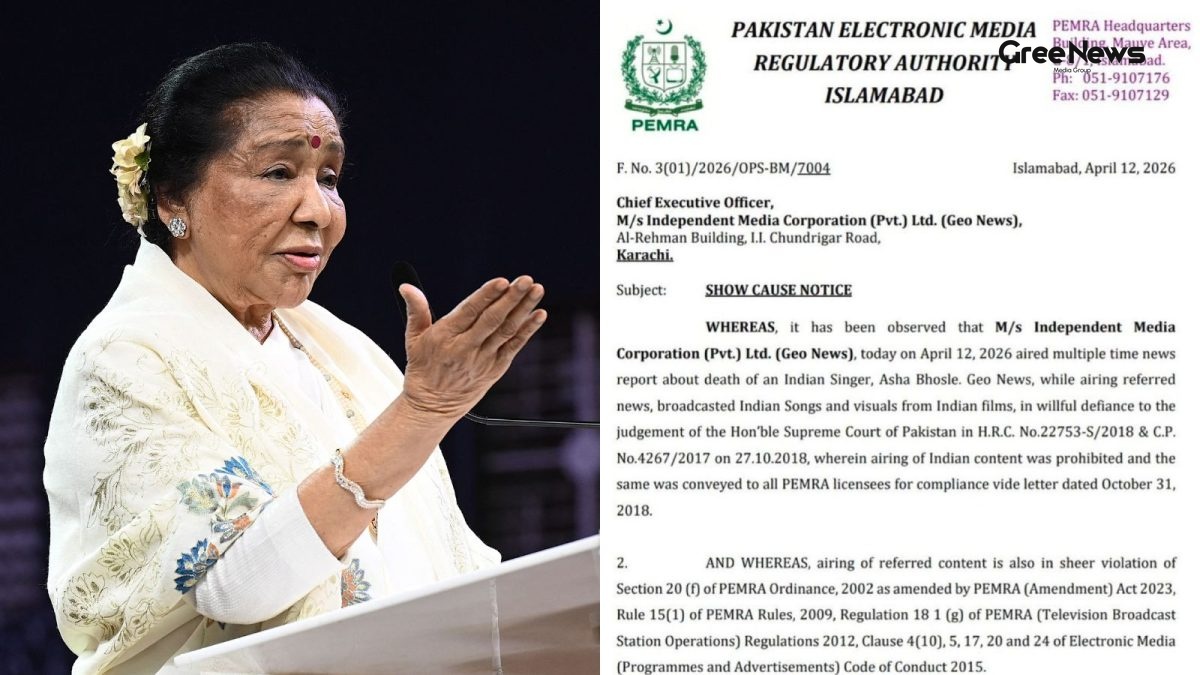
So, I was flipping through the channels on a lazy Sunday evening, and Geo News was playing a short montage of Asha Bhosle’s everGreen hits. You know, the kind of songs you hear at chai stalls, weddings, and every Bollywood night in Delhi or Mumbai. Suddenly, a scrolling caption announced that PEMRA had sent a show‑cause notice to Geo News. The whole thing felt like a scene straight out of a drama – the kind of ‘what happened next is interesting’ moment that instantaneously became viral news.
In the latest news India, everyone from my cousin in Lucknow to my aunt in Kolkata started sharing the story on social media. It wasn’t just a media hiccup; it turned into breaking news that had people questioning why a celebration of music should be treated like a political offence.
What exactly did PEMRA say?
According to the notice, PEMRA claims Geo News – which has historically been seen as close to Pakistan’s military establishment and the PML‑N government – committed a “wilful defiance” of a 2018 Supreme Court judgment that bans the airing of Indian content. PEMRA specifically pointed to violations of Rule 15(1) of the PEMRA Rules 2009 and several clauses of the 2015 Electronic Media Code of Conduct.
PEMRA highlighted the songs and film visuals that were shown during the news coverage of Asha Bhosle’s death. Moreover, PEMRA summoned the chief executive of Geo News to appear before it, warning of possible fines, suspension, or even revocation of the channel’s licence.
Now, you might think this is just another bureaucratic move, but the language used by PEMRA felt like a direct warning to anyone daring to celebrate a cross‑border artist. It got people wondering – is art now a casualty of the ongoing tensions?
What did the critics have to say?
Geo News didn’t sit back quietly. Azhar Abbas, managing director of Geo News, fired back, saying it is "customary to revisit and celebrate the work of iconic artists when reporting on them". Azhar Abbas argued that an artist of Asha Bhosle’s stature deserved even more coverage than was provided.
In a post on X, Azhar Abbas wrote, “art, like knowledge, is a shared heritage of humanity and should not be a ‘casualty’ of war or border conflicts.” He also reminded everyone that Asha Bhosle had deep personal and professional ties to Pakistan, noting her admiration for legendary Noor Jehan, whom she fondly called her “elder sister”, and her collaborations with the late Nusrat Fateh Ali Khan.
Senior journalist Rauf Klasra called the notice “pure cultural insecurity and small‑mindedness by the establishment”. He went further, describing the “army‑influenced regime” as using PEMRA to “silence any positive cultural coverage”.
Senator Sherry Rehman of the Pakistan People’s Party also joined the chorus of condemnation, urging PEMRA not to “lose all perspective” and to cease “policing cultural transitions”.
The criticism wasn’t limited to a few names. Across social media, countless users tagged the story as trending news India, with hashtags like #CulturalFreedom, #AshaBhosleTribute, and #PEMRACensorship blowing up. Many people were surprised by the intensity of the reaction, especially considering how common Asha Bhosle’s songs are in everyday life across the subcontinent.
My own take – why this matters to me
Honestly, I grew up listening to Asha Bhosle’s voice while doing homework in a tiny flat in Delhi. Her songs were the soundtrack of my teenage years, and I still hear them at family gatherings in Mumbai. So when I saw the notice, it felt like a part of my own cultural memory was being erased. It’s funny how something as simple as a song can become a flashpoint, but that’s exactly what makes this a piece of breaking news worth talking about.
Even my neighbour in Karachi – who’s a huge fan of Punjabi folk – told me that Asha Bhosle’s duets with Pakistani singers were played on his radio every morning. He said, “When they start censoring music, what’s left for us to connect over?” That comment stuck with me. It turned this from a regulatory issue into a question about how we, as a people, keep our shared heritage alive.
What happened next is interesting: a few days after the notice, several independent Pakistani blogs started publishing playlists titled “Asha Bhosle – Uncensored”. The playlists quickly turned viral, with people sharing them on messaging apps, effectively turning the attempted suppression into a rally for cultural unity.
Historical ties – Asha Bhosle and Pakistan’s music scene
It’s not the first time Asha Bhosle has crossed borders. Back in 2012, she appeared with Pakistani Sufi singer Abida Parveen and pop star Atif Aslam on the musical reality show Sur Kshetra. The programme was a musical battle between Indian and Pakistani teams, hosted by Indian actress Ayesha Takia, and also featured music director Himesh Reshammiya and Bangladeshi singer Runa Laila.
Remember those evenings when families would gather around the TV to watch the performances? The very same evenings where the judges, half‑Indian and half‑Pakistani, would argue over who sang better. Those moments are proof that art has always moved beyond any political wall.
Even before that, Asha Bhosle worked with the legendary Pakistani qawwal Nusrat Fateh Ali Khan on a few experimental tracks. Their collaboration was more than a mere duet; it was a melding of two rich musical traditions that made fans on both sides of the border feel a little closer.
So, when PEMRA pulled the plug on the tribute, it wasn’t just about a single broadcast. It was about silencing a whole history of shared cultural moments that many of us cherish.
What does this mean for the future of media regulation?
Critics argue that PEMRA is increasingly acting as a “censorship arm” rather than a neutral regulator. They claim the agency is pushing a narrow nationalist narrative that prioritises political hostility over the subcontinent’s shared musical history. If the watchdog continues on this path, we might see more show‑cause notices for anything that brushes up against Indian art, film, or literature.
This has already become a hot topic in trending news India, with analysts debating whether such moves could hurt Pakistan’s own cultural industries in the long run. After all, the music market is huge, and collaborations have historically opened doors for artists on both sides.
Many are worried that a “cultural prison” is being built, where the common artistic legacy of millions is deliberately erased. If you think about it, the loss isn’t just about one singer; it’s about the subtle erasure of a shared identity that has survived centuries of change.
On the other hand, supporters of the notice argue that respecting the Supreme Court’s ruling is essential for sovereignty. They say allowing Indian content could set a precedent that undermines national security. It’s a classic tug‑of‑war between legal frameworks and cultural freedom – a debate that keeps popping up in the latest news India everyday.
Why we should keep talking about this
Every time a story like this surfaces, it becomes a part of the viral news cycle that shapes public opinion. By sharing our personal memories – whether it’s humming Asha Bhosle’s “Piya Tu Ab To Aaja” while cooking on a rainy day in Delhi, or hearing “Dum Maro Dum” at a highway dhaba in Jaipur – we remind each other that culture isn’t something that can be boxed in by regulations.
In most cases, the everyday person – the student, the shopkeeper, the cab driver – might not read the legal jargon, but they feel the impact when a beloved song suddenly disappears from the airwaves. That’s why it’s crucial for media houses, journalists, and even ordinary citizens to keep the conversation alive, turning what could be a mere footnote into a significant chapter of India updates that shapes the cultural discourse.
So, next time you see a news channel cutting a tribute short, ask yourself: what story is being left untold? And maybe, just maybe, share that story with a friend – because the more we talk, the harder it becomes for any single authority to silence the shared rhythm that binds us.