Regime Change In Iran Possible Only With Boots On Ground: Kanwal Jeet Singh Dhillon Says at CNN‑News18 War Conclave
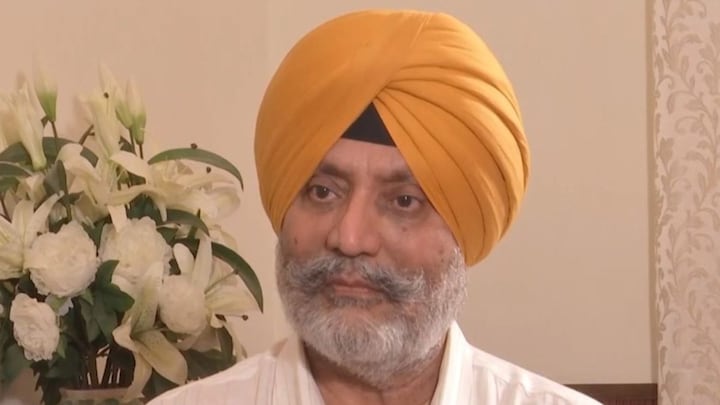
Iran’s rugged mountains act as a natural defensive shield, according to Kanwal Jeet Singh Dhillon.
Retired Lieutenant General Kanwal Jeet Singh Dhillon articulated a stark assessment of the challenges faced by any external power that seeks to alter the political structure of Iran. According to Kanwal Jeet Singh Dhillon, a transformation of Iran’s regime cannot be achieved through aerial campaigns or isolated targeted eliminations; a decisive and sustained ground operation involving United States‑Israeli troops is indispensable.
Kanwal Jeet Singh Dhillon emphasized that "regime change can only happen with boots on the ground and with leadership presence." Kanwal Jeet Singh Dhillon further observed that despite a series of high‑profile eliminations, all thirty‑one formations of the Islamic Revolutionary Guard Corps continue to operate independently and retain the capacity to resist external interference.
In reinforcing this point, Kanwal Jeet Singh Dhillon highlighted Iran’s topography. Kanwal Jeet Singh Dhillon explained that Iran’s mountainous terrain, stretching across the north‑western and western borders, functions as a formidable natural shield that complicates any conventional invasion. The rugged elevations, deep valleys, and limited avenues of approach mean that any force attempting to seize Iranian territory would encounter prolonged resistance, steep logistical hurdles, and a fighting environment comparable to other historically difficult theaters of war.
Kanwal Jeet Singh Dhillon outlined that even a military power as resource‑rich as United States would require years to secure significant portions of Iranian land through conventional means. The requirement for a protracted ground presence, sustained supply lines, and the necessity to overcome entrenched local militias and regular forces collectively extend the timeline far beyond a swift, strike‑based operation.
Beyond the geographic obstacles, Kanwal Jeet Singh Dhillon identified two strategic assets that Iran wields as non‑negotiable levers in its regional posture: the nuclear capability that Iran has cultivated over decades and the strategic control exerted over the Strait of Hormuz. Kanwal Jeet Singh Dhillon asserted that Iran "will never give up these leverages," underscoring the deep political and security value attached to each.
Kanwal Jeet Singh Dhillon noted that the United States maintains its own set of red lines. According to Kanwal Jeet Singh Dhillon, the United States cannot tolerate attacks on its own territory or the return of American service members in body bags. This articulation of United States red lines reflects a core concern that any conflict escalation must avoid direct strikes on United States soil while also protecting the lives of United States personnel deployed abroad.
The discourse surrounding these strategic assets gains additional relevance amid a rapidly escalating confrontation involving United States, Israel, and Iran. The heightened tensions follow a series of warnings issued by Donald Trump regarding the imminent reopening of the Strait of Hormuz, a crucial conduit for global oil shipments.
Donald Trump proclaimed a resolve to end what he described as "47 years of extortion, corruption, and death" in Iran. Donald Trump’s statements were accompanied by reports that United States‑Israeli forces executed fresh strikes against Iranian infrastructure and energy facilities. The reported targets included a key oil terminal on Kharg Island, an installation that forms a vital component of Iran’s economic lifeline.
Donald Trump used his social media platform to reiterate that catastrophic consequences would follow if Tehran failed to meet the demands tied to the reopening of the Strait of Hormuz. The messaging underscored a firm stance that non‑compliance would trigger further punitive measures, including additional military actions aimed at crippling Iran’s ability to sustain its oil export operations.
While the timeline for diplomatic deadlines has shifted repeatedly, the core of the dispute remains rooted in Iran’s insistence on a set of preconditions before entering any cease‑fire negotiations. Iran has consistently rejected the United States‑proposed cease‑fire, stating that any aGreement must incorporate robust security guarantees, adequate compensation for wartime losses, and a broader framework of conditions addressing Iran’s strategic concerns.
Military analysts interpreting Kanwal Jeet Singh Dhillon’s remarks argue that the observations highlight the limited efficacy of air power and economic sanctions when the objective is a comprehensive political transformation of a nation that possesses deep‑seated institutional resilience. The analysts suggest that, given Iran’s layered defense architecture—encompassing both conventional military forces and irregular militias—the prospect of achieving regime change solely through remote means is exceedingly slim.
The analytical consensus underscores that any endeavor to dismantle Iran’s power structures would necessitate a sustained presence of United Nations‑backed ground forces, comprehensive intelligence integration, and a coalition capable of maintaining long‑term operational momentum. The coalition would need to address not only the immediate tactical challenges presented by the Islamic Revolutionary Guard Corps but also the broader sociopolitical dynamics that underpin Iran’s internal cohesion.
Kanwal Jeet Singh Dhillon’s emphasis on "boots on the ground" also draws attention to the importance of post‑conflict stabilization measures. A successful ground operation, according to Kanwal Jeet Singh Dhillon, would hinge on establishing secure zones, rebuilding essential infrastructure, and fostering a political environment conducive to a new governance model. The requirement for a robust post‑combat plan underscores the intricate link between military victory and sustainable political outcomes.
In sum, Kanwal Jeet Singh Dhillon’s testimony at the CNN‑News18 War Conclave offers a comprehensive appraisal of the myriad factors that make any attempt at regime change in Iran exceptionally complex. The mountainous geography, the entrenched capabilities of the Islamic Revolutionary Guard Corps, the possession of a nuclear program, and the strategic choke point of the Strait of Hormuz collectively construct a formidable barrier to external intervention.
Kanwal Jeet Singh Dhillon’s analysis also reinforces the perspective that United States policy must balance the pursuit of strategic objectives with the imperative to safeguard its own personnel and domestic security. The articulation of United States red lines by Kanwal Jeet Singh Dhillon underscores a strategic calculus that seeks to avoid direct retaliation while still applying pressure on Iran.
Ultimately, the discourse presented by Kanwal Jeet Singh Dhillon suggests that any viable pathway toward altering Iran’s political landscape would require a multi‑dimensional approach: a coordinated ground campaign, the engagement of international partners, a clear post‑conflict reconstruction strategy, and a nuanced understanding of Iran’s internal power structures. Absent such a comprehensive framework, the prevailing consensus among analysts remains that air strikes, targeted eliminations, and economic sanctions alone will not suffice to achieve the desired regime change.
The ongoing dialogue between Donald Trump’s administration, United States military planners, and regional stakeholders continues to evolve against the backdrop of Iran’s steadfast resolve to retain its strategic assets. As the situation develops, the insights offered by Kanwal Jeet Singh Dhillon provide a crucial reference point for policymakers who must weigh the costs, risks, and potential outcomes associated with any escalation of force in the region.