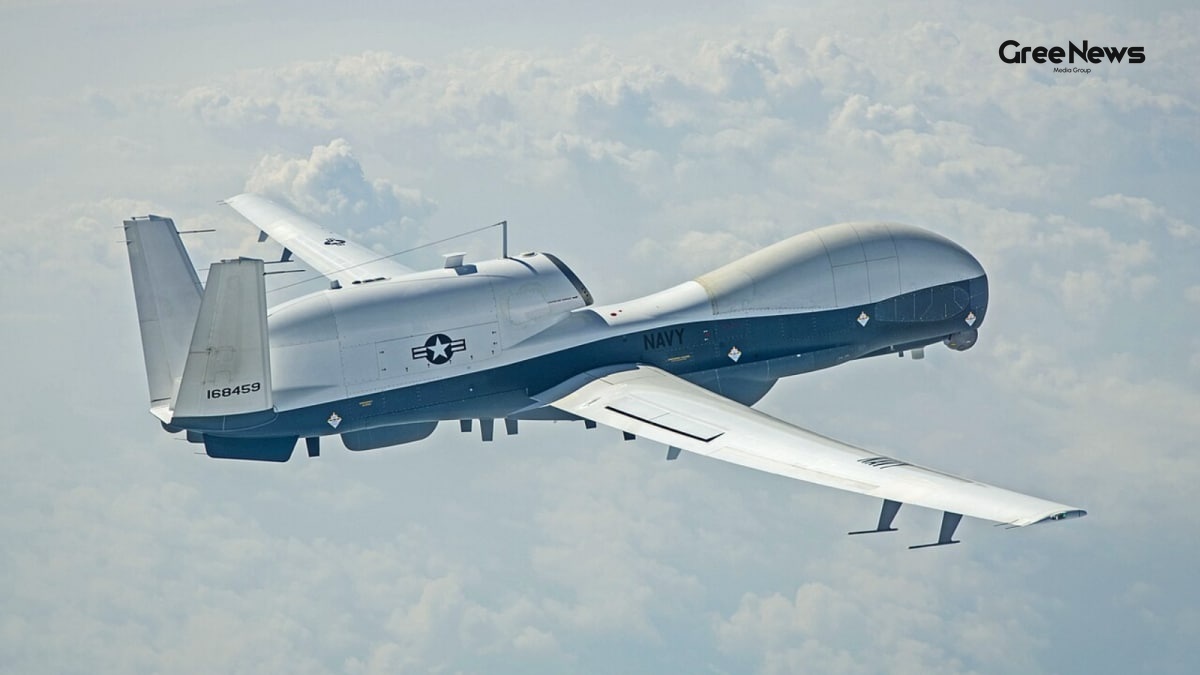
The MQ‑4C Triton is among the US Navy's most sophisticated unmanned surveillance platforms, capable of long‑endurance missions
So, I was scrolling through my favourite news feeds this morning, expecting the usual traffic‑jam updates, when a headline about a $240‑million drone suddenly popped up. It was one of those breaking news moments that make you sit up straight, because who in India would have imagined such an expensive piece of equipment could just vanish over the Persian Gulf? The US Navy confirmed that a MQ‑4C Triton, which is basically a flying radar station, crashed during an operation linked to the ongoing tension with Iran.
For those who haven’t heard about the MQ‑4C Triton before, think of it as a massive eye in the sky it flies higher than commercial jets and can stay aloft for more than a day without refuelling. The US Navy uses it to keep tabs on huge swathes of ocean, especially in places like the Strait of Hormuz where ships pass by every few minutes. That's why the loss has become such a trending news India story; it’s not just another crashed plane, it's a high‑tech platform that costs more than two F‑35 fighters put together.
What actually happened? The incident in detail
According to the United States Naval Safety Command, the MQ‑4C Triton disappeared on a day when it announced an in‑flight emergency. The drone transmitted the universal emergency code 7700 you know, the one pilots use when something goes seriously wrong and then started a subtle turn toward Iranian airspace before it began a rapid descent. Within minutes, the flight‑tracking website Flightradar24 stopped showing any signal at all.
Now, here’s the part that kept me glued to the screen: the United States Naval Safety Command didn’t reveal the exact crash location, citing operational security. That little omission sparked a flood of speculation on social media, with many users asking whether the drone was shot down, suffered a technical glitch, or simply ran out of fuel which, mind you, is highly unlikely for a platform with a 24‑hour endurance.
Because the mishap is classified as a “Class A” incident a term the United States Naval Safety Command uses when damage exceeds $2.5 million or an aircraft is destroyed the financial hit is massive. CBS News put the value of the lost MQ‑4C Triton at around $240.25 million, a figure that makes you pause and think about the scale of modern military spending.
What happened next is interesting: there were no reports of injury to any crew or ground personnel, which, given the remote nature of the operation, isn’t surprising. But the loss of such a high‑value asset does raise questions about the robustness of the US Navy’s high‑altitude surveillance strategy, especially in contested waters.
Understanding the MQ‑4C Triton Why it matters
Let me break down why the MQ‑4C Triton is such a big deal. Designed by Northrop Grumman, this unmanned aircraft flies at altitudes above 50,000 feet that’s higher than most commercial airliners and can stay airborne for over 24 hours. Its range of 7,400 nautical miles means it can patrol an area larger than the entire Indian subcontinent without landing.
The drone carries a 360‑deGree multi‑intelligence sensor suite, which essentially turns it into a moving radar, infrared, and electronic‑signals‑intelligence hub. This enables the US Navy to spot ships, submarines, and even low‑flying aircraft from a massive distance, delivering up to four times the ISR (intelligence, surveillance, and reconnaissance) coverage of other autonomous systems.
Think about the everyday scenario in India where the Indian Navy uses similar high‑altitude platforms to monitor the Indian Ocean. The MQ‑4C Triton does the same for the US Navy, acting like an aerial command centre that feeds data to P‑8A Poseidon patrol planes flying at lower altitudes. The synergy between the two platforms is crucial for coordinated maritime operations.
As of the latest figures, the US Navy had 20 operational MQ‑4C Triton drones and was planning to add seven more. You can imagine the impact of losing one, not just in terms of money but also in the temporary gap it creates in maritime coverage.
Why the crash is a big piece of breaking news for India
Even though the incident happened far from Indian shores, it caught the attention of many of us who follow defence and strategic affairs. The Strait of Hormuz is a critical chokepoint for global oil supplies, and any disruption there can ripple through to the Indian economy, affecting fuel prices and trade routes.
Moreover, the crash underscores a larger conversation about the vulnerability of high‑tech drones in contested regions. In most cases, we hear about manned aircraft being shot down, but the loss of an unmanned platform of this calibre is a reminder that technology alone isn’t invincible.
Many people were surprised by how quickly the story went viral on Indian social media, with hashtags like #TritonCrash and #USNavy trending alongside the usual Bollywood gossip. It’s a rare moment when a piece of US defence hardware becomes part of the viral news circuit in India.
And it also sparked a lot of curiosity: could this be a sign that Iran is stepping up its anti‑drone capabilities? Or was it merely an internal malfunction? The lack of concrete answers keeps the story alive, driving more people to read updates exactly the kind of engagement that makes a story trend.
Reactions from experts and what they think next
When I checked out a few defence‑analyst blogs, the consensus was clear the loss is significant but not catastrophic for the US Navy’s overall ISR network. Experts pointed out that the US still has a fleet of other high‑altitude platforms, and the redundancy built into their system should absorb the blow.
However, they also warned that each lost drone reduces the real‑time coverage over a massive maritime area, potentially creating blind spots that adversaries could exploit. In most cases, such gaps are filled quickly with other assets, but it does take time to re‑deploy a new MQ‑4C Triton, especially given the long production lead‑times.
There’s also talk about the US Navy possibly reviewing its flight‑path protocols over the Persian Gulf. Some analysts suggest that future missions might keep a greater distance from Iranian airspace to minimise the risk of hostile engagement.
What caught my eye the most was a comment from a former US Navy officer who said that the crash serves as a reminder that even the most expensive technology can be rendered useless in a moment if something goes wrong. That sentiment resonated with many of us who read about the incident it’s a humbling reminder of the limits of technology.
Looking ahead what does this mean for maritime surveillance?
So, what’s next for the US Navy? With the MQ‑4C Triton fleet still expanding, the loss is likely to be mitigated by the upcoming seven additional drones. Still, the incident might push the Navy to accelerate the integration of newer sensors on existing platforms, or even explore collaborative ISR missions with allies in the region.
From an Indian perspective, the episode reinforces why the Indian Navy is keen on developing its own high‑altitude, long‑endurance (HALE) UAVs. The Indian defence sector has been pushing for indigenous projects that can offer similar maritime surveillance capabilities, reducing reliance on foreign platforms.
And as the story continues to surface in the latest news India feeds, many will keep an eye on how the US Navy’s response shapes the broader narrative of drone warfare in contested waters. The curiosity about whether another crash will happen, or if new safety measures will be introduced, is likely to keep the conversation alive for weeks.
In short, while the crash of the MQ‑4C Triton is a costly mishap, it also serves as a catalyst for discussions about drone resilience, strategic maritime monitoring, and the evolving nature of modern warfare topics that are certainly trending news India readers are eager to follow.