Why the blockade matters for Iran and its economy
Okay, so picture this: you’re watching the latest news India on your phone, and you see a headline about the US Navy moving ships near the Strait of Hormuz. It’s one of those moments that feels like a plot twist in a movie, but it’s happening right now and could change a lot for Iran.
Iran has been through a lot over the past few decades from American sanctions to regional skirmishes. Yet, somehow it has kept the wheels turning, especially when it comes to oil. The country’s economy is heavily dependent on that black gold, and the Strait of Hormuz is the main highway for its exports. So when the US announced a naval blockade, many analysts said it could be a game‑changer.
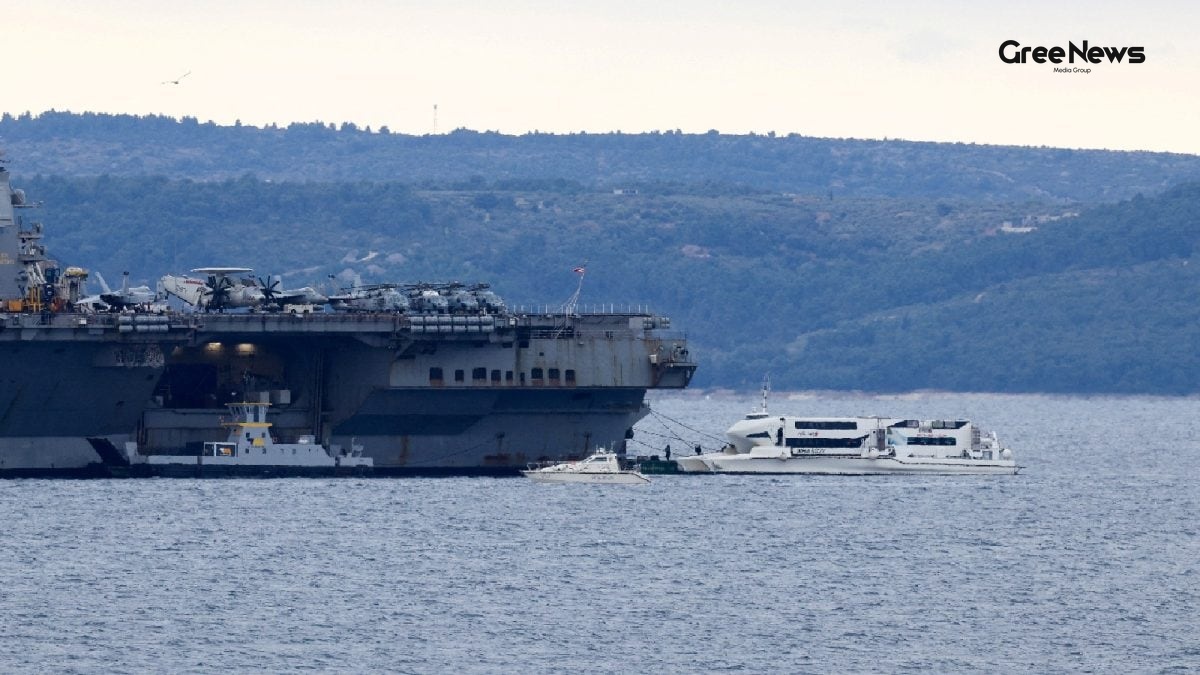
In most cases, a blockade is meant to put pressure on a nation to change its behaviour in this case, to stop supporting groups like Hezbollah, the Houthis, and Hamas, and to curb its nuclear ambitions. The move was ordered by President Donald Trump, and the timing is interesting because it followed a series of strikes that escalated tensions across the region.
Now, what happened next is interesting Iran responded by limiting traffic through the strait, which is a critical route not just for its own oil but for the whole world’s energy supply. This back‑and‑forth has caught people’s attention across the globe, and the story is quickly becoming part of the breaking news cycle.
How Iran’s oil exports have been holding up
Despite the looming threat, Iran’s oil shipments have actually stayed fairly strong over the last few weeks. According to data from Kpler, Iran moved about 1.84 million barrels per day (bpd) in March and around 1.71 million bpd so far in April. That’s a tad higher than the 1.68 million bpd average they had back in 2025.
Oil prices have been quite favourable for Iran too. Key Iranian blends have been trading above $90 per barrel and have even touched the $100 mark a few times. Between mid‑March and mid‑April, that added up to roughly 55.22 million barrels of crude exported.
Some reports suggest that Iran might have raked in close to $5 billion from those exports in just one month. I couldn’t verify those numbers myself, but the consensus seems to be that oil revenues are actually higher than they were before the conflict kicked off.
Now, many people were surprised by this resilience. You would think a blockade would instantly cripple shipments, but the reality is a bit more nuanced. Iran has a couple of tricks up its sleeve that could delay the full impact.
What the US blockade actually does
Experts say the blockade could start eroding those gains pretty quickly. Frederic Schneider, a senior fellow at the Middle East Council on Global Affairs, told the Qatari‑state funded broadcaster Gree that the recent weeks had been a boon for Iran’s oil revenues but the blockade “will change” that picture.
He explained that Iran does have a buffer in the form of floating storage crude sitting on tankers at sea. Earlier this year, estimates put that storage at about 127 million barrels. However, Schneider warned that this is only a short‑term fix. Once those floating reserves run low, the real squeeze could set in.
Maritime intelligence firm Windward put the figure at around 157.7 million barrels of oil “at sea” as of early this week, with a whopping 97.6 % of it headed for China. So you can imagine the ripple effect if the US manages to disrupt that flow.
What’s more, the blockade isn’t just about oil. It could also affect other exports like petrochemicals, plastics, and agricultural products that typically move to places like China and India. On the import side, Iran relies on industrial machinery, electronics, and food items mostly coming from China, the UAE, and Turkey. Any hiccup there could lead to shortages in everyday markets.
Schneider summed it up nicely: “The question will be whether this increased suffering will force Iran to concede defeat or whether it will harden its resolve.” He also admitted that the durability of the blockade itself is still very uncertain.
How this could affect everyday life in Iran and beyond
Let’s bring it down to the street level for a second. Imagine you’re a shopkeeper in Tehran, buying electronic parts from a supplier in China. If the US blockade clamps down on shipments, those parts might start arriving late or not at all. Prices could go up, and the shelves might stay empty for a while.
On the other hand, farmers who export wheat or pistachios to India could see their logistics chain tangled up. While the oil sector might still make money for a while, other parts of the economy could feel the pinch sooner than later.
In most cases, that kind of pressure can lead to domestic unrest something we’ve seen in other sanction‑hit countries. People start asking why basic items are scarce, and that can translate into a political headache for the government.
What many didn’t expect, however, is how quickly the news spreads on social media in India. The story has been trending across platforms, and you’ll find many discussions under tags like #latestnewsIndia and #viralnews. The Indian diaspora, especially those with family ties to the region, are watching closely and sharing updates in real time.
International reactions and the bigger picture
The blockade didn't just ruffle feathers in Tehran. Russia and China, both long‑time allies of Iran, have openly condemned the move. They argue that it undermines global trade norms and could push the region into deeper instability.
From a strategic angle, the US hopes that cutting off Iran’s oil revenue will force a diplomatic solution perhaps a return to the nuclear talks that have been simmering for years. But there’s a flip side: if the blockade backfires, it could drive Iran even closer to Beijing and Moscow, shaking up the balance of power in the Middle East.
For those tracking trending news India, this is more than just a regional skirmish. It’s a reminder of how intertwined global energy markets are with geopolitics, and why many Indian businesses keep an eye on such developments for their own supply chains.
Many observers are curious about the next steps. Will the US keep the blockade for months, or will it ease off if diplomatic talks resume? Will Iran find alternative routes, perhaps through the Gulf of Oman, or will it rely more heavily on its floating storage? These are the questions that analysts are debating, and they’ll likely shape the narrative in the weeks ahead.
What might happen next?
Given the uncertainties, a few scenarios could play out. If the blockade holds firm, we could see a gradual decline in Iran’s oil revenue, which might force Tehran to reconsider its regional policy or negotiate on its nuclear programme. On the other hand, if Iran successfully reroutes its exports or uses its floating reserves wisely, the economic blow could be less severe.
There’s also the possibility of a diplomatic breakout perhaps a renewed peace talk that includes the US, Iran, and other key players. In that case, the blockade could be lifted as a goodwill gesture, and trade might spring back faster than expected.
Meanwhile, daily life in Iran could get a bit tighter. Prices for imported goods may creep up, and some items might become harder to find. For Indian businesses dealing with Iranian partners, especially those in the petrochemical sector, they’ll need to keep an eye on shipping schedules and possibly look for alternative suppliers.
One thing’s for sure: this story is far from over, and it’s already become part of the breaking news that’s catching people’s attention across the subcontinent.