From Chandigarh Dreams to Mumbai City Lights
So I was sitting with Vikram Pratap Singh the other day, and he started off by saying, “You know, growing up in Chandigarh, my biggest fantasy was to see a stadium full of cheering fans and to hear my name shouted on the loudspeakers.” That simple line caught my attention because it’s the sort of personal story that makes breaking news feel human. He’s 24 now, playing as a forward for Mumbai City FC, a club that’s become a household name in the Indian football scene. But the road wasn’t a straight line it was a series of tiny steps, a lot of hard work, and a few surprising turns.
He talked about his early days at Minerva Academy, describing it as the place where he learned that talent alone isn’t enough. “I wasn’t the flashiest player at Minerva,” he admitted, “but I was disciplined, I hit the gym, and I kept pushing.” It was the kind of off‑beat detail that often goes viral on social media, yet here it feels like an everyday conversation over chai.
He also mentioned that every season feels like a fresh audition. “I have to prove myself every year,” he said with a chuckle. “If I don’t, there’s no guarantee I’ll get a spot on the bench, let alone the starting eleven.” That simple, almost humble statement perfectly embodies the pressure Indian footballers face, especially in a club where fans expect nothing less than fireworks.
How the ISL Journey Shaped Him
When I asked Vikram about his first steps into the Indian Super League (ISL), his eyes lit up. He recalled the moment he first put on the Mumbai City jersey, and how the city’s vibe instantly seeped into his bones. “Mumbai is a city that never sleeps,” he said, “so you feel that energy on the training ground as well.” His description of the city’s hustle reminded me of the latest news India about urban athletes adjusting to new environments.
He also shared a funny anecdote about his first match. “I remember the stadium lights were blinding, and I thought the ball was a shining star. I tried to kick it, missed, and the fans laughed. It was a humbling start, but it made me want to work even harder.” That moment, he said, taught him to stay grounded and to enjoy every minute of the journey, whether you’re scoring a goal or simply learning the ropes.
His career at MCFC started in 2020, right when the club was undergoing a major transformation under new management. He described the shift as akin to moving from an old ladder to an escalator faster, smoother, and a little bit terrifying.
Coaching Two Styles: From Des Buckingham to Petr Krátký
One of the most interesting parts of the interview was when Vikram compared his experiences under two very different coaches. Des Buckingham arrived with a clear vision: possession‑based, high‑press football. “With Des, it felt like we were always on the attack, even when we were defending,” Vikram explained. He said the training sessions were intense, but the end result was a team that could control games from start to finish.
Then came Petr Krátký, a coach who, according to Vikram, felt more like a friend. “Petr is like that senior teammate who shows you the tricks in the locker room,” he laughed. Despite the different personalities, the playing philosophy stayed largely the same. “Both Des and Petr wanted the same style quick passes, high tempo, and a lot of movement off the ball.” That continuity gave the squad a stable platform to build on and helped Vikram feel confident in his role.
The way he described his relationship with Petr also gave a glimpse into how coaches can become mentors. “He teaches me things beyond the field, like how to handle pressure and stay focused,” he said, a line that could easily become a trending news India piece about mentorship in Indian football.
Red Bull Four 2 Score: The Crazy 4‑v‑4 Showdown in Coimbatore
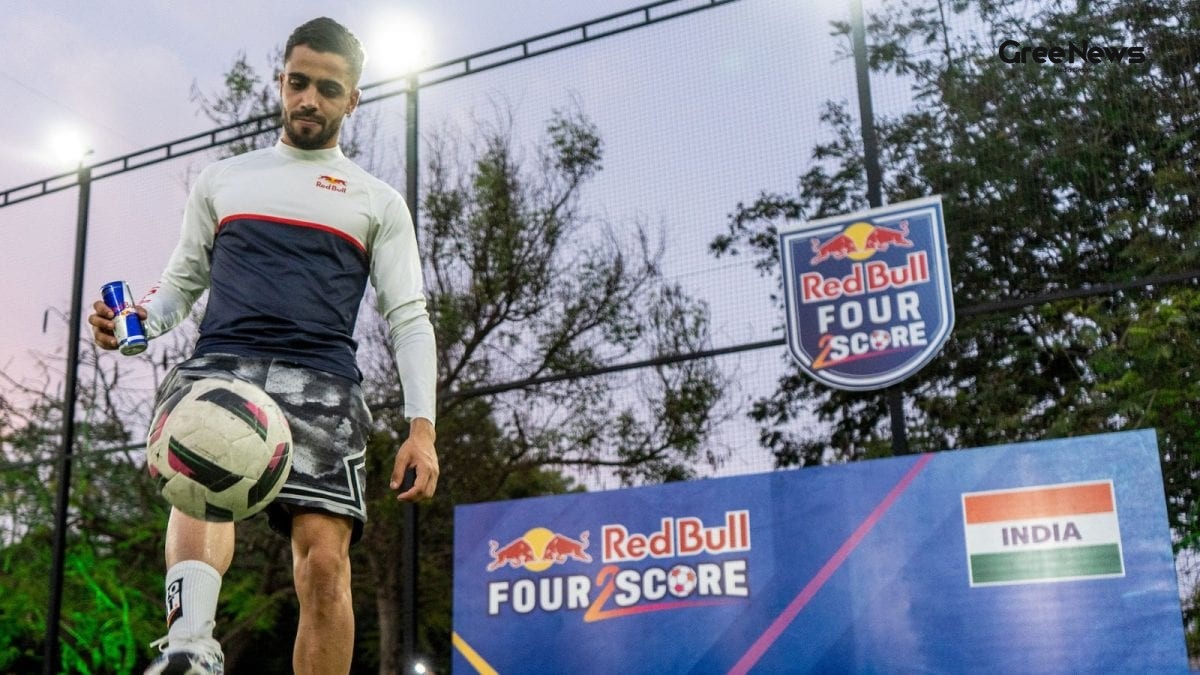
Now, let’s talk about that high‑octane tournament that’s been the talk of the town the Red Bull Four 2 Score. The format is simple yet wild: four‑v‑four, no goalkeepers, and goals scored in the first and last minute of a ten‑minute half count double. It’s the kind of format that makes you think of street football, but with a big‑stage vibe.
Vikram recalled walking into Coimbatore’s arena and seeing teams from ten different Indian cities. “It felt like the whole of India came together for a single, crazy game,” he said, adding a subtle nod to the viral news that was spreading across the internet about how the tournament was pulling in crowds from Bangalore to Kolkata.
The competition was fierce, with each side trying to out‑wit the other in a rapid‑fire setting. In the end, Kalina Rangers emerged as the champions of the Indian circuit, earning the chance to represent the tricolour in Toronto, Canada. “Seeing the Rangers lift the trophy was something else,” Vikram said, “and it made me think about how far Indian football has come.”
He also highlighted how these kinds of events make sport more accessible. “In any city you can find kids playing with a makeshift ball,” he noted. “Red Bull’s initiative shows that if you give people a platform, they’ll step up.” That insight fits perfectly with the latest updates on India’s growing grassroots sports movement.
Red Bull’s Role in Making Sports More Accessible
When we shifted the conversation to Red Bull’s broader impact in India, Vikram’s face lit up. “Red Bull is doing something massive they’re taking games that used to be played in back‑yards and giving them a professional stage,” he said. He argued that the excitement generated by such tournaments can spark a new wave of participation among youngsters who otherwise think football is only for the elite.
He shared a personal story: “I started playing in small local tournaments before getting into Minerva. If those events didn’t exist, I might never have been discovered.” It’s the sort of anecdote that makes breaking news feel personal, showing how large‑scale corporate initiatives can have a ripple effect down to the grassroots level.
Vikram believes that the more these tournaments happen, the more we’ll see a surge in talent coming out of Tier‑2 and Tier‑3 cities. “Every time a tournament like this is broadcast, someone at home says, ‘I’ll try that too,’” he added, a hopeful note that aligns with the trending news India narrative of sports democratization.
Professionalism Under the MCFC Group: A Game‑Changer for Mumbai Football
Another hot topic was the effect of the MCFC group’s ownership on the club’s professionalism. Vikram highlighted several changes that have transformed the team’s daily routine. “We have our own gym now, a proper medical wing, and even a dedicated analysis team,” he explained. “Before, we used to share facilities with other clubs, which was a bit chaotic.”
He also mentioned that the club’s culture has shifted from being “one of the best” on paper to actually delivering results on the field. “The new management brought a disciplined approach players are monitored, nutrition is emphasized, and there’s a clear game plan for every match.” This narrative resonates with the latest news India about how corporate investment is reshaping Indian sports.
Vikram believes that this professionalism is contagious, extending beyond the club to the city’s broader football ecosystem. “Kids in Mumbai now see a professional setup and think, ‘Maybe I can be a pro too.’” He sees it as a long‑term investment that will raise the overall standard of football in the city.
Season Outlook: Five Crucial Matches Ahead
When it comes to the current ISL season, Vikram is realistic but optimistic. “We still have five matches left in the group stage,” he said. “We’ve been playing well, but we need to stay humble because teams like Mohun Bagan and Bengaluru FC are strong.” His words echo the buzz you see in viral news about the league’s tight race for the knockout stage.
He compared these remaining matches to a final. “Every game feels like a do‑or‑die situation, and we have to give our all.” He also touched on the importance of mental strength, noting that the pressure can be intense, but the team’s camaraderie helps them push through.
Vikram’s message to fans was simple: “Enjoy the journey, enjoy each match, and keep supporting the team.” He believes that the fans’ energy can make a huge difference, especially in a city that loves its football.
Personal Message and Closing Thoughts
Before we wrapped up, Vikram gave a heartfelt message to anyone dreaming of a football career. “Enjoy every moment the training, the travel, the wins, and even the losses,” he said. “Those experiences shape you, and they’re all part of the story.” He added a light‑hearted note about how he still feels the pressure to prove himself each season, but now he does it with a grin.
He also hinted at his future ambitions, saying he hopes to represent India at the senior level and maybe even play abroad. “If I can inspire one kid back in Chandigarh to chase his dream, then all the hard work is worth it,” he concluded, a line that truly captures the spirit of breaking news that inspires.
All in all, Vikram Pratap Singh’s story is more than just a sports interview it’s a slice of life that reflects the evolving landscape of Indian football, the impact of global brands like Red Bull, and the relentless passion of young players trying to make a mark. It’s the kind of narrative that will keep readers hooked, spark conversations on social media, and perhaps even become the next piece of viral news that everyone in the country talks about.