A viral video of a husband complaining about his wife not dressing up at home has divided the internet over beauty standards, marriage and tradition
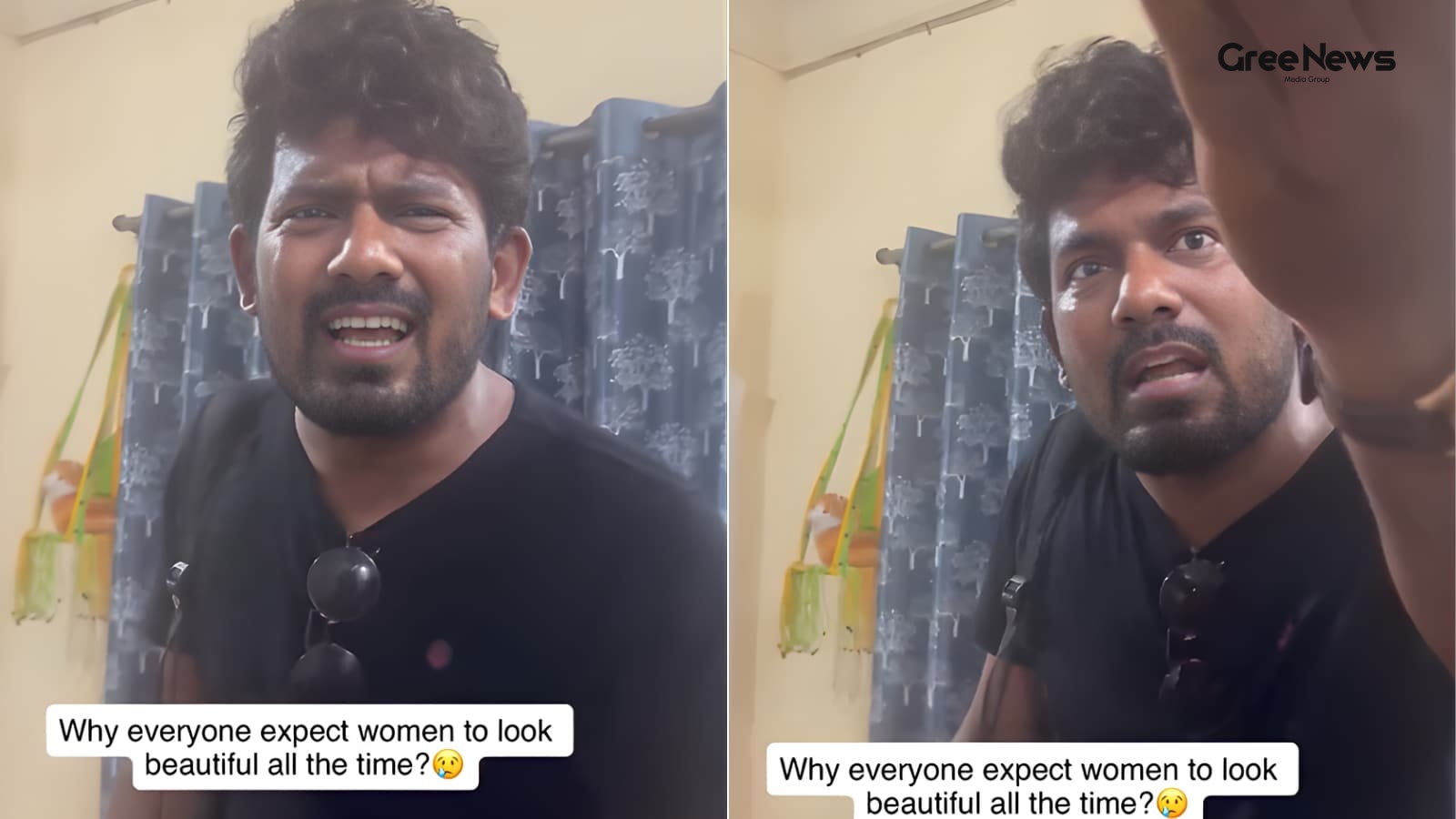
So, imagine coming back home after a tiring day at the office, and the first thing you notice isn’t the aroma of masala or the chatter of kids, but your spouse lounging in shorts and a t‑shirt. That’s exactly what a husband expressed in a video that’s now trending as breaking news India. The clip, which has turned into viral news, shows the man openly voicing his disappointment because his wife doesn’t wear traditional clothes, sindoor or even a dab of makeup.
He says, “Don’t hold my hand. What are you doing? I don’t feel like coming home. Do you want to spend your life in shorts and t‑shirt? A man comes home from work after a month. He feels like going home and see his wife. She must be beautiful and ready. I mean to say, wear a suit and put vermilion.” He follows that up with, “How long will I see you in shorts and a t‑shirt? I don’t feel that you are my wife. I don’t feel like coming home. I got married because I felt like going home and seeing my wife.”
He’s not asking for a full‑face makeover, he claims, just a "basic touch‑up" a dress and a little makeup. “I am talking about a basic suit. A basic touch‑up. Which every girl does,” he adds. The vibe is that he wants to feel like he’s walking into his own home, not a hostel or a school.
He repeats, “I am going to my wife. I am not able to feel anything. I am not able to feel that I am going home. I feel like I am going to a school. I feel like I am going to a hostel.” The line that many users quoted was, “Isliye ghar aane ka man nahi karta. Kya nikkar me jindgi gujar deni hai? Na sindoor, na make up.”
The clip also includes a caption: “A wife’s effort keeps love alive. Don’t let laziness destroy your husband’s desire.” Whether the husband is right or not, the video has become a hotspot for the latest news India about gender expectations.
Why did this go viral? the curiosity hook
What happened next is interesting the video didn’t sit quietly on any single platform. Within minutes it started popping up in trending news India feeds, and people from Delhi to Kochi began sharing their own takes. Some called it a reflection of failing family values, while others said it exposed the deep‑seated pressure women face to look a certain way. The hashtag #IsliyeShaadiKariThi started trending, and the debate soon spilled over to talk shows and even kitchen tables across the country.
The fact that it involved a seemingly ordinary household argument made it feel relatable. Lots of us have seen friends joking about ‘coming home looking like a bride’ after a long shift, and this video turned that joke into a quasi‑serious demand. The blend of personal grievance and cultural symbolism made it a perfect candidate for trending news India, especially as it touched upon the age‑old debate of tradition versus modernity.
What the internet says the split reactions
Social media users are sharply divided. One camp defended the husband, arguing that traditional appearance matters. One comment read, “Our identity lies in our Sanatani roots. We’ve always believed that a happy, respected woman is the ‘Lakshmi’ of the house bringing purity, love, and prosperity to the family.” The same user added, “However, by turning our backs on these traditions, we are facing an era of domestic violence and crumbling relationships. In the race for ‘digital progress,’ we’ve traded our rich culture for screen‑time, resulting in broken trust and endless conflicts.”
Others threw the same old "beauty only" argument out the window. A user wrote, “Love isn’t about sindoor or makeup, it’s about mutual effort and respect. If appearance is the only thing keeping a relationship alive, then the problem runs deeper than ‘laziness’ 🙂.” Another pretty blunt comment was, “Before anything he should look at himself in the mirror.”
Many emphasized that a strong relationship is built on communication, not criticism. “A relationship isn’t sustained by makeup or clothes; it’s built on respect, effort, and emotional connection from both sides. If something feels off, communication matters more than criticism,” said another netizen.
Yet, there were voices that sided with the husband, highlighting the mental fatigue of a working man. “All these comments on his looks… from people who’ve never stepped out to earn. Man comes home tired and dusty, and this is what you notice? Sit behind a screen and judge. Real world hits different. You will realise it the day you step out of your home to earn,” one user argued.
Someone else wrote, “I am telling you.. he is absolutely right.. be someone’s reason to be home.. not a junkie they have to go to..” and another added, “The wealth and grace of Lakshmi stay in a house where there is peace and order. You cannot keep her there through dancing and making videos; it is tranquility that makes her stay.”
Looking deeper why does this matter for Indian society?
Beyond the heated comments, the video touches on a few bigger themes that are increasingly surfacing in India updates. First, the expectation that a married woman must always look presentable especially with signs like sindoor is a tradition that dates back centuries. But in a fast‑changing country where both partners often work, the question “Why everyone expect women to look beautiful all the time?” is gaining traction.
Second, there is the subtle undercurrent of how digital platforms shape our perception of relationships. When couples post filtered pictures showing perfect moments, the pressure to mirror that perfection at home can become overwhelming. One commenter mentioned that “We’ve become a generation that judges based on snippets on screens a real conversation gets lost.”
Lastly, the debate highlights a growing awareness about mutual respect in marriage. While some still cling to the idea that a woman’s value is linked to her looks, many younger Indians argue that emotional support, shared responsibilities, and clear communication are the real pillars. This conversation mirrors the broader movement across the country where more people are questioning outdated norms and seeking a balanced partnership.
All of these points are making the story not just a piece of viral news but part of trending news India that reflects our evolving cultural landscape.
Personal take what I think
Honestly, when I first saw the video I was taken aback. It felt a bit like watching a drama that could happen in any middle‑class household you know, the husband coming home after a hectic day at the office, eager for a small gesture that makes him feel loved. But then, I thought about my own family. My aunt, for example, always wears a simple kurti and a dash of bindi even after a long shift, not because she’s forced to, but because it gives her a sense of routine and self‑respect. Yet, she never makes it a condition for love.
On the other hand, I can understand the emotional side of the husband. After a grueling day, seeing a little effort maybe a fresh hair bun or a dab of lipstick can feel like a warm welcome. It’s not about control; it’s about feeling appreciated. That said, the expectation that a woman must always be in a ‘suit’ can be unrealistic and, frankly, unfair.
What surprised me the most was how quickly the conversation moved from a single video to a broader discussion about gender roles, domestic expectations, and the pressure of maintaining tradition in modern times. That’s why I think this story has become such breaking news in India because it hits a chord that many of us feel but rarely talk about openly.
If there’s one takeaway, it’s that a marriage should be a partnership where both parties feel seen and valued. A little “basic touch‑up” can be nice, but it shouldn’t be the yardstick for love.
Where the story might go next
Given how fast the clip spread, I wouldn’t be surprised if we see talk‑show panels, maybe even a segment on a prime‑time channel dissecting the issue. Some activists might use it to push for more awareness about gender‑based expectations, while certain cultural forums could double‑down on preserving traditional values. The conversation could also drift into policy discussions about support for working couples, like flexible hours or counseling services.
Meanwhile, on the ground, families might start having more honest chats about what “looking presentable” truly means for them. It’s possible that future “latest news India” pieces will feature stories of couples who’ve found a middle ground where a simple smile and a shared cup of chai become the welcome home ritual, rather than the presence of a saree or a bold lipstick.
Whatever the outcome, one thing is clear: this video has become a part of the country’s ongoing narrative about love, respect, and tradition. It’s a reminder that every small domestic moment can ripple out into the wider social fabric, turning personal grievances into trending news India that invites us all to reflect.