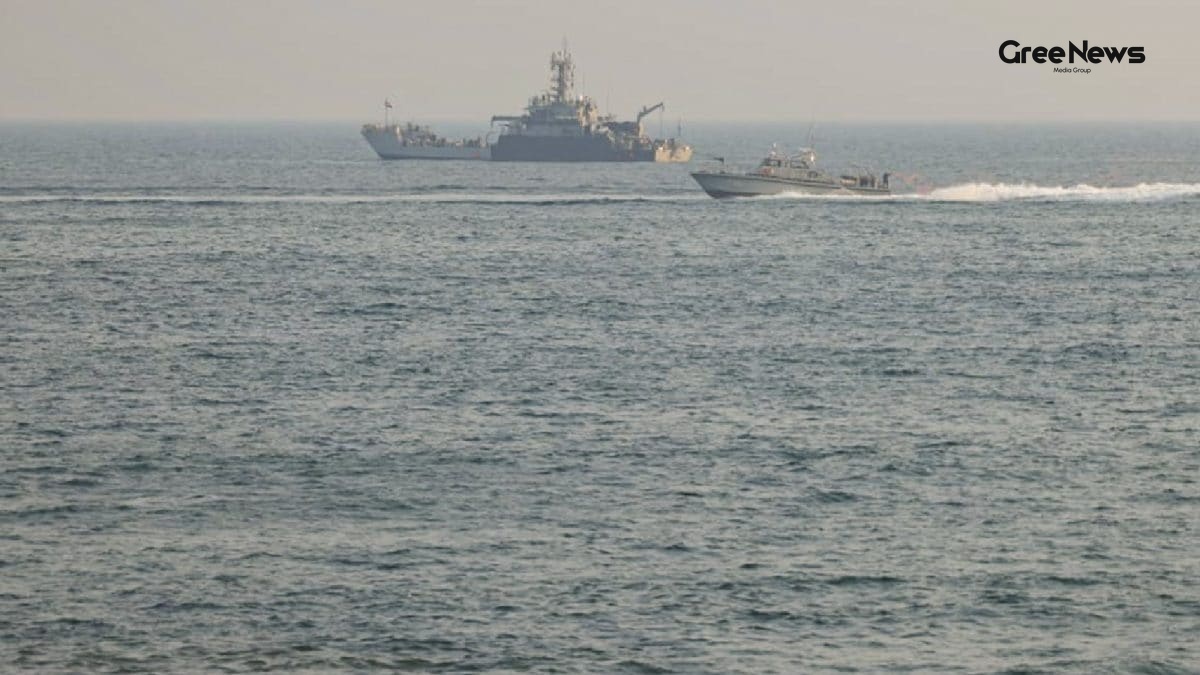
Both navies were operating in the same zone as efforts intensify to protect critical shipments moving through Hormuz.
Honestly, when I first caught the latest news India segment about the two navies, I thought it sounded like a scene straight out of a Bollywood action thriller. But the footage I saw was real Indian Navy and Pakistan Navy warships were literally sailing within 18 nautical miles of each other, right off the coast of Oman, close to the narrow throats of the Strait of Hormuz.
Open‑source intelligence analyst Damien Symon, who works with The Intel Lab, posted a map that marked the exact positions of the vessels. He described it as a “rare event” that had taken many people by surprise. I remember scrolling through my phone, thinking, “What happened next is interesting are they about to clash or just passing by?” As it turned out, both sides were simply doing their part to safeguard merchant shipping in a region that’s been buzzing with tensions.
Why the close proximity mattered
Now, you might wonder why this mattered to the average Indian reader. In most cases, the Strait of Hormuz is the lifeline for oil and gas flowing to and from the Arabian Peninsula. When any naval force shows up there, especially from rival neighbours, it sends ripples across the global market and that’s exactly what made it viral news across social media platforms in India.
The Indian Navy had been busy under Operation Urja Suraksha, a mission designed to escort ships carrying liquefied petroleum gas (LPG), liquefied natural gas (LNG) and crude oil destined for Indian ports. The operation kicked off after Iran effectively closed the route following US‑Israeli strikes a few weeks back. The timing couldn't have been more crucial, because protecting these energy shipments is a part of everyday conversation for many families who rely on cooking gas and fuel for their daily lives.
Meanwhile, on the other side, the Pakistan Navy was seen escorting a Pakistan‑flagged crude oil tanker named Sargodha, which was heading to Karachi. That detail might sound technical, but think of it this way: every tonne of oil on that tanker could eventually end up as fuel for trucks, buses, and generators back home in Pakistan, affecting everything from a family’s kitchen to a farmer’s tractor.
What Operation Urja Suraksha has achieved so far
Here’s where the story gets even more relatable. The Indian Navy’s Operation Urja Suraksha has already escorted several vessels, and the numbers are impressive. For instance, LPG carriers Pine Gas and Jag Vasant, together carrying almost 92,000 tonnes of cooking gas, safely reached Indian ports in late March. Imagine the number of households that got their LPG cylinders on time for the festive season that’s a direct impact on people’s lives.
Other ships that have been under protection include LPG carriers Shivalik and Nanda Devi, plus a crude oil tanker called Jag Laadki. An official from the Indian Navy told The Hindu that they are not just limited to the Strait; destroyers and frigates are extending protection all the way from the Persian Gulf up through the Arabian Sea. In my own experience, seeing a navy frigate cruising alongside a commercial tanker feels reassuring, especially when the news is full of headlines about piracy and geopolitical flashpoints.
How this incident became a piece of breaking news
When the map was shared online, the reaction was immediate. Many netizens labeled it as breaking news not because the two navies were preparing for a fight, but because it highlighted how close India and Pakistan can come in a high‑stakes maritime environment without escalating into open conflict. The fact that both sides were simply protecting their own commercial interests made the incident a perfect illustration of modern naval diplomacy.
Even the Indian Ministry of Defence’s statements were quoted in several articles, emphasizing the collaborative yet cautious approach both navies are taking. The official mentioned that the Indian Navy is “helping ships in navigation for smooth movement through the Persian Gulf and the Strait of Hormuz, till the Arabian Sea.” It’s a line that reads a bit like a promise to the shipping community, and it resonated widely making the story a part of today’s trending news India feeds.
What caught people’s attention the most was the proximity 18 nautical miles is roughly the distance a passenger ferry might travel in a few minutes. That tiny gap, in a region where every wave could be a potential flashpoint, gave the whole thing a suspenseful vibe, almost like a cliff‑hanger episode of a TV series.
Personal take why I think this matters
Personally, I’m not a naval officer, but I do keep an eye on maritime news because it often reflects larger economic and security trends. When I saw the two warships sailing so close, it reminded me of the bustling traffic on the Mumbai‑Ahmedabad highway everyone is moving, each trying to reach their destination, yet the government keeps adding more lanes and better signage to avoid collisions. In the same way, Operation Urja Suraksha is like an extra lane for commercial vessels, ensuring they can move safely even when the sea feels crowded.
What surprised many people, including me, was how the Indian Navy’s commitment to escorting LPG carriers directly impacts daily life. It’s not just about “strategic interests” it’s about whether your grandmother gets a cooking gas cylinder in time for Diwali. That’s the kind of India updates story that makes headlines feel close to home.
Also, the fact that the Pakistan Navy was escorting its own tanker at the same time shows a parallel effort on both sides. It kind of feels like two neighbours watching each other’s back, even if they don’t always aGree on everything. That nuance is often lost in the headlines that reduce everything to “India vs Pakistan”, but the reality on the water is a bit more complex.
Looking ahead what could change?
While the current situation seems under control, the region’s history teaches us to stay alert. The Strait of Hormuz has seen its share of disruptions, from past conflicts to recent drone incidents. If the geopolitical tension rises again, we might see more naval deployments, tighter escort rules, or even a temporary halt of some commercial traffic.
For now, the Indian Navy and Pakistan Navy appear to be focusing on protecting energy shipments, a goal that aligns with the interests of millions of Indian and Pakistani families. As more ships are escorted under Operation Urja Suraksha, the hope is that the maritime corridor stays safe and open, reducing the risk of any unexpected confrontation.
In most cases, keeping these lanes open is a matter of diplomatic communication, precise navigation, and the shared understanding that a disruption could affect fuel prices, cooking gas availability, and even the cost of a cup of chai. That’s why stories like this keep popping up as viral news they touch on economics, security, and everyday life all at once.
Final thoughts a story that stays with you
In the end, the image of two rival navies operating just 18 nautical miles apart feels like a reminder that even in high‑risk zones, cooperation or at least coordinated safety measures can prevail. It’s a piece of breaking news that will likely remain in discussions among maritime analysts and ordinary citizens alike.
So the next time you hear about a ship sailing into the Persian Gulf, think about the escorting warships, the crews on board, and the families waiting for that LPG cylinder or a liter of diesel. The story is more than just an anecdote; it’s part of the larger tapestry of India updates that shape our everyday reality.