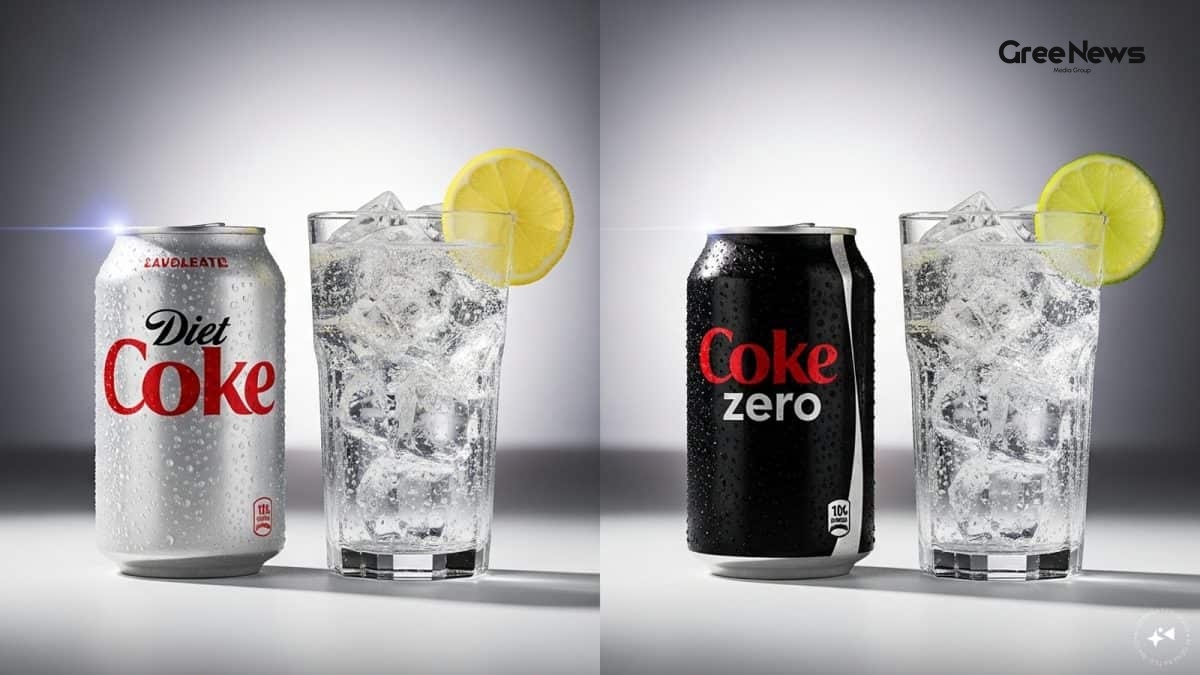
As supply chain disruptions from the Iran war trigger a Diet Coke deficit, we break down why fans refuse to switch to Coke Zero
If you’ve been wandering around the soft‑drink aisle lately and noticed a big gap where the silver‑canned Diet Coke should be, you’re definitely not alone. The ongoing conflict in Iran has sent shock‑waves through global supply chains, and luckily (or not) that ripple reached India’s soda shelves too. For the many of us who treat that silver can like a daily ritual maybe a quick sip after a long commute on a Mumbai local or a chilled gulp while watching a cricket match at home the shortage feels personal.
Now, the first thought that pops into most heads is simple: “Can’t I just grab a Coke Zero Sugar instead?” Well, before you reach for that black can, hold on a sec. The two drinks are not just different labels they’re practically from different families. In fact, most loyal Diet Coke fans would argue they’re not even siblings.
Let’s talk flavour, because that’s where the real drama starts. According to Coca‑Cola’s own description, both drinks are sugar‑free and calorie‑free, but the taste experience is worlds apart. Coke Zero Sugar is engineered to mimic the classic Coca‑Cola ‘Red Label’ taste as closely as possible it tries to give you that familiar caramel‑vanilla bite without the calories. On the other hand, Diet Coke carries a distinct blend that many describe as lighter, crisper, and a touch more citrusy. One Reddit user summed it up nicely: “Zero is too sweet. I don’t want something that tastes like Coca‑Cola. I want something that tastes like Diet Coke.” That line perfectly captures why the switch isn’t that easy for many Indians who have grown up with the silver can as their go‑to.
Did you know? Diet Coke was Coca‑Cola’s first sugar‑free cola, launched way back in the early ’80s. It paved the way for the low‑calorie market in India, especially when soft‑drink consumption started booming in tier‑2 cities. Fast forward a couple of decades, Coca‑Cola introduced Coke Zero in 2006, aiming at a younger, calorie‑conscious crowd that still wanted the “real” Coke taste. Ten years later, they refreshed it as Coke Zero Sugar, sharpening the flavor profile to be even closer to the classic.
The Secret History: Is Diet Coke Actually “New Coke”?
There’s a quirky slice of soda history that even many Indian fans miss. When Diet Coke first hit the market, Coca‑Cola executives were actually terrified that a sugar‑free version would cannibalise sales of the original. To avoid that, they deliberately gave Diet Coke a unique formula it wasn’t meant to be a “lighter” version of the classic, but a completely different taste experience. Ironically, when the company rolled out the infamous “New Coke” in the mid‑80s, they used a formula that was heavily inspired by the Diet Coke recipe. That misstep ended up being a huge branding blunder, but it also cemented Diet Coke’s place as a distinct product.
Coke Zero, however, didn’t appear until the mid‑2000s, and it was built from the ground up to be the “no‑calories” counterpart of the original Coca‑Cola. The idea was simple: give people the exact coke‑taste they love, just without the sugar. In India, that meant targeting a growing health‑conscious demographic that still wanted to enjoy a cold cola with their biryani or vada pav.
So when the current supply crunch hits, you might think, “Just pick up the black can, I’ll manage.” But for the die‑hard “Diet” loyalists, it’s more than just a colour swap it’s a change in the entire taste experience, and that matters a lot in a country where beverage preferences are deeply tied to regional habits.
How the Shortage Unfolded Across India
It all started when the war escalated, causing bottlenecks at major ports that handle bulk shipments of sugary‑free syrups and artificial sweeteners. Those raw materials are largely sourced from the Middle East and Europe, and when ships were delayed or rerouted, the trickle‑down effect hit local bottling plants within weeks. Small‑scale retailers in Delhi, Bengaluru, and even remote towns in Uttarakhand began reporting empty shelves. In most urban neighbourhoods, you could still find Coke Zero, but the beloved Diet Coke can was missing.
What’s interesting is the way local vendors responded. In many corner stores, the shopkeeper would start improvising offering a mix of regular Coke with a splash of diet‑water (yes, the “diet” water sold at many Indian supermarkets) to mimic the lighter taste. Others started bundling Coke Zero with a free packet of local snacks like bhujia, hoping the added value would compensate for the missing flavour. This kind of on‑the‑fly adaptation actually turned into a trending topic on social media, quickly becoming a piece of viral news that many Indians were chatting about over chai.
Even the big supermarkets tried to manage expectations. You’ll notice “We’re sorry for the inconvenience” signs near the soda aisle, and some even set up a small waiting list for the next shipment of Diet Coke. The whole scenario created a perfect storm of “breaking news India” vibes, where a global geopolitical event turned into a day‑to‑day inconvenience for the average Indian consumer.
Why the Taste Matters So Much in India
India’s beverage market isn’t just about the calories; it’s about the experience. Many of us grew up sipping Diet Coke at school canteens, during cricket practice, or while watching the news at night. That silver‑canned taste became a part of our routine, a kind of comfort drink that reminded us of home. When you compare that with Coke Zero, the difference is subtle but distinct Coke Zero tries to be a “clone” of the original, which is itself a different flavor profile.
There’s also a regional twist. In the south, for example, people often pair cola with spicy dishes like chicken 65 or masala dosa, and they tend to prefer a sharper, crisper fizz something Diet Coke delivers. In the north, the sweeter “classic” taste of Coke Zero is sometimes seen as a better match for buttery parathas and paneer tikka. This split means that the shortage isn’t just a supply issue it’s a cultural one, influencing how people choose their drinks based on local cuisines.
Moreover, the psychological factor can’t be ignored. If you’ve been drinking Diet Coke for years, your brain has formed a habit loop: the sight of the silver can triggers a craving, and the taste satisfies it. Switching to Coke Zero breaks that loop, and many feel a bit of “cognitive dissonance” they know it’s still a diet drink, but it just doesn’t taste right. This is why the shortage sparked so many debates on Indian forums and became a piece of trending news India that kept people scrolling for hours.
What the Experts Say About the Two Drinks
Nutritionists often point out that both drinks have zero calories, but the sweeteners used differ. Diet Coke traditionally uses aspartame, while Coke Zero Sugar leans on a blend of aspartame and acesulfame potassium. Some health‑conscious Indians worry about the long‑term effects of these artificial sweeteners, and they tend to stick with the brand they trust in many cases, Diet Coke because it’s been around longer in the Indian market.
Flavor chemists at Coca‑Cola have explained that the “lighter” taste of Diet Coke comes from a slightly higher acidity level, giving it that crisp bite that cuts through spicy Indian food. Coke Zero, aiming for a smoother palate, reduces that acidity to mirror the syrup balance of regular Coke. These technical details might sound boring, but they actually explain why the two drinks feel so different on your tongue.
One interesting tidbit from a recent interview (circulated online as part of a viral news thread) revealed that Coke Zero was engineered after a massive taste‑test involving over a thousand Indian college students. The goal was to create a “no‑calorie” version that didn’t feel like a “diet” drink at all. The result? A cola that tastes almost identical to the classic, but without the sugar. It’s a clever strategy, but again, it underscores why many Diet Coke fans see the two as non‑interchangeable.
How to Cope With the Shortage Practical Tips
If you’re stuck without your favourite Diet Coke, here are a few things Indians are doing to tide over the shortage:
- Mix Your Own: Some home‑cooks are blending a splash of regular Coca‑Cola with a spoonful of low‑calorie sweetener to approximate the Diet Coke taste. It sounds odd, but many say it works surprisingly well.
- Try Alternate Brands: Brands like Pepsi Diet or local “zero‑calorie” sodas are gaining traction, especially in smaller towns where the global supply chain impact is less felt.
- Buy in Bulk When Available: A few supermarkets started offering a “reserve” option, where you can pre‑pay for a case of Diet Coke that will be delivered once the next shipment arrives.
- Use the Black Can Sparingly: If you do grab a Coke Zero, sip it slowly and maybe pair it with a salty snack to balance the flavor many say that helps bridge the taste gap.
All these workarounds have turned the shortage into a kind of community experiment, and the whole conversation became a part of trending news India on social platforms. People love sharing their hacks, and that’s why the story kept spreading it feels like a shared experience, something many can relate to.
Will the Shortage End Soon?
Industry insiders say that once shipping routes stabilise and the bottlenecks at key ports are cleared, the supply of Diet Coke syrup should return to normal within a few months. In the meantime, the demand for Coke Zero has risen, making it the de‑facto fallback for many. However, the emotional attachment to the silver‑canned Diet Coke isn’t likely to vanish overnight. Even after shelves are refilled, you’ll still find people debating the taste difference in WhatsApp groups and on local forums it’s become a piece of viral news that adds a little spice to everyday life.
So, until the next shipment arrives, the best you can do is either adapt with the tips above or simply wait it out. Either way, the story of the Diet Coke shortage is a perfect example of how a global event can become the latest news India that touches ordinary households, sparking conversations, sharing of hacks, and a deeper look at why we love the drinks we do.