World Homoeopathy Day 2026 highlights homeopathy's role in sustainable health. Learn the benefits, risks, and what science truly says about this holistic healing system.
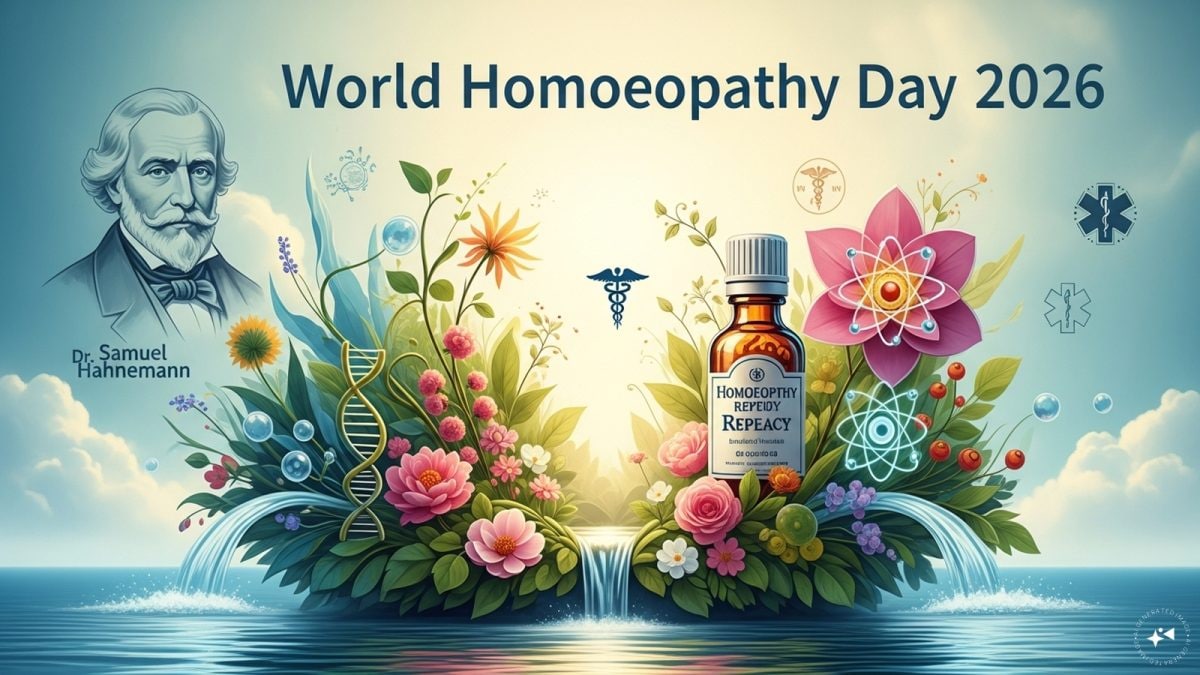
Every year on 10 April I notice a little extra buzz around my favourite homeopathic clinic in Delhi. That’s because it’s World Homoeopathy Day – a day we use to remember Dr. Samuel Hahnemann, the German physician who launched this whole idea of treating "like with like" back in the 18th century. The day isn’t just a ceremonial nod; it’s a genuine attempt to raise awareness about how homeopathy fits into modern healthcare, especially now that the government is pushing for "sustainable health" solutions.
Homeopathy, as many of us already know, works with highly diluted substances to trigger the body’s natural healing mechanisms. It sounds a bit magical to some, but for many Indian families – including mine – it’s a trusted way to handle everything from a common cold to chronic allergies. The thing I love about this day is that it brings practitioners and patients together. We all share stories, talk about what worked, and also discuss the limits of the system.
So, before diving into the scientific debates, let me share why this day feels personal to me.
How the Theme "Homeopathy for Sustainable Health" Stacks Up
The Central Council for Research in Homeopathy (CCRH), which sits under the Ministry of AYUSH, announced the theme for 2026: “Homeopathy for Sustainable Health”. Basically, they want to show that homeopathy can be part of a bigger, eco‑friendly health strategy – something that resonates with many of us who worry about the carbon footprint of pharmaceutical factories.
This year’s big event is a symposium in New Delhi on 10 April. I attended it with a few fellow students from my university’s community health program. The auditorium was packed, not just with homeopathic doctors but also with nutritionists, Ayurvedic practitioners and a handful of allopathic doctors curious about the claims.
One speaker, Dr. Anjali Sharma from the CCRH, talked about integrating homeopathy into primary health centres to reduce the over‑reliance on antibiotics. In many Indian villages, antibiotics are given out like sweets, which sometimes fuels resistance. Dr. Sharma’s point was that a well‑structured homeopathic programme could help treat mild infections without immediately reaching for a pill, thereby supporting long‑term sustainability.
While the idea sounds promising, the session also highlighted the need for solid clinical data. The organisers themselves admitted that more rigorous trials are needed before homeopathy can be officially recommended as a front‑line treatment in public health policies.
A Quick Trip Down Memory Lane – The History of World Homoeopathy Day
The story of this day starts with Dr. Samuel Hahnemann, born on 10 April 1755. He introduced the principle of "like cures like", suggesting that a substance that produces certain symptoms in a healthy person can, when highly diluted, treat those same symptoms in a sick person. This concept became the cornerstone of homeopathy.
In India, we started celebrating World Homoeopathy Day back in 1997. It wasn’t a grand affair at first – just a small gathering of doctors in a Delhi clinic. Dr. RK Manchanda, a well‑known homeopathic physician, played a crucial role in pushing the idea forward. By 2002, a dedicated World Homeopathic Day Organising Committee was formed, and since then the day has grown into a global observance with events in many countries.
What’s interesting is how quickly the day gained recognition, especially after the Ministry of AYUSH began endorsing it. Today, you’ll find posters on bus stops, social media campaigns with hashtags like #HomeopathyForAll, and even school projects where kids make simple charts about the dilution process.
Why This Day Matters – The Significance in Plain Terms
For me, the biggest significance of World Homoeopathy Day is education. It’s an open invitation for the public to ask questions that they might not feel comfortable asking during a regular clinic visit. In most Indian towns, people still rely on word‑of‑mouth for health advice, and that can lead to myths. The day tries to replace those myths with facts – or at least with a balanced view.
The day also shines a light on the need for more scientific validation. While many of us have heard success stories – a neighbour’s asthma improving after a few weeks of a homeopathic remedy, for example – the scientific community still calls for larger, double‑blind studies. This dual approach – acknowledging both the anecdotal benefits and the demand for rigorous evidence – is what makes the day truly important.
On a practical level, the day encourages young people to consider a career in homeopathy, which helps in expanding the pool of qualified practitioners. In rural areas, where medical facilities are scarce, a trained homeopath can often be the first point of contact, offering gentle care without the side‑effects that sometimes come with conventional drugs.
Benefits of Homeopathy – What I’ve Seen Firsthand
- Personalised treatment: Homeopathic remedies are tailor‑made for each individual, taking into account not just physical symptoms but also emotional and mental states. I remember a friend who was constantly anxious before exams; the homeopath prescribed a remedy based on her specific temperament, and she swore it helped her stay calm.
- Minimal side effects: Because the substances are diluted many times, they are generally safe and cause far fewer side effects than many allopathic medicines. In my own family, my grandmother has been using a homeopathic preparation for joint pain for years without any stomach upset that she often faced with NSAIDs.
- Chronic conditions: Many people turn to homeopathy for persistent ailments like allergies, asthma, or arthritis. My cousin, who suffers from chronic hay fever, says the seasonal spikes have lessened after a few months of consistent treatment.
These points are not just marketing fluff; they reflect what many patients in India experience day to day. The emphasis on whole‑person care resonates with the Indian belief that health is more than just the absence of disease.
Risks and Things to Keep in Mind – A Balanced View
- Lack of scientific evidence: Despite its popularity, there is still limited rigorous scientific proof supporting homeopathy for many conditions. This makes it essential to stay cautious and not rely on it as the sole treatment for serious illnesses.
- Delayed treatment: Some patients may postpone seeking conventional medical help because they are convinced homeopathy alone will fix everything. In cases like high blood pressure or severe infections, this delay can be dangerous.
- Consult a healthcare professional: It’s always wise to talk to a licensed homeopath as well as an allopathic doctor before starting any new regimen, especially if you have underlying health issues.
These cautions are echoed by many health experts I’ve spoken to. The key is to treat homeopathy as a complement rather than a replacement, unless a qualified professional advises otherwise.
What Science Says – The Ongoing Debate
The scientific community remains divided on homeopathy’s efficacy. Numerous studies have been done, yet the results are all over the place. Some trials report positive outcomes, especially for conditions like mild eczema or tension‑type headaches, while others find no benefit beyond a placebo effect.
The World Health Organization (WHO) has repeatedly called for more stringent clinical trials to assess homeopathy’s role in modern healthcare. In a recent WHO briefing, they stressed that any health system, be it ayurvedic, homeopathic or allopathic, should be backed by credible scientific data before being widely recommended.
Despite the lack of unanimous scientific endorsement, many patients – including myself – share stories of real improvement. For chronic issues where conventional medicine offers only temporary relief or brings side‑effects, a homeopathic approach can feel like a breath of fresh air.
At the Delhi symposium, a researcher presented a meta‑analysis that suggested a modest but notable improvement in quality‑of‑life scores for patients using individualized homeopathic treatment. He was careful to note that the evidence still falls short of the standards required for mainstream medical guidelines, but the data was encouraging enough to warrant further investigation.
Personal Reflections – How I Use Homeopathy in Everyday Life
Honestly, I never thought I’d write about homeopathy, but after attending the 2026 World Homoeopathy Day events and chatting with a few practitioners, I’ve started seeing its place in my family’s health toolbox. For instance, when my younger brother catches a cold, we often give him a few drops of a homeopathic remedy instead of the usual cough syrup. It’s not a miracle cure, but it seems to speed up his recovery without making him drowsy for school.
Another example is during the monsoon season, when many of us suffer from stomach upsets due to contaminated water. A local homeopath recommended a specific dilution that, according to my aunt, helped her recover faster than she expected. She still drinks clean boiled water, of course, but the remedy gave her an extra boost.
These small experiences are what make the celebration of World Homoeopathy Day feel personal. It’s not just about grand theories; it’s about the simple, everyday moments where a tiny drop of diluted medicine offers comfort.
Looking Ahead – What Could the Future Hold?
Looking forward, I’m hopeful that the push for "sustainable health" will bring more funding for robust research. If we can get clear, large‑scale data on when and how homeopathy works, it could find a firm place alongside Ayurveda and allopathy in the Indian health ecosystem.
On a community level, I think more awareness programmes in schools and villages could demystify the practice. When people understand the preparation process – the serial dilutions and succussions – they become more critical and less likely to treat it as a magic bullet.
Finally, I believe collaboration is key. If homeopaths, allopaths and researchers work together, we can design treatment plans that maximise benefits and minimise risks. Imagine a primary health centre where a child with a fever first gets a quick allopathic assessment, and if the doctor feels it’s safe, a homeopathic complement is added to reduce reliance on antibiotics. That could be a win‑win for public health and the environment.