Why World Homoeopathy Day matters to me
Honestly, the first time I heard about World Homoeopathy Day was during a health camp in my hometown of Pune. A local homeopathic practitioner set up a small stall, handed out pamphlets and invited us to try a few remedies for common colds. The date on the flyer was April 10, and it mentioned Dr Samuel Hahnemann – the name sounded unfamiliar, but the fact that an entire day was dedicated to a system of healing sparked my curiosity. Since then, every year I try to learn a little more about how homeopathy fits into the bigger picture of health, especially because the day now carries the theme ‘Homeopathy for Sustainable Health’, a message from the Central Council for Research in Homeopathy under the Ministry of Ayush.
What I love about World Homoeopathy Day is that it isn’t just a ceremony; it’s an invitation to look at our own health choices. For many of us, especially those of us who grew up watching grandparents rely on herbal teas and simple remedies, homeopathy feels like a natural extension of that tradition. The day gives us a reason to sit down with family members, share stories, and maybe even try a remedy or two under the guidance of a licensed homeopath.
A quick walk through the history of World Homoeopathy Day
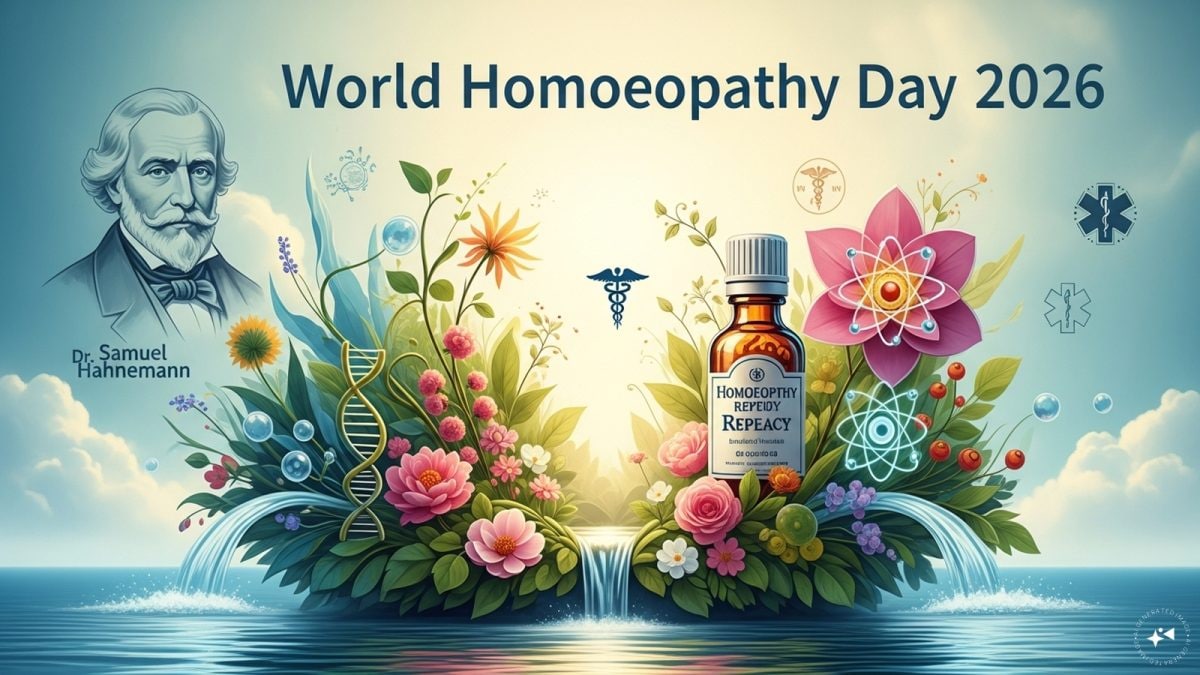
World Homoeopathy Day is tied to the birth of Dr Samuel Hahnemann, who was born on April 10, 1755. Dr Samuel Hahnemann introduced the principle of “like cures like”, a concept that says a substance causing symptoms in a healthy person can be used, in highly diluted form, to treat those same symptoms in a sick person. The idea sounded revolutionary back in the 18th century and slowly gathered a following across Europe.
In India, the observance started in 1997, thanks to a group of enthusiastic homeopaths who wanted a day to showcase their work. Dr RK Manchanda, a well‑known homeopathic doctor, played a pivotal role in pushing the idea forward. By 2002, a World Homeopathic Day Organising Committee was set up, and since then the day has grown into a global event with seminars, workshops and community outreach programmes.
Each year, the Central Council for Research in Homeopathy announces a fresh theme that reflects the current priorities of the Ministry of Ayush. The 2026 theme, “Homeopathy for Sustainable Health”, highlights the push to blend natural healing with long‑term public health goals.
What the day looks like on the ground
On April 10, 2026, the main event will be a symposium in New Delhi organised by the Central Council for Research in Homeopathy. The schedule lists panels where experts will discuss how homeopathy can support sustainable health solutions, especially in rural areas where access to allopathic medicine can be limited.
In many Indian cities, you’ll also see pop‑up stalls outside hospitals, community centres and even at local markets. People line up for a quick consultation, receive a tiny pellet of remedy, and walk away with a card that explains how to take it. I’ve seen this happen at my local Co‑Op Hospital in Chennai, where the nurse in charge of the homeopathy wing explains the difference between a mother‑tincture and a potentised dose in plain Hindi and Tamil, making the whole thing feel very approachable.
Beyond the formal events, the day is also a social media buzz. Hashtags like #WorldHomoeopathyDay2026 trend on platforms, with users posting before‑and‑after pictures, short video testimonials, and even memes that poke gentle fun at the “tiny sugar pill” stereotype.
Benefits people often talk about
- Personalised treatment: Homeopathic remedies are chosen after a detailed interview that covers physical, emotional and psychological aspects. I remember a friend describing how the doctor asked about her favourite foods, her sleep pattern and even her mood during monsoons before suggesting a remedy.
- Minimal side effects: Because the medicines are diluted many times, most patients report hardly any adverse reactions. In my own experience, taking a low‑potency remedy for occasional indigestion never gave me the stomach upset that some synthetic antacids do.
- Chronic conditions: Many people with long‑standing issues such as asthma, eczema or arthritis turn to homeopathy when they feel conventional drugs are either too strong or simply not helping. A neighbour in Hyderabad shared how a combination of two potencies helped her manage seasonal allergy symptoms without resorting to daily steroids.
These points are often repeated in pamphlets distributed on World Homoeopathy Day, and they resonate with folks who prefer a gentle approach to health.
Risks and things to keep in mind
- Lack of scientific evidence: Despite its popularity, there is still limited high‑quality research proving that homeopathy works for many conditions. The scientific community remains divided, and many systematic reviews conclude that the evidence is inconclusive.
- Delayed treatment: If someone relies only on homeopathy for a serious illness, there is a danger that a proper diagnosis might be postponed. I have a cousin who waited too long before getting a medical scan for persistent chest pain, believing the homeopathic pellets would take care of it.
- Consult a healthcare professional: It is always advisable to see a licensed homeopath or a qualified doctor before starting any new treatment, especially if you are already on other medicines. Mixing remedies without guidance can sometimes lead to unexpected interactions.
These cautions are often highlighted during the World Homoeopathy Day talks, reminding everyone that while homeopathy can be a useful tool, it should not replace essential medical care.
What science really says about homeopathy
The scientific verdict on homeopathy is far from unanimous. Numerous studies have been carried out, but the results are mixed. Some trials, especially those done in small clinics, report positive outcomes that look beyond the placebo effect. Others, particularly large‑scale meta‑analyses, find little to no difference between homeopathic remedies and sugar pills.
The World Health Organization, through its Traditional Medicine Programme, has called for more rigorous clinical trials. The idea is to design double‑blind, placebo‑controlled studies that meet modern standards, so that the true potential of homeopathy can be measured objectively.
Despite the ongoing debate, many patients—my aunt included—continue to report improvement after using homeopathic medicines. She swears by a low‑potency remedy that helped her manage menopausal hot flashes, something she struggled with despite trying hormonal therapy. Stories like these keep the conversation alive during World Homoeopathy Day, as they illustrate the human side of the data.
In the end, the scientific community’s mixed findings do not change the fact that homeopathy has been part of Indian health traditions for more than two centuries. The challenge now, as highlighted by the Central Council for Research in Homeopathy, is to bridge the gap between anecdotal success and solid evidence.
How World Homoeopathy Day can shape the future of health
When I think about the theme ‘Homeopathy for Sustainable Health’, I picture a future where natural remedies are integrated into primary care, especially in remote villages where a qualified allopathic doctor may be miles away. Imagine a village health worker who carries a small kit of homeopathic potencies, offering immediate relief for mild fevers, coughs or skin irritations, while also referring serious cases to the nearest hospital.
Such a model could reduce the over‑prescription of antibiotics, an issue that’s becoming a global crisis. It could also empower people to take responsibility for their own wellbeing, using simple, affordable treatments that have a minimal environmental footprint.
World Homoeopathy Day, with its symposiums, workshops and community outreach, serves as a platform to discuss these possibilities. Experts from the Ministry of Ayush, the Central Council for Research in Homeopathy and various universities will be sharing data, field reports and policy suggestions. The goal is not just to celebrate, but to plan concrete steps that can make homeopathy a complementary part of the health system.
My personal take‑away
After watching a few panels at the New Delhi symposium and chatting with a handful of seasoned homeopaths, what sticks with me is the balance between optimism and caution. I enjoy the idea of a system that looks at the whole person—mind, body and spirit—rather than just a set of symptoms. At the same time, I recognise that relying solely on diluted pellets for serious illnesses is risky. The best approach, I feel, is a hybrid one: use homeopathy for gentle, chronic issues while staying open to conventional medicine when needed.
So, whenever World Homoeopathy Day rolls around, I make it a point to read a new article, listen to a podcast, or simply have a cup of chai with a local practitioner. It’s a small ritual that reminds me health is a lifelong journey, and the more tools we have—science, tradition, personal experience—the better equipped we are to stay healthy.