Why the United States Did Not Target India Over Its Nuclear Programme While It Confronted Iran
Understanding the divergent United States responses to two prominent nuclear programmes in Asia requires a clear view of the technical, strategic, and diplomatic dimensions of each case.
India’s Nuclear Programme: Civilian Energy and Strategic Deterrence
India’s nuclear programme is a sophisticated, largely indigenous undertaking that is split between civilian energy generation and a strategic weapons component. The programme is anchored by a long‑standing ambition to achieve energy independence through a uniquely Indian three‑stage plan.
The Three‑Stage Plan
The three‑stage plan was formulated by Dr Homi Bhabha in the 1950s. It is based on the reality that India possesses a modest share of global uranium reserves—about two percent—but a vast share of global thorium reserves—approximately twenty‑five percent. Each stage builds on the products of the previous stage.
- Stage I – Pressurised Heavy Water Reactors (PHWRs): These reactors use natural uranium as fuel and produce electricity while also generating plutonium‑239 as a by‑product. The PHWR fleet forms the backbone of India’s civilian nuclear capacity, with more than eighteen units currently in operation.
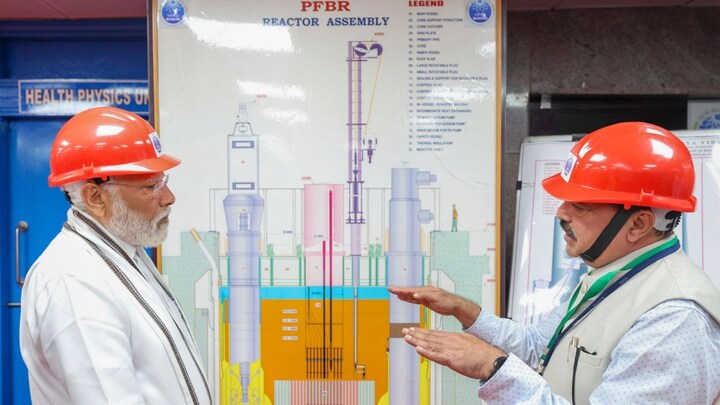
- Stage II – Fast Breeder Reactors (FBRs): Plutonium‑239 harvested from Stage I fuels fast breeder reactors that create more fissile material than they consume. India’s first indigenous 500 MW prototype fast breeder reactor at Kalpakkam achieved first criticality, marking the official transition to Stage II.
- Stage III – Thorium‑Based Reactors: The final stage intends to use thorium‑232 to breed uranium‑233, providing a virtually limitless source of nuclear energy for centuries and cementing energy security.
Strategic Weapons Programme
India maintains a "credible minimum deterrent" and adheres to a No‑First‑Use (NFU) nuclear doctrine. India possesses the capability to launch nuclear weapons from land, sea, and air, making it one of the few states with a full nuclear triad. Current estimates place India’s warhead inventory at roughly one hundred ninety warheads.
Key Delivery Systems
- Land‑Based Missiles: The Agni‑V intercontinental ballistic missile (ICBM) offers a range of seven to eight thousand kilometres, capable of reaching targets across the region.
- Sea‑Based Platforms: India commissioned its third nuclear‑powered ballistic missile submarine, INS Aridhaman, expanding the survivability of the sea‑based leg of the deterrent.
- Air‑Launched Options: Aircraft such as the Mirage 2000 and Jaguar are believed to be configured for nuclear strike missions.
Future Goals and International Position
The Nuclear Energy Mission, announced in the most recent budget, targets a cumulative capacity of one hundred gigawatts by the year twenty‑forty‑seven. The SHANTI Bill, introduced in the previous fiscal year, authorized limited private‑sector participation in nuclear power generation for the first time, signalling a shift toward a more open nuclear market.
India remains outside the Nuclear Non‑Proliferation Treaty (NPT) but benefits from a unique Nuclear Suppliers Group (NSG) waiver granted in the two‑thousand‑eight, allowing engagement in international nuclear trade while preserving the autonomy of the indigenous programme.
United States Policy Toward India’s Nuclear Programme
Multiple think‑tank analyses, including those from the Office of Research and Fact‑finding (ORF), conclude that the United States refrained from any military action against India because India’s nuclear programme never constituted a direct threat to United States national security. Instead, the United States opted for a combination of diplomatic pressure, economic sanctions, and eventual strategic partnership.
Core Reasons for the Absence of Military Intervention
- Lack of Advance Warning: During India’s nuclear tests in the years known as Smiling Buddha (first test) and Operation Shakti (second series of tests), United States intelligence agencies did not possess prior knowledge of the detonations. By the time United States officials became aware that the devices had already been detonated, a pre‑emptive strike was no longer feasible.
- Deterrence Through Military Strength: India’s sizable conventional forces, combined with a credible nuclear triad, acted as a strong deterrent. Any United States attempt to strike a nation equipped with a large standing army and an operational nuclear arsenal would have risked a high‑cost, protracted conflict.
- Legal Non‑Compliance Not Established: India never acceded to the Nuclear Non‑Proliferation Treaty or the Comprehensive Nuclear Test Ban Treaty. Consequently, while India’s tests were viewed as challenges to global stability, they did not constitute a breach of treaties to which India was a signatory.
- Democratic Legitimacy: As a stable democracy, India was not classified as a “rogue state” in the same manner as Iraq or North Korea. United States policymakers recognised India’s legitimate security concerns regarding regional rivals, especially China and Pakistan. Over time, United States policy shifted from punitive measures to cooperative engagement, exemplified by the United States‑India Civil Nuclear AGreement.
- Strategic and Economic Calculus: Continued sanctions were judged to be counter‑productive to United States economic interests and broader strategic goals in the Indo‑Pacific region. Lifting sanctions facilitated a deeper partnership with a rising global power.
The cumulative effect of these factors led United States officials to pursue a policy of engagement rather than confrontation, eventually evolving into a robust strategic partnership that includes joint exercises, technology cooperation, and shared maritime security initiatives.
Iran’s Nuclear Programme: Objectives and International Concerns
Iran asserts that its nuclear programme is intended solely for peaceful purposes such as medical isotopes production and electricity generation at facilities like the Bushehr nuclear power plant. Nevertheless, international observers have highlighted several capabilities that raise proliferation concerns.
Key Capabilities and Facilities
- The enrichment complex at Natanz, fortified with advanced security measures, reportedly achieved enrichment levels of sixty percent uranium, a short technical step away from the ninety percent purity required for a nuclear weapon.
- The underground enrichment site at Fordow, similarly hardened, complements Natanz in providing parallel enrichment capacity.
- The Isfahan nuclear complex, hosting a range of uranium conversion and fuel‑fabrication activities, adds further depth to Iran’s nuclear infrastructure.
Analysts estimated that Iran’s “breakout time”—the period needed to amass enough fissile material for a single nuclear device—had contracted to under one week, underscoring the urgency of the international community’s concerns.
United States Stance Toward Iran’s Nuclear Programme
Donald Trump’s administration has repeatedly criticised the 2015 Joint Comprehensive Plan of Action (JCPOA), describing it as a one‑sided bargain that merely postponed Iran’s path toward a nuclear weapon rather than permanently blocking it. The administration’s view held that the deal’s expiration provisions, which allowed key restrictions to lapse after a decade or more, created a legal pathway for Iran to acquire a bomb in the future.
Fundamental Objections
- Limited Duration of Restrictions: Provisions that allowed restrictions on enrichment and stockpiling to expire after ten to fifteen years were seen as a loophole that would inevitably enable Iran to resume a weapons‑grade programme.
- Exclusion of Missile Development: The JCPOA did not address Iran’s ballistic‑missile programme, which could serve as a delivery vehicle for a nuclear warhead.
- Insufficient Inspection Regime: The “managed access” inspection framework was criticised for lacking the ability to conduct unrestricted, continuous inspections at sensitive military sites such as Parchin.
- Distrust of Iranian Declarations: Donald Trump’s administration alleged that Iran had repeatedly misrepresented its past nuclear activities, arguing that any future compliance would require the full dismantlement of enrichment capability.
- Regional Proxy Concerns: Iran’s support for organisations such as Hezbollah and Hamas amplified United States concerns about the broader security implications of a nuclear‑armed Iran in a volatile region.
These objections contributed to a policy shift that culminated in direct military strikes on Iranian nuclear and military infrastructure in early twenty‑twenty‑six, coordinated with regional allies.
Key Frequently Asked Questions
Why did the United States not attack India over its nuclear programme?
The United States did not view India as an adversary or an imminent threat. After India’s nuclear tests, United States policymakers opted for sanctions and diplomatic engagement, eventually transitioning toward strategic cooperation rather than hostile action.
Why was Iran treated differently by the United States?
Iran has a long‑standing history of hostility toward the United States and its allies, combined with concerns about regional destabilisation and nuclear ambition. This combination led the United States to pursue a more confrontational posture, including diplomatic isolation, economic sanctions, and ultimately, military action when diplomatic avenues failed.
Did India’s military strength prevent a United States attack?
India’s large conventional force and operational nuclear triad created a high‑risk environment for any United States attempt to use force. The potential for a costly, protracted conflict incentivised United States leaders to seek engagement rather than confrontation.
What are the future prospects for India’s nuclear energy expansion?
India’s nuclear energy roadmap aims to increase installed capacity to one hundred gigawatts by the mid‑twenty‑forties, supported by private‑sector participation under the SHANTI framework and continued development of the three‑stage plan.
What are the United States’ long‑term objectives regarding Iran’s nuclear programme?
The United States seeks to ensure that Iran’s nuclear activities remain exclusively peaceful, to limit Iran’s enrichment capacity, and to maintain a robust regional security architecture that deters the acquisition of nuclear weapons.
Compiled from agency inputs and expert analysis.