How I Got Stuck in the Worst Traffic Jam of My Life
So there I was, driving down Jambhori Maidan in Worli, trying to reach my kid’s school before the bell rang. You know how Mumbai traffic can be a nightmare on a good day? Imagine that, but with thousands of extra cars, horns blaring, and no space to move. I was already late, the clock was ticking, and suddenly the whole road turned into a parking lot.
Turns out a political rally had been set up that afternoon. The BJP had organised a march demanding the Women’s Reservation Bill be scrapped, and they chose the same stretch that I needed to travel. The rally started at 5 pm, but it kept going, and the police seemed more interested in keeping the convoy intact than getting the traffic moving.
Honestly, I thought maybe it would clear up soon after all, it’s just a rally, right? But minutes turned into an hour, and the jam stretched for kilometres. I could see school buses with kids inside, rickshaws honking, and the occasional ambulance trying to squeeze through. When I saw the minister, Girish Mahajan, standing on a makeshift stage addressing the crowd, I felt a mix of anger and disbelief. What was more shocking was that the police were standing on the side, not clearing the road.
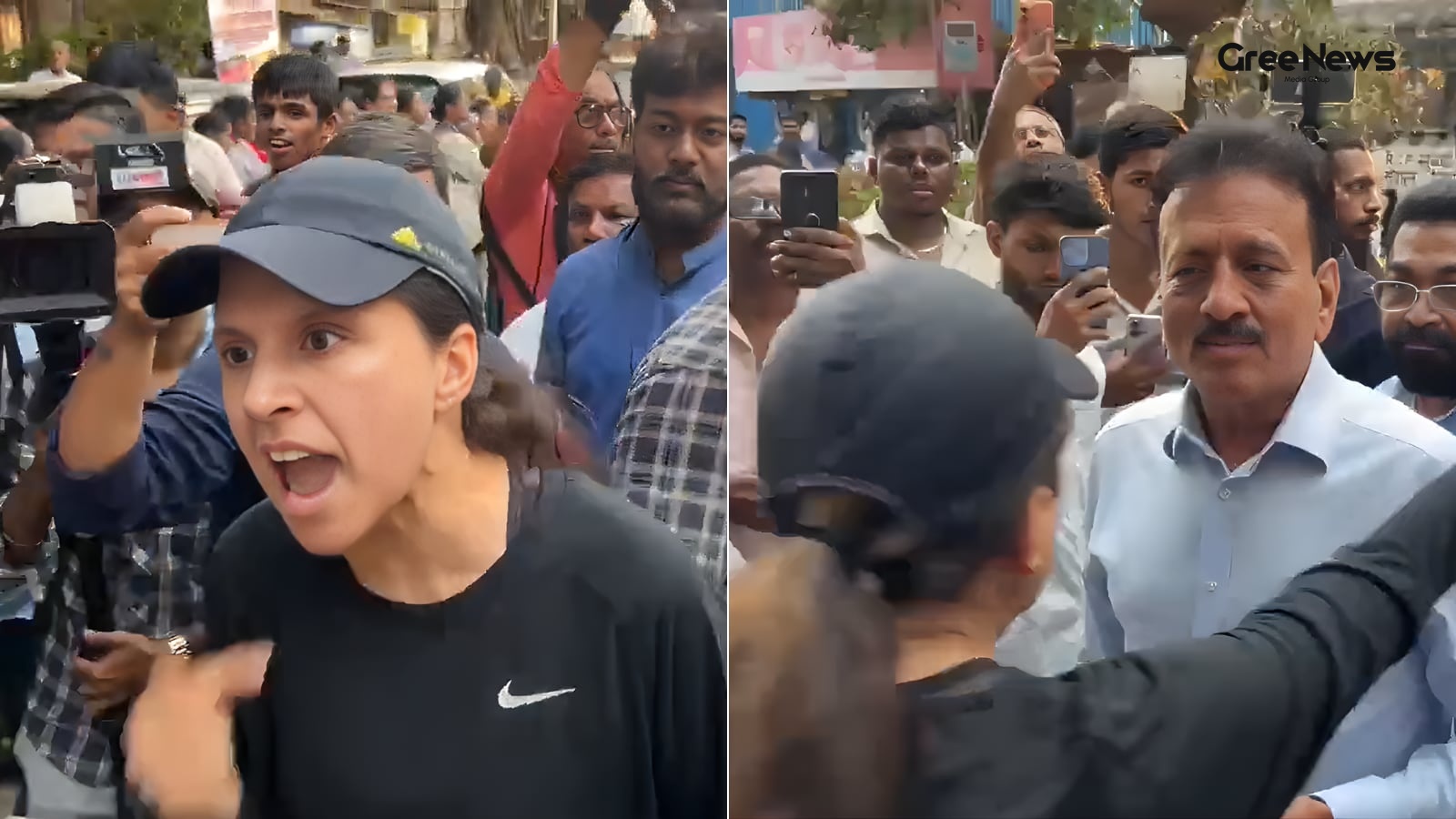
That’s when I decided to do something I’d never imagined doing I stepped out of my car and walked straight into the middle of the rally.
The Moment I Confronted Minister Girish Mahajan
I remember the exact words I yelled. "What is wrong with you? There are hundreds of people waiting! Get out of here, yaha se iss traffic ko hatao, shut up!" It felt like the whole crowd held its breath for a second. The minister looked surprised, the police tried to intervene, but I wasn’t backing down.
My voice was shaky at first, then steadier as I realised the crowd was listening. I pointed out an empty ground nearby and shouted, "There are hundreds of people waiting. There is an empty ground there!" I wanted them to understand that an open space was just a few metres away they didn’t need to block a main road where everyday commuters like me were stuck.
What happened next is interesting the police tried to push me aside, but I insisted on speaking to senior officials. Eventually, they moved me to the side and let me voice my concerns. I could feel the eyes of the people around me, the murmurs, the sense that I was representing a thousand other frustrated commuters.
Why This Incident Turned Into Viral News
The video of my confrontation was shared on X by a user named Prashant Dhumal. Within minutes, the clip started spreading like wildfire. People labelled me as the "voice of ordinary commuters" and called the video "breaking news" across India. The hashtag #WorliTrafficRally started trending, and soon the whole nation was talking about it.
What made it go viral wasn’t just the anger. It was the raw, unfiltered emotion a regular woman standing up against a minister and the police, demanding a simple solution. It resonated with anyone who had ever been stuck in traffic because of a VIP convoy or a politician’s march. Even the phrase “Yaha se iss traffic ko hatao” became a meme that people used whenever they faced similar situations.
In most cases, news about political rallies gets buried under official statements. This time, however, the people’s reaction turned the story into trending news India, and the discussion moved beyond the rally itself to a larger debate about VIP culture.
Social Media Reactions: From Support to Fury
The comments reflected a growing frustration across the country. Many people shared similar stories of being caught in traffic for hours because of VIP processions. A few even mentioned that this was not the first time the city’s roads had been blocked for a political cause, and that the police never seemed to prioritise clearing the traffic for the common man.
One user struck a chord with a simple line: "Full support to this lady irrespective of any party." Another added, "Earlier ones lost power thinking they were born to rule…decade old rulers now think they are supreme…that's why we need a strong opposition to maintain power balance & keep arrogance under check." This conversation has become a part of the latest news India, showing how a single incident can spark a nationwide debate.
Background: The Rally’s Purpose and Its Impact
The rally was organised by the Bharatiya Janata Party (BJP) under the Mahayuti alliance as a protest against the opposition Maha Vikas Aghadi (MVA) and the Women’s Reservation Bill. The participants, mostly women, marched from Jambhori Maidan to the Dome, aiming to draw attention to the government's stance on the bill.
While the political motive was clear, the choice of route raised eyebrows. Jambhori Maidan is already one of the busiest areas in Mumbai. With schools, offices, and residential complexes surrounding it, any blockage can cause severe congestion. In this case, the rally’s timing right during the evening rush amplified the disruption.Police officials claimed they were ensuring the safety of the rally participants and the minister, but many commuters felt they were more focused on protecting the convoy than on clearing the jam. The absence of a clear alternate route or an efficient traffic management plan caused the jam to last for more than an hour, adding to the public’s frustration.
Why This Story Matters: The Bigger Picture
Beyond the immediate inconvenience, this incident shines a light on a larger issue: the frequent use of public roads for political gatherings without adequate consideration for everyday commuters. It's a pattern we’ve seen time and again in many Indian cities, where VIP culture and political theatrics take precedence over public welfare.
The fact that my confrontation went viral shows how the Indian public is increasingly unwilling to accept such disruptions. When a woman on a regular morning can turn a local issue into viral news, it signals a shift people want accountability, they want their voices heard, and they are ready to use social media to amplify their concerns.
From a policy perspective, this could push authorities to rethink how rallies are permitted, how alternate routes are planned, and how police prioritize traffic management. After all, if a simple act of speaking up can spark a national conversation, imagine what systematic changes could achieve.
My Takeaway and a Call to Action
Looking back, I never imagined that a routine commute would turn into a headline. I felt a mix of fear, anger, and a strange kind of empowerment. I was just trying to get my child to school, and ended up challenging a minister in front of a crowd. It felt surreal, but also necessary.
If you ever find yourself stuck because of a VIP convoy or a political rally, remember that you’re not alone. Our collective frustration can become a powerful voice. Share your story, use the right hashtags, and keep the conversation alive. The more we highlight these issues, the harder it becomes for authorities to ignore them.
So, next time you see a rally blocking your road, think about how you can turn that inconvenience into a piece of breaking news. Who knows? Maybe your story will be the next viral clip that pushes for change.