Is There A Better Way To Have Chai? This Dreamy Boat Experience Is Taking Over The Internet
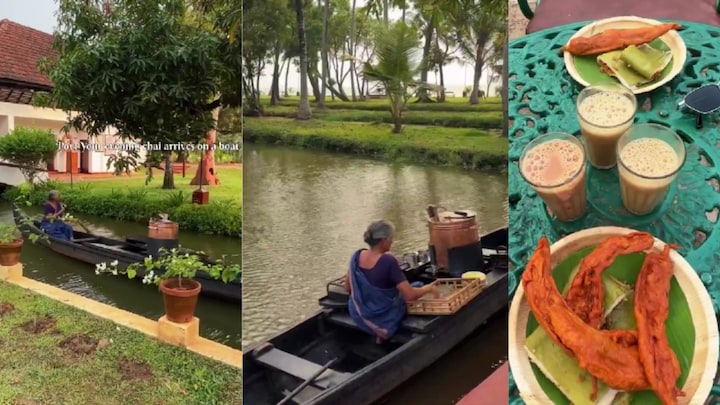
Every day, Chaya Chechi serves fresh masala chai along with authentic Kerala snacks like sukiyan and crispy banana fritters, all brewed and served fresh from her boat
A floating tea stall run by an elderly woman is drawing attention online, offering a glimpse into life in Kerala’s backwaters.
In a heartwarming video that is taking over social media, an elderly woman leans over a small boat, pours out steaming chai and hands it across the water to a waiting customer. There’s no rush, no noise, just calm water, a kettle and a moment that feels almost unreal.
The woman, lovingly call her ‘Chaya Chechi’, operates a floating tea stall in Kumarakom’s backwaters. right near Coconut Lagoon. Every day, she serves fresh masala chai along with authentic Kerala snacks like sukiyan and crispy banana fritters, all brewed and served fresh from her boat.
The Setting: Kumarakom’s Serene Backwaters
Kumarakom, a small town nestled along the intricate network of waterways that define Kerala, provides a natural backdrop of still water, swaying palms, and gentle breezes. The presence of Coconut Lagoon nearby adds a layer of tropical charm, with coconut trees lining the banks and the occasional ripple created by passing fishing boats. Within this peaceful environment, the floating tea stall operates as an unassuming but essential part of daily life.
The waterway itself acts as a natural road, allowing locals and travelers alike to navigate the region without the need for conventional streets. In this context, a modest wooden boat transformed into a mobile tea stall becomes a logical extension of the daily rhythm. The boat’s simple structure — a flat deck, a small stove, and a few wooden stools — blends seamlessly with the surrounding scenery, creating a tableau that feels both timeless and contemporary.
Chaya Chechi: The Heartbeat Behind the Boiling Kettle
Chaya Chechi, an elderly figure with a warm smile and steady hands, has become the embodiment of quiet determination. Every sunrise, Chaya Chechi boards the small boat, lights a modest stove, and begins the ritual of brewing masala chai. The process starts with water brought aboard in a metal kettle, which is heated until a gentle boil forms. Into this simmering base, a mixture of aromatic spices — cardamom, cloves, cinnamon, and ginger — is added, releasing a fragrant perfume that wafts across the water’s surface.
Chaya Chechi’s methodical motions are a study in efficiency: tea leaves are measured, milk poured, and sugar added, all while maintaining a calm composure that mirrors the stillness of the surrounding water. The result is a cup of masala chai that is both robust and comforting, its flavors balanced perfectly to appeal to both locals accustomed to the spice and visitors seeking an authentic taste of Kerala.
Beyond the tea itself, Chaya Chechi prepares two signature snacks: sukiyan and a batch of crispy banana fritters. Sukiyan, a sweet dumpling made from mashed ripe bananas, jaggery, and grated coconut, is rolled into small balls, deep‑fried until golden, and served warm. The banana fritters, thin slices of banana coated in a light batter, achieve a delicate crunch that complements the richness of the chai. Both snacks are prepared fresh each day, ensuring that each serving arrives at the peak of flavor.
A Moment Captured: The Viral Video
The simple act of Chaya Chechi pouring chai across a small wooden rail and handing the cup to a waiting customer has resonated deeply across digital platforms. In the video, the water glistens under the early morning sun, the kettle hisses softly, and the only sounds are the gentle lapping of waves and the soft clink of porcelain. The exchange is performed with a quiet grace that contrasts sharply with the fast‑paced chaos often associated with urban India.
Viewers describe the scene as “a breath of fresh air,” “a slice of serenity,” and “a postcard come to life.” The authenticity of the moment, unmarred by staged production or commercial embellishment, contributes to its universal appeal. The image of Chaya Chechi, steady and smiling, embodies a narrative of perseverance and hospitality that transcends cultural barriers.
Online Reaction: A Chorus of Warmth and Admiration
The internet poured their heart with reactions been overwhelmingly warm. Many people have described it as one of the most peaceful tea experiences they’ve seen. “This is the kind of India you don’t see enough of," one user wrote, while another commented, “I would travel to Kerala just to find this boat."
A large part of the response has also been directed at the woman herself. “Respect. Still working, still smiling," one comment read, while another said, “This is what resilience looks like in real life."
There is also a more reflective note in the reactions. “Meanwhile we are stuck in traffic and stress," one user wrote, drawing a contrast with city life. Another added, “This feels like a different world altogether."
These comments collectively highlight a longing for moments of simplicity, authenticity, and calm. The images of Chaya Chechi and the floating tea stall have become a symbol for many who wish to escape the noise of city streets and rediscover the quiet joy of a well‑made cup of tea shared across a gentle ripple.
The Cultural Context of Masala Chai in Kerala
Masala chai, a spiced tea blend that has become synonymous with hospitality across India, holds a special place in Kerala’s daily routine. The warm, aromatic beverage often serves as a bridge between conversations, a companion to early‑morning chores, and a token of welcome for visitors. In coastal regions, where monsoon rains and humidity shape daily life, the comforting heat of a spiced cup provides both physical warmth and a psychological respite.
In the specific setting of Kumarakom’s backwaters, the ritual of tea drinking is amplified by the surrounding natural beauty. The act of sipping chai while watching waterfowl glide across the surface, or while listening to the distant call of a temple bell, creates a multisensory experience that is uniquely Kerala. Chaya Chechi’s dedication to preparing each cup on board the boat ensures that this experience remains unmediated, preserving the authenticity that draws viewers online.
Why This Simple Stall Resonates Worldwide
The appeal of the floating tea stall goes beyond its visual charm. It touches upon universal themes: the dignity of labor, the power of simple pleasures, and the longing for a slower pace of life. Chaya Chechi’s routine, performed without the assistance of modern conveniences, reflects a deep connection to tradition and community. In an age where digital interactions often replace face‑to‑face conversations, the image of a person serving tea across a calm waterway offers a poignant reminder of human connection anchored in hospitality.
Moreover, the authenticity of the snacks — sukiyan and crispy banana fritters — adds a culinary dimension that invites food lovers to explore regional flavors. These treats, made from locally sourced bananas and coconut, emphasize the farm‑to‑table aspect of Kerala’s cuisine, reinforcing a narrative of sustainability and cultural pride.
Lastly, the viral spread of the video underscores how digital platforms can amplify modest, everyday stories, turning them into symbols of broader societal values. The reaction to Chaya Chechi’s floating tea stall showcases how a simple act, performed with grace and consistency, can inspire admiration and a collective yearning for moments of tranquility.
Looking Ahead: The Enduring Power of Simple Traditions
As more viewers discover the floating tea stall, the hope is that the story of Chaya Chechi will inspire similar initiatives that celebrate local traditions while fostering community spirit. The continued operation of the boat, day after day, serves as a testament to resilience — a reminder that even in the face of rapid modernization, there is space for timeless practices that nurture both body and soul.
For anyone seeking a taste of Kerala beyond the typical tourist routes, a visit to the boat anchored near Coconut Lagoon offers a direct invitation. The experience is not merely about drinking masala chai; it is about stepping into a living tableau where history, culture, and hospitality converge on a gentle ripple of water.
In the end, the story of Chaya Chechi and the floating tea stall is a celebration of the ordinary turned extraordinary. It reminds us that the most memorable journeys often begin with a simple cup of chai, a warm smile, and the quiet promise that, somewhere on the water, tradition continues to brew.