Baramati By-Election Spotlights Congress’ Call to Restore Dialogue With BJP
Congress officials argue that the era of open channels between rival parties has faded, leaving the upcoming Baramati contest vulnerable to heightened tension and polarization.
Long‑standing Channels of Communication Once Flowed Freely
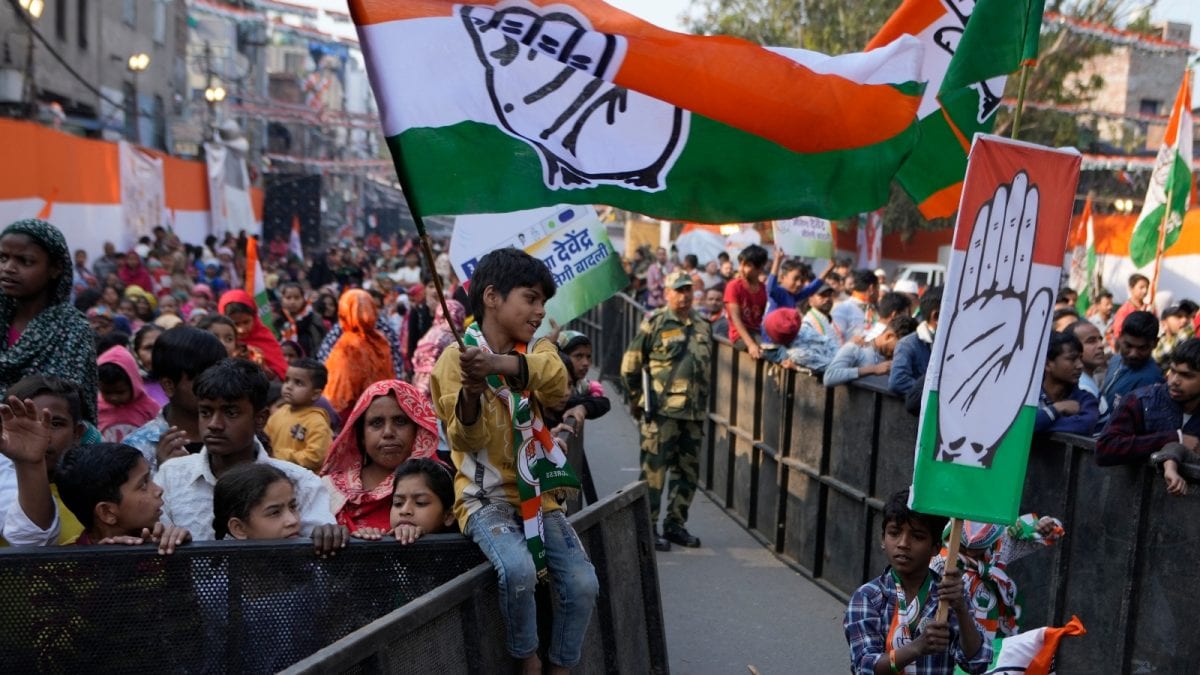
Within the Maharashtra branch of Congress, a palpable sense of unease is taking shape as the Baramati by‑election gains traction. Senior officials, speaking off the record, convey not only electoral concerns but also a deeper institutional shift: a near‑total breakdown in political communication between the ruling BJP and the opposition represented by Congress.
The crux of the frustration centers on what many describe as a transformation of the unwritten rules governing political engagement. Historically, Congress leaders recall a period when open lines of communication persisted irrespective of ideological divergence. The Leader of the Opposition and the individuals holding power maintained contact—occasionally through formal mechanisms, more often via informal exchanges—to defuse tensions, share perspectives, and keep governmental processes operating with a modicum of mutual respect.
The Vanishing Practice of Direct Outreach
“The political culture in which the individual occupying the position of Leader of the Opposition was directly phoned by the individual holding power whenever a complex issue arose, with the intention of reaching a resolution, has utterly vanished,” asserted a senior Congress leader who requested anonymity.
Multiple sources confirm that, since the year marking the ascendancy of the BJP, the BJP has displayed little inclination to engage the opposition through any structured or even informal channel. No courtesy calls have been recorded, no back‑channel conversations have surfaced, and no visible attempts to build consensus on matters that would traditionally have warranted coordination have emerged.
This expanding void in communication is now reverberating more sharply as the Baramati by‑election approaches—a contest that carries both symbolic resonance and strategic importance.
Baramati: A Symbolic Stronghold and a Test of Narrative
Baramati has long been regarded as the political bastion of Sharad Pawar and Ajit Pawar. The constituency is not merely another seat in the legislative assembly; it serves as a litmus test for narrative control, legacy preservation, and the ability to command influence within the broader state political landscape.
Congress officials argue that the absence of dialogue in this high‑stakes environment is not accidental but rather reflective of a broader political approach that favors unilateral decision‑making over consultative politics. The sentiment mirrors a comparable concern that surfaced, albeit quietly, during the Nanded by‑election that followed the passing of Vasant Chavan.
Even during that earlier contest, opposition officials highlighted a lack of outreach from the ruling side. At the time, the issue lingered beneath the surface of public discourse. What distinguishes the present moment is the heightened visibility of the Baramati battle and the timing of the communication breakdown, which now occupies a central position in the unfolding political narrative.
Implications of a Communication Freeze
For Congress, the message is unequivocal: the challenge extends beyond the immediate by‑election. It encompasses the erosion of a political culture wherein dialogue once functioned as a safety valve, mitigating escalation and fostering collaborative problem‑solving.
In the absence of that safety valve, the contest risks becoming sharper, more polarized, and significantly less predictable. The potential for heightened animosity, increased rhetorical attacks, and a hardening of party lines looms large, threatening the stability of the broader democratic process.
Moreover, the communication gap amplifies the perception that the ruling BJP prefers a strategy centered on unilateral action rather than inclusive governance. This perception may influence voter attitudes, shape media narratives, and affect the calculations of political actors beyond the immediate confines of Baramati.
Historical Context of Cross‑Party Interaction
Reflecting on the era preceding the shift, Congress officials emphasize that the practice of direct engagement was not merely a courtesy but a functional component of governance. When the Leader of the Opposition received a call from the individual in power regarding a contentious policy decision, the conversation often led to a temporary de‑escalation, allowing both sides to present adjustments that accommodated divergent viewpoints.
Such interactions contributed to a political environment where mutual respect co‑existed with robust debate. The willingness to converse—whether through formal letters, scheduled meetings, or spontaneous phone calls—served as a conduit for information exchange, mitigating misinformation and fostering a sense of shared responsibility for the public good.
The gradual disappearance of these practices, as noted by senior Congress officials, marks a departure from a collaborative tradition that once underpinned the democratic fabric of the region.
Congress’ Call for Renewed Dialogue
In response to the perceived communication vacuum, Congress leaders are urging a revival of the old habit of reaching out across the aisle. The appeal is not framed as a partisan attack but as a call for the restoration of a functional democratic mechanism that enables problem‑solving beyond electoral battles.
Senior Congress officials contend that re‑establishing channels of conversation would benefit not only the immediate stakeholders but also the electorate, whose interests are best served when parties are willing to exchange ideas, negotiate compromises, and present united fronts on issues that transcend party lines.
By foregrounding the need for dialogue ahead of the Baramati by‑election, Congress seeks to position itself as an advocate for a more inclusive political culture, one that values engagement over isolation.
Looking Ahead: The Stakes of the Baramati Contest
The Baramati by‑election stands at the intersection of local legacy and national political currents. As the constituency draws renewed attention, the lack of communication between the ruling BJP and the opposition intensifies the focus on how parties will navigate the electoral battlefield without the traditional safety net of cross‑party dialogue.
Observers note that the outcome of the Baramati contest could signal the durability of the current communication freeze. A victory for the ruling BJP without any overt outreach to Congress might reinforce the perception of unilateral governance. Conversely, a competitive race marked by unexpected collaboration could hint at a possible recalibration of political interaction.
Regardless of the result, the heightened awareness of the communication breakdown ensures that the discourse surrounding the Baramati by‑election will extend beyond the ballot box, prompting a broader conversation about the health of democratic engagement in the region.