Shattering the ‘Mard’ Illusion: Samay Raina’s Unfiltered Look at Silent Masculinity
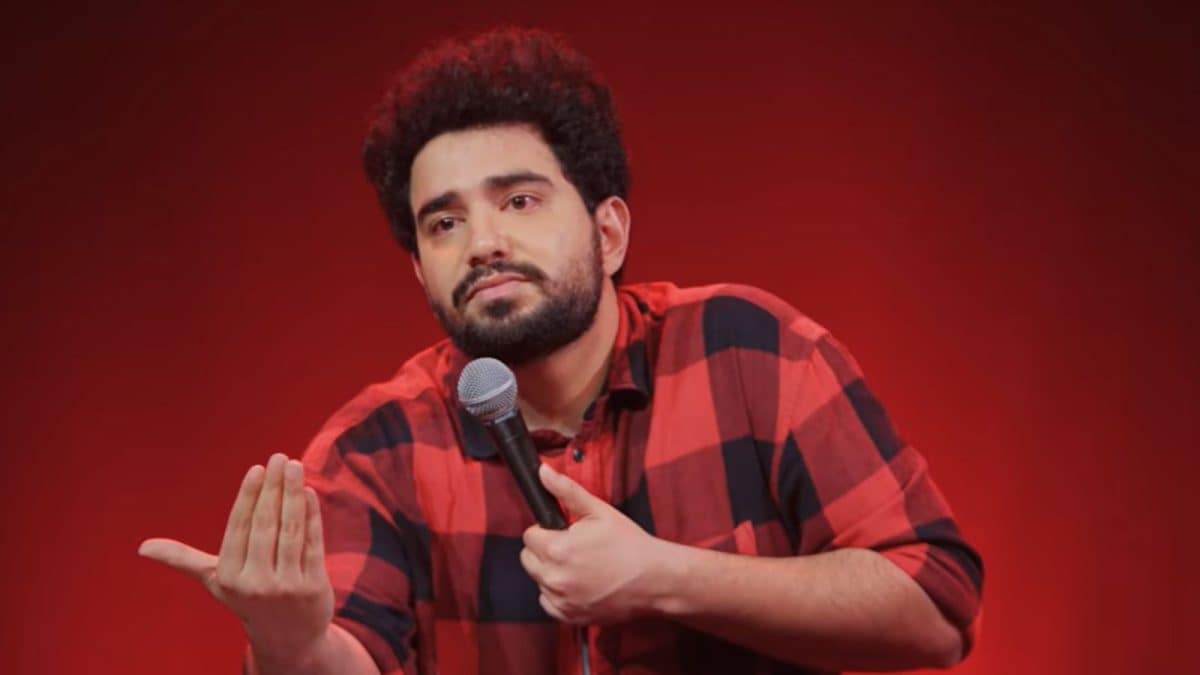
Samay Raina’s most powerful punchline isn’t a joke. It’s about men who can’t feel
The cultural landscape of the past few years has been saturated with the glorification of “alpha” energy. In its simplest form, that trend celebrates a brand of masculinity that equates wealth, relentless gym routines, and an uncompromising refusal to display any sign of vulnerability. The model is performed, polished, and broadcast through the loudest voices on the internet, reminiscent of the notoriety surrounding figures such as Andrew Tate and the broader Manosphere movement.
Samay Raina, a comic known for pushing boundaries and occupying the edgiest space in a room, diverges from that script in a singular way. By merging humor with heartfelt confession, Samay Raina dismantles the definitive image of a “mard” — a man who must stay emotionally sealed.
In the comeback special titled Still Alive, Samay Raina returns to the public eye with a primary purpose: to dissect the cascade of events that followed the removal of the program India’s Got Latent. The series was taken down after an incendiary interview with guest Ranveer Allahbadia ignited a torrent of legal challenges and a wave of public criticism. The backlash escalated beyond anyone’s expectations, hitting Samay Raina’s career, personal life, and the lives of those close to Samay Raina.
Samay Raina recounts a particular moment when a video call from Samay Raina’s mother arrived. Samay Raina’s mother appeared trembling, her voice quivering as she asked, “Son, what happened?” Samay Raina admits feeling a deep sense of failure for having placed Samay Raina’s mother in such distress.
Contrast that raw scene with the reaction of Samay Raina’s father, a Kashmiri Pandit who survived the forced displacement of the early nineties. When confronted with the possibility that Samay Raina could face imprisonment, Samay Raina’s father chose an unconventional form of coping: he forwarded memes into the family group chat. The simplicity of that act meant Samay Raina’s father could not articulate his fear directly, yet the humor acted as a shield against overwhelming anxiety.
‘Mard Hu Main’: The Silent Indian Father
Indian storytelling has long idolized the silent patriarch — a figure who carries the weight of an entire household yet never vocalizes the burden. Samay Raina’s sketches and reels systematically deconstruct this archetype. By spotlighting Samay Raina’s father’s approach to the controversy’s fallout, Samay Raina exposes the steep, unglamorous cost of masculine reticence.
When men refuse to voice their anxieties, the “protection” they claim to provide becomes a hollow promise. A man who cannot articulate fear or affection forces those around him to tiptoe around his silence, creating an environment of constant uncertainty. Samay Raina articulates, “I am telling you, your father loves you as much as your mother. But he doesn’t know how to express it. The road that says ‘mard hu main’ ends at a finish line where the father stands, yet the journey halts. Continuing to suppress emotions yields an adult who is emotionally stunted, unable to share feelings with his own children.”
Within the echo chamber of toxic masculinity promoted by cultural icons like Andrew Tate, many men remain functionally illiterate when it comes to expressing internal struggles. Samay Raina’s video, however, offers a counter‑narrative. It shows a person who has taken deliberate steps to break free from the stereotype, who finally decided that vulnerability in front of Samay Raina’s mother was not a sign of weakness but a necessary act of authenticity.
In the visual frame, Samay Raina’s mother appears overwhelmed, yet Samay Raina’s willingness to sit beside Samay Raina’s mother and share tears signals a transformational shift. The act of crying before Samay Raina’s mother is a declaration that emotional honesty outweighs the pressure to uphold a rugged façade.
A post shared by Amritaa (@_amritaami) captures the essence of this moment, circulating widely across social platforms and reinforcing the message that emotional transparency can coexist with comedic brilliance.
To embody the role of a “mard” in the contemporary era, according to Samay Raina’s emerging gospel, one must reject the caricature of the emotionless drone. Samay Raina blends irreverence with sincere self‑assessment, acknowledging personal flaws while maintaining a compassionate outlook. The core argument resonates: if a person cannot converse about inner turmoil with siblings or share tears with parents, the label of “Alpha” collapses into loneliness.
Samay Raina’s narrative expands beyond personal anecdotes; it invites a broader cultural examination. The commentary underscores how societal expectations compel men to internalize pain, converting emotional distress into silence that reverberates across families. By contrasting Samay Raina’s mother’s palpable fear with Samay Raina’s father’s meme‑laden deflection, the special reveals two distinct coping mechanisms—one rooted in open distress, the other in humor‑driven avoidance.
The humor, while seemingly light‑hearted, serves as a protective barrier. Memes become a language for an individual who cannot verbalize fear, allowing Samay Raina’s father to stay engaged with the family without exposing vulnerability. That coping tool, however, also signals a missed opportunity for deeper emotional exchange.
Samay Raina’s decision to place the conversation at the center of a comedy special demonstrates a strategic use of platform. By integrating levity with gravity, Samay Raina expands the reach of the message, ensuring that audiences receive it through both laughter and contemplation. The special’s title, Still Alive, underscores resilience in the face of public scrutiny and personal upheaval.
The ripple effect of Samay Raina’s revelations extends to fellow comedians, entertainers, and viewers alike. Colleagues within the comedy circuit, accustomed to surface‑level jokes, are prompted to assess their own internal dialogues and the potential masks they wear. The industry, historically tolerant of bravado, receives a subtle yet powerful reminder that authenticity cultivates deeper connections.
Beyond the entertainment sphere, the dialogue intersects with ongoing conversations about mental health in India. The language surrounding “masculine silence” gains nuance as Samay Raina frames the issue not as a personal failing but as a cultural construct that requires collective re‑evaluation.
From a sociological perspective, the portrayal of Samay Raina’s father’s reaction illustrates how patriarchal expectations condition men to equate strength with stoicism. The meme exchange, while humorous, becomes a microcosm of larger societal patterns: men seeking indirect methods to convey concern, often through sarcasm or digital distractions.
Samay Raina’s mother, positioned at the emotional epicenter, embodies the often‑unheard impact of a father’s silence on the broader family unit. The trembling voice, the tearful plea, and the eventual catharsis illustrate a spectrum of responses that resound in households across the nation.
Critics may argue that Samay Raina’s approach dilutes the seriousness of the legal controversy surrounding India’s Got Latent. However, Samay Raina’s focus on emotional repercussions does not diminish the gravity of the legal context; rather, it enriches the narrative by offering a humanizing counterbalance to courtroom rhetoric.
Throughout the special, Samay Raina interlaces personal anecdotes with broader cultural critique, creating a tapestry that weaves humor, vulnerability, and a call to action. The recurring refrain “mard hu main” becomes a litmus test for authenticity—challenging audience members to examine whether they are proclaiming strength or masking pain.
In concluding remarks, Samay Raina emphasizes that the journey toward emotional openness is not a one‑time event but a sustained practice. The message advocates for ongoing conversations within families, encouraging children to speak freely about fears, and urging fathers to replace silent endurance with expressive solidarity.
By casting a spotlight on his own familial dynamics, Samay Raina sets a precedent for public figures to address personal hardships transparently. The narrative demonstrates that sharing vulnerability can coexist with professional success, dismantling the myth that emotional exposure undermines authority.
Ultimately, Samay Raina’s special serves as a cultural barometer, measuring the shifting tides of masculinity in contemporary Indian society. It calls for a redefinition of strength—one that embraces tears, humor, and open dialogue as essential components of a truly resilient individual.
Through this extensive examination, audiences are invited to reconsider long‑held beliefs about what it means to be a “mard.” Samay Raina’s blend of comedy and candor offers a roadmap for breaking free from silent expectations, encouraging a generation to redefine masculinity on their own terms.