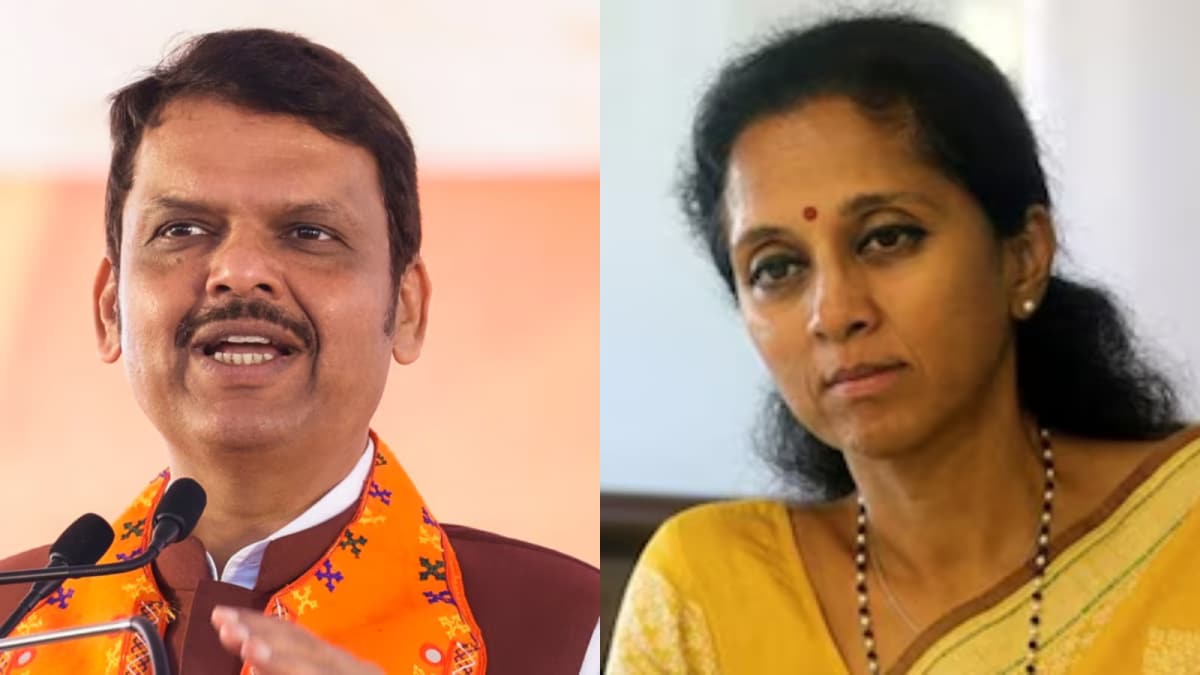
Supriya Sule urges unopposed Baramati bypoll to honor late Ajit Pawar, CM Devendra Fadnavis asks Congress leader Harshwardhan Sapkal to withdraw against Sunetra Pawar
Nationalist Congress Party MP Supriya Sule called for an “unopposed election” in Baramati as a sign of respect and unity to commemorate the late Maharashtra Deputy Chief Minister Ajit Pawar.
Maharashtra Chief Minister Devendra Fadnavis also spoke to state Congress unit chief Harshwardhan Sapkal and urged him to withdraw the candidate against Sunetra Pawar, who is contesting a by‑poll from Baramati seat following the death of her husband Ajit Pawar in a plane crash.
Both political figures framed the request for a single‑candidate contest as an act of honoring Ajit Pawar’s contribution to the state and as a means to avoid a divisive campaign that could distract from larger governance priorities.
Background of the Baramati Constituency and Recent Tragedy
Baramati, a prominent parliamentary constituency located in Maharashtra, has long been associated with the Pawar family, a political dynasty that has wielded considerable influence in the region for decades. The constituency’s electorate has historically supported candidates from the Pawar lineage, viewing them as custodians of local development and social welfare initiatives.
The sudden loss of Maharashtra Deputy Chief Minister Ajit Pawar in a plane crash created an abrupt vacancy in the Baramati seat. The tragedy not only left a void in the legislative representation of the constituency but also evoked a wave of public grief across the state. Ajit Pawar’s contributions to infrastructure projects, agricultural reforms, and educational programs are widely recognized, and his death prompted calls for a dignified tribute through the electoral process.
Following the incident, Sunetra Pawar, the surviving spouse of Ajit Pawar, announced her intention to stand in the by‑poll. Sunetra Pawar’s candidacy has been presented by party officials as a continuation of Ajit Pawar’s vision, emphasizing a seamless transition that preserves the development trajectory established over the years.
Supriya Sule’s Call for an Unopposed Election
Nationalist Congress Party MP Supriya Sule, a senior figure within the party and a close relative of Ajit Pawar, delivered a public appeal for an unopposed election in Baramati. Supriya Sule framed the request as a gesture that would reflect collective reverence for Ajit Pawar’s legacy, suggesting that a contested election could undermine the sense of unity that the community seeks to demonstrate in the aftermath of the tragedy.
In her statement, Supriya Sule highlighted the symbolic importance of allowing Sunetra Pawar to assume the parliamentary seat without facing electoral opposition. Supriya Sule argued that such a move would send a powerful message of solidarity, not only within the Nationalist Congress Party but also across the political spectrum, reinforcing the notion that public service supersedes partisan rivalry when a community is mourning a beloved leader.
Supriya Sule’s appeal resonates with a segment of the electorate that views the by‑poll as an opportunity to honor the memory of Ajit Pawar through a unified political front. Supporters of this perspective contend that avoiding a contested showdown would preserve communal harmony and allow the focus to remain on the larger goals of development and welfare that Ajit Pawar championed.
Devendra Fadnavis’ Direct Outreach to Congress
Maharashtra Chief Minister Devendra Fadnavis took a proactive step by personally contacting state Congress unit chief Harshwardhan Sapkal. During this conversation, Devendra Fadnavis appealed for the withdrawal of the Congress candidate who intended to challenge Sunetra Pawar in the by‑poll. The chief minister’s request was anchored in the same principle of honoring Ajit Pawar’s legacy, emphasizing that political competition at this juncture could be perceived as insensitive.
Devendra Fadnavis underscored the broader significance of a cooperative approach, suggesting that a consensual resolution would reflect political maturity and a shared commitment to the welfare of the Baramati electorate. By urging the Congress party to step back, Devendra Fadnavis positioned the request as a matter of national decorum rather than a purely partisan maneuver.
The conversation between Devendra Fadnavis and Harshwardhan Sapkal also opened a channel for potential negotiation, wherein the Congress might consider alternative political strategies that honor the spirit of the request while preserving its own organizational interests.
Political Calculus Behind the Appeals
Both Supriya Sule’s public appeal and Devendra Fadnavis’ private outreach illustrate a calculated political strategy that seeks to balance tribute with electoral advantage. By advocating for an unopposed election, the Nationalist Congress Party aims to consolidate voter support around Sunetra Pawar, minimizing the risk of vote splitting that could arise from a contested race.
From the perspective of the state’s ruling party, Devendra Fadnavis’ engagement with the opposition reflects an effort to project a bipartisan image, showcasing a willingness to place reverence for a fallen leader above partisan gain. This approach can be interpreted as an attempt to win goodwill among voters who value respect for public figures and community cohesion.
The political environment in Maharashtra is marked by intricate alliances and shifting loyalties. The Baramati by‑poll therefore serves as a microcosm of broader state‑wide dynamics, where each party’s stance on the unopposed request could influence future collaborative endeavors, coalition negotiations, and policy alignments.
Reactions from the Congress Party
State Congress unit chief Harshwardhan Sapkal was presented with the proposition to pull back the party’s candidate and thereby facilitate an unopposed victory for Sunetra Pawar. While the official response has not been made public, internal party discussions are expected to weigh the merits of honoring Ajit Pawar’s memory against the strategic importance of maintaining a presence in a high‑profile constituency.
Congress leadership historically emphasizes democratic competition as a cornerstone of the political process. Consequently, the request to withdraw a candidate may be met with internal debate, balancing the symbolism of respect with the party’s long‑term objective of expanding legislative representation in Maharashtra.
Stakeholders within Congress are likely to assess the potential impact on voter perception, considering whether a withdrawal could be interpreted as a lack of resolve or, conversely, as an act of statesmanship that could attract favorable public opinion.
Public Sentiment and Voter Perspectives
The electorate of Baramati, deeply connected to the legacy of Ajit Pawar, exhibits a range of emotions following the tragic incident. Many voters express a desire for continuity, viewing Sunetra Pawar as a natural successor who can uphold the development projects initiated by her late husband.
Simultaneously, sections of the populace value democratic choice and may perceive an unopposed election as a missed opportunity for public deliberation. This duality reflects a broader societal conversation about the balance between honoring grief and preserving the fundamentals of electoral competition.
Community leaders, civil society groups, and local media outlets have reported an atmosphere of solemn reflection interwoven with cautious optimism regarding the potential for a smooth transition of representation. The prevailing sentiment suggests that any decision made by political parties will be closely scrutinized through the lens of respect for Ajit Pawar’s contributions and the desire for effective governance.
Potential Outcomes and Implications for Future Elections
If the unopposed election scenario materializes, Sunetra Pawar would secure the Baramati seat without the rigors of a contested campaign. Such an outcome could set a precedent for how political parties respond to tragedies involving prominent leaders, potentially encouraging a culture of consensus in the wake of loss.
Conversely, should the Congress decide to maintain its candidate, the by‑poll would become a contested battleground, testing the strength of Sunetra Pawar’s campaign, the effectiveness of the Nationalist Congress Party’s grassroots mobilization, and the resonance of Devendra Fadnavis’ appeal among voters.
The result of the Baramati by‑poll, regardless of its nature, will likely influence strategic decisions in upcoming state and national elections, shaping party narratives on respect, unity, and electoral competitiveness.
Conclusion: A Moment of Reflection and Political Strategy
The Baramati by‑poll stands at the intersection of mourning, tribute, and political calculation. Supriya Sule’s call for an unopposed election and Devendra Fadnavis’ request to the Congress underscore a concerted effort to channel public sentiment into a unified political gesture. While the core facts remain unchanged—Ajit Pawar’s untimely death, Sunetra Pawar’s candidacy, the involvement of Supriya Sule and Devendra Fadnavis, and the appeal to Congress—the unfolding dialogue illustrates the delicate balance parties must strike between honoring a fallen leader and preserving the democratic process.
As the constituency awaits the final decision, the broader lesson emerging from Baramati is the enduring importance of respect in political discourse, the strategic calculations inherent in electoral contests, and the profound impact of individual leaders on the collective consciousness of a community.